On the afternoon of March 23, Zhu Jian, Secretary of the Municipal Party Committee, conducted an unannounced inspection in Zhuhui District to supervise the campaign against misconduct and corruption that directly affect the public. He stressed the importance of consistently upholding a people-centered approach, taking on the task with a strong sense of political responsibility and mission. He called for resolute action to tackle such issues within a set timeframe, aiming to continuously improve the public's sense of gain, happiness, and satisfaction.
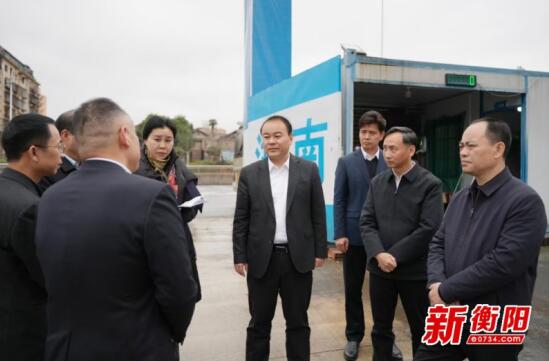
▲ Zhu Jian inspects the Dongcheng Yijing resettlement housing project in Zhuhui District.
Zhu Jian and his team visited the Dongcheng Yijing resettlement housing project and the Hengzhou Education New City public rental housing project in Zhuhui District. They conducted on-site investigations into the reasons behind the delayed delivery of these projects, supervised the next steps for rectification, and coordinated work related to the "Sanxiang Anju" (Peaceful Housing in Hunan) initiative.
Zhu Jian emphasized the need for a thorough analysis of the root causes of the problems. He stated that incoming officials must address lingering issues from previous administrations, and a systematic review of the history behind these long-delayed projects should be carried out. The focus should be on examining whether there was any dereliction of duty during the decision-making process. Regarding any disciplinary or illegal violations exposed by the problems, the Municipal Commission for Discipline Inspection and the Municipal Supervisory Commission should initiate a higher-level review process, integrating clues from public complaints and reports. This is to ensure precise accountability and remove obstacles to rectification. He also stressed the need to strengthen the responsibility of designated supervising officials, accelerate the improvement of rectification plans, set clear timelines for each corrective action, and coordinate efforts to secure necessary funding and resources. All departments at all levels should enhance collaboration, draw lessons from this case to address broader issues, accelerate the resolution of problems identified during inspections, and deepen the outcomes of the "Sanxiang Anju" initiative. The ultimate goal is to ensure that projects intended to improve people's livelihoods truly win public support.
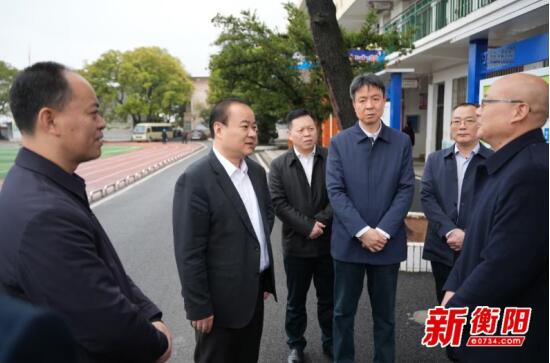
▲ Zhu Jian inspects the No. 2 Middle School in Zhuhui District.
The former principal and the cashier of Zhuhui District No. 2 Middle School were placed under investigation last year for embezzling student meal funds, a significant case in Hengyang's "campus meal" anti-corruption efforts. Zhu Jian visited the school cafeteria to verify the regulatory loopholes exposed by the case and to gain a detailed understanding of the management of primary and secondary school meal programs.
Zhu Jian stressed the need to learn from this case to promote systemic improvement. He called for intensified efforts in the special rectification of issues related to school meals, swiftly closing institutional gaps and strengthening regulatory frameworks to resolutely prevent similar problems from recurring. Education departments must focus on key areas such as meal supply models, food procurement, and financial management. They should further strengthen their oversight responsibilities for campus food safety, explore innovative operational management models, and continuously enhance the quality of school meals. Discipline inspection and supervision agencies should conduct regular, embedded oversight. This can be achieved by displaying supervision QR codes prominently in cafeterias, increasing the frequency of parent-guardian meal accompaniment sessions, and opening other channels to gather clues about potential issues. Such measures enable early detection, early warning, and early intervention, effectively curbing corruption risks before they materialize. The goal is to safeguard the "safety on the tip of the tongue" for teachers and students and continuously improve public satisfaction with school meal programs.
Participating city leaders included Yang Weiping, Wei Zhongfa, Zhong Fan, and Xie Hong