-- Article list --

Liu Hai Cuts Wood, a flower drum opera known by every household in Hunan, is also familiar to audiences nationwide. Still, few people know about the authentic version of the legend and its origin, Changde. Early in the Northern Song Dynasty(960 A.D-1127A.D.), the legend of Liu Hai cutting Firewood had already taken shape. The version we know today is believed to have originated in the middle of Qing Dynasty (1636AD-1912AD).
Long time ago, near the Tower Gourd Well (named for the tower gourd images in the well) in Wuling District of Changde, there lived a young man Liu Hai and his mother. Liu Hai was very diligent and dutiful to his mother. In the hills where he often cut firewood, a fox fairy Hu Xiuying admired him for his kindness and insisted to marry him. Liu Hai hesitated first, because he was afraid that his poor living could not secure a happy marriage for Hu Xiuying. However, he was moved by her love after all. The marriage was also approved by Liu Hai's mother. Unfortunately, when they bought wedding supplies in Ji’er Alley of the downtown, the tenth Bodhisattvas in the adjacent temple (eighteen Bodhisattvas in total) wanted to rob Hu’s pearl, with which he could become immortal. Without her pearl, Hu would immediately show herself as a fox. She told Liu Hai the truth and he forgave her. Thanks to the help of the God Axe and Hu’s sisters, Liu Hai defeated the Bodhisattvas with his axe and got the pearl back. They lived together happily ever after.
The myth tells about a love story between Liu Hai and a fox fairy. According to the tale, Liu Hai is a diligent, upright and filial character who remains loyal to his lover and courageously pursues happiness. Even today, the legend holds profound realistic significance, vividly representing a common man's love for goodness and benevolence. The legend also made records of the local life conditions and folk customs of ancient Changde. The spirit of this story has been handed down for generation from father to son.
In Changde, there is a well named "Tower Gourd Well", which was documented in the legend, though dilapidated with wild grass due to air-slake and erosion. However, the "Liu Hai Temple" where Liu Hai is said to have fought the tenth Bodhisattvas for the love, was completely destroyed.
Hengyang String Music is a unique form of folk art, sung in Hengyang dialect and accompanied by musical instruments. Its musical style blends the solemnity and elegance of court music with the softness and agility of folk songs and dances.
As the third Hunan Intangible Cultural Heritage Expo is about to open, tourists are welcome to Hengyang to enjoy the string music, an intangible cultural heritage item.
Shadow puppet plays, also known as shadow play or lamp shadow play, is a folk opera form of cutting beast skin or hard paper board into articulated figures and performing in front of an illuminated backdrop to create the illusion of moving images. Accompanied by music, performers manipulate the figures and sing. With a long history in China, shadow puppets were introduced to many countries during the Yang Dynasty, attracting many foreign audiences. They call the art form Chinese shadow play.
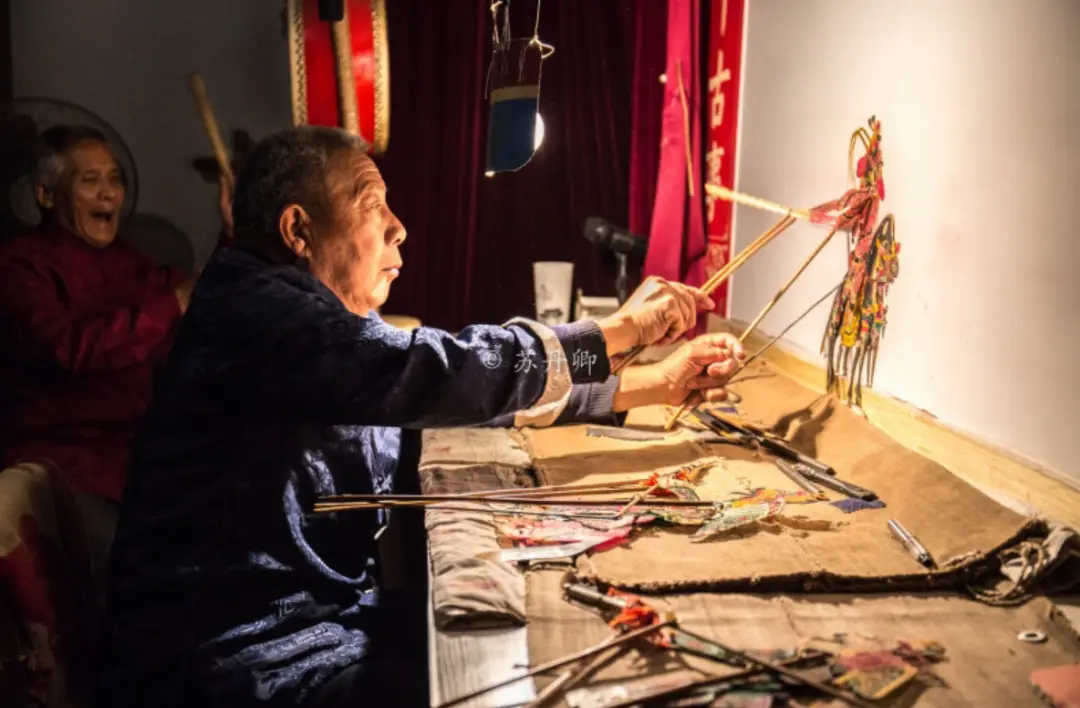
In Ming Dynasty, shadow puppet play was played by only one person with fisher drums as the musical instrument. When it entered Qing Dynasty, shadow puppet play was performed by two persons as a team with gong, drum and urheen as the main musical instrument. And they performed the play in the way that one person play the musical instruments and the other control the flat articulated figures. The story told by the play were mainly folk legend, historical tales and so on.
Shadow Puppets Play Association in Hengyang was funded in 1984 by the 30 members of Futian Community with their 15 plays. Cao Degui was the general director of the association. The performer from Futian, Wang Chunyun was invited to perform in the temple fair in 1985, whose performance there was appreciated by more than 400 audience and the director of the Provincial Shadow Puppets Play Association, Chen Maizhong. Futian Shadow Puppets Play Association had its personnel adjusted and rearranged in 1985. Yan Changkun, the secretary of the Futian CPC Cpmmittee. Was elected the director of the association. The second shadow puppets play joint performance was held on October 16th 1985, in which in total 9 performances was played. Among these 9 performances, one was awarded first award, three were awarded second award and five were awarded third award. The performance team from Xuzhou Town and Zhurong Town were invited to participated in the joint performance and they had been awarded memorial awards.
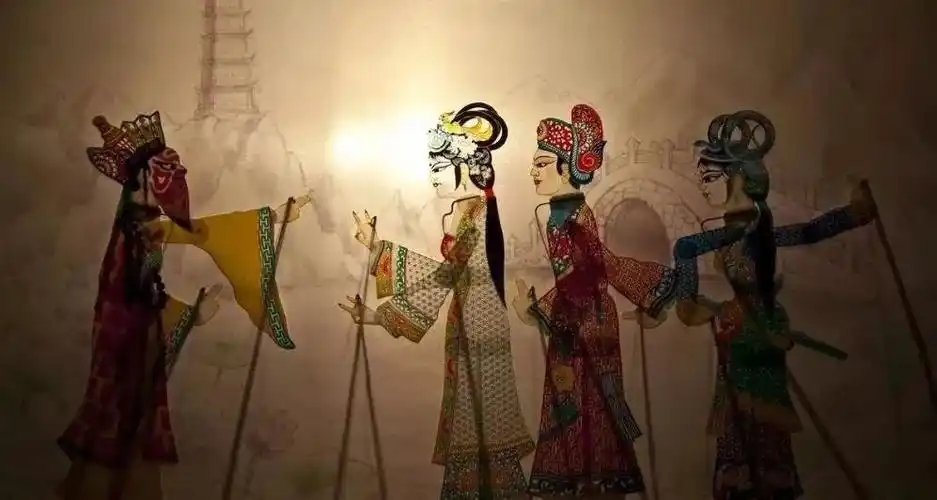
In the meantime, the meeting of the shadow puppets play performers was held and Wang Chunyun was elected the new general director of the Shadow Puppets Play Association in Xinming Town. Fu Tianpu County was named the Birthplace of Shadow Puppets Play in Hunan Province by Hunan Provincial Government.
Following content is a brief introduction of the history of the shadow puppets play in Fu Tianpu Town. Among all the artistic forms, shadow puppets play might be the most special and popular one. Fu Tianpu Town would be the most representative in Hengshan County.
It is known that shadow puppetry originated during the Han Dynasty when one of the concubines of Emperor Wu of Han died from an illness. The emperor was devastated, and he summoned his court officers to bring his beloved back to life. The officers made a shape of the concubine using donkey leather. Her joints were animated using 200 separate pieces of the leather, and adorned with painted clothes. Using an oil lamp they made her shadow move, bringing her back to life. Shadow theatre became quite popular as early as the Song Dynasty when holidays were marked by the presentation of many shadow plays. During the Ming Dynasty there were 40 to 50 shadow show troupes in the city of Beijing alone. In the 13th century, the shadow show became a regular recreation in the barracks of the Mongolian troops. It was spread by the conquering Mongols to distant countries like Persia, Arabia, and Turkey. Later, it was introduced to other Southeastern Asian countries. The earliest shadow theatre screens were made of mulberry paper. The storytellers generally used the art to tell events between various war kingdoms or stories of Buddhist sources. Today, puppets made of leather and moved on sticks are used to tell dramatic versions of traditional fairy tales and myths. In Gansu province, it is accompanied by Daoqing music, while in Jilin, accompanying Huanglong music forms some of the basis of modern opera.
The puppet play in Hengshan appeared in Shunzhi Period in Qing Dynasty. Peng Fengju, a peasant in Fu Tianpu Town learned how to perform the play and returned to Hengshan and funded a folk association of shadow.puppets play, “Old Dragon Community”. From then on, shadow puppets play began to show up in Hengshan. Until now, the shadow puppets play in Hengshan has gone through 360 years. In the late 1930s, the skills to make shadow puppets here has become very delicate and professional. The height of the puppet has reached one chi and three cun, the dedication on the puppets were more and more beautiful and vivid. Until then, the shadow puppets play in Hengshan with its folk art form and cheap cost became the necessary entertainment for the people there.
After the foundation of the PRC, the shadow puppets play in Hengshan has been developing quickly and well. The performers there collected money and bought new equipments and facilities of the shadow puppets play themselves, which helped the shadow puppets play there make great progress. The deputy director of the National Bureau of Culture of China, Xu Pingyu visited Hengshan and he asked to appreciate the performance of shadow puppets in 1965. Shadow Puppets Play Association in Hengyang was funded in 1984 by the 30 members of Futian Community with their 15 plays. Cao Degui was elected the general director of the association according to the rules and regulations of the association. The performer from Futian, Wang Chunyun was invited to perform in the temple fair in 1985, whose performance there was appreciated by more than 400 audience and the director of the Provincial Shadow Puppets Play Association, Chen Maizhong. Fu Tianpu County was named the Birthplace of Shadow Puppets Play in Hunan Province by Hunan Provincial Government. In May 2000, Fu Tianpu Town was named the Birthplace of Chinese Folk Art by the National Bureau of Culture of China.
By now, there are more than 30 teams of shadow puppets play with more than 60 performers. In recent years, Fu Tianpu Town has held annual Shadoe Puppet Play Art Festival in which all the performers would gather together and learn form each other the skills of the shadow puppet play.