-- Article list --

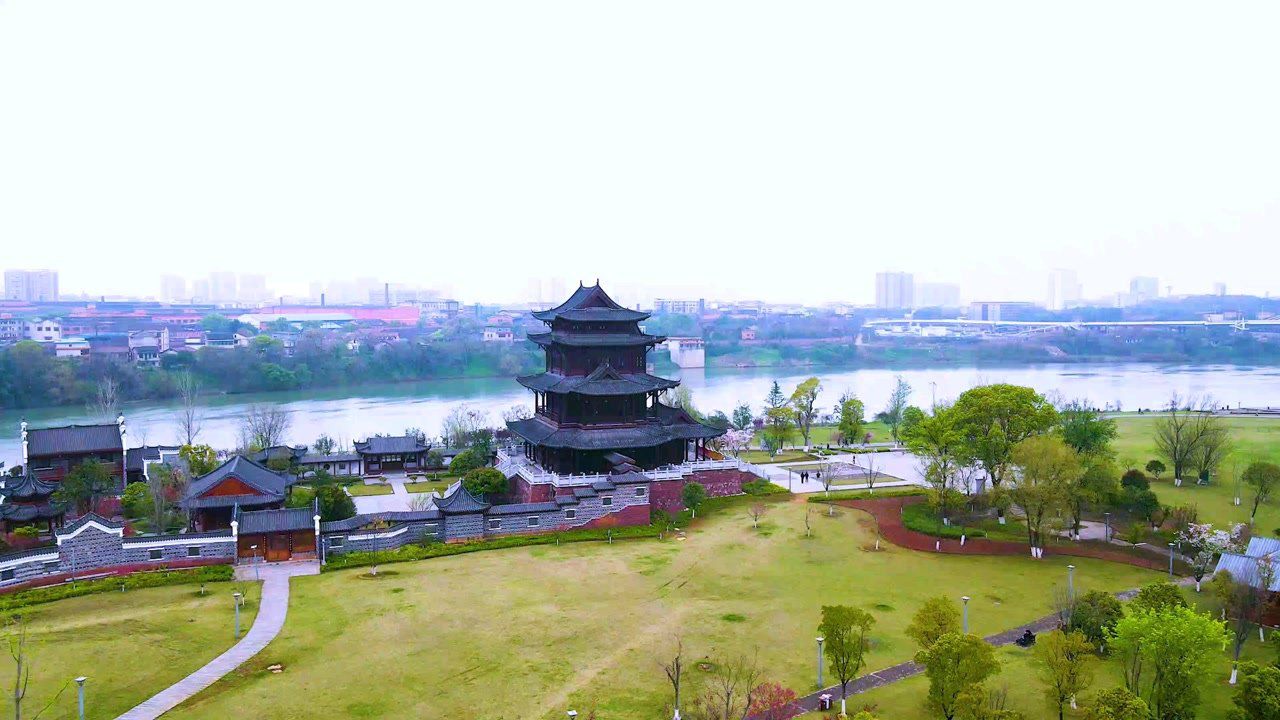
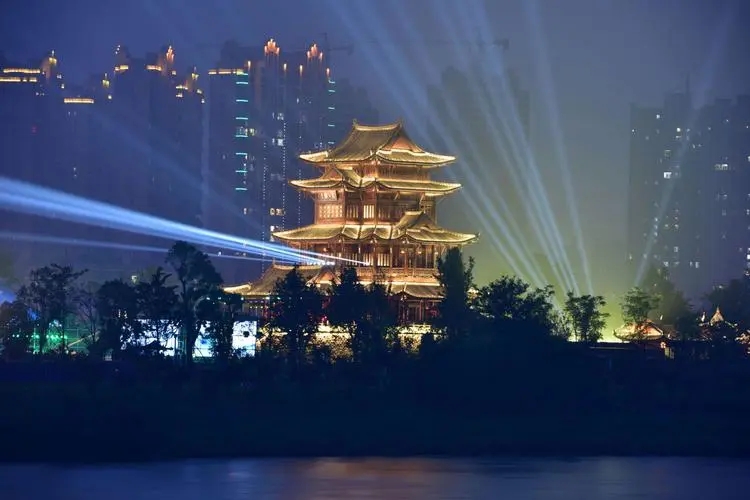
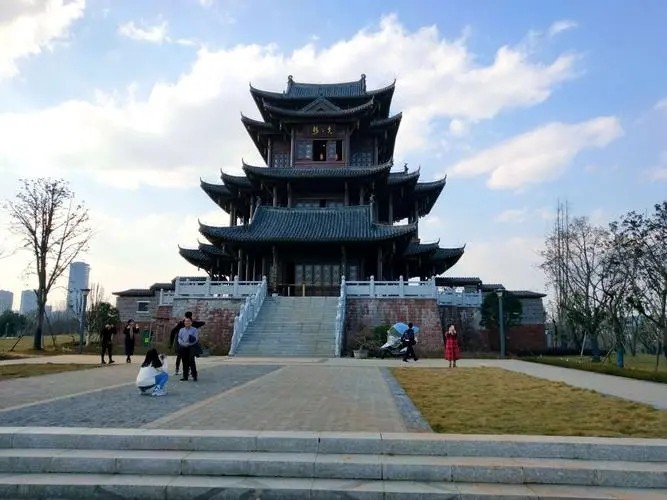
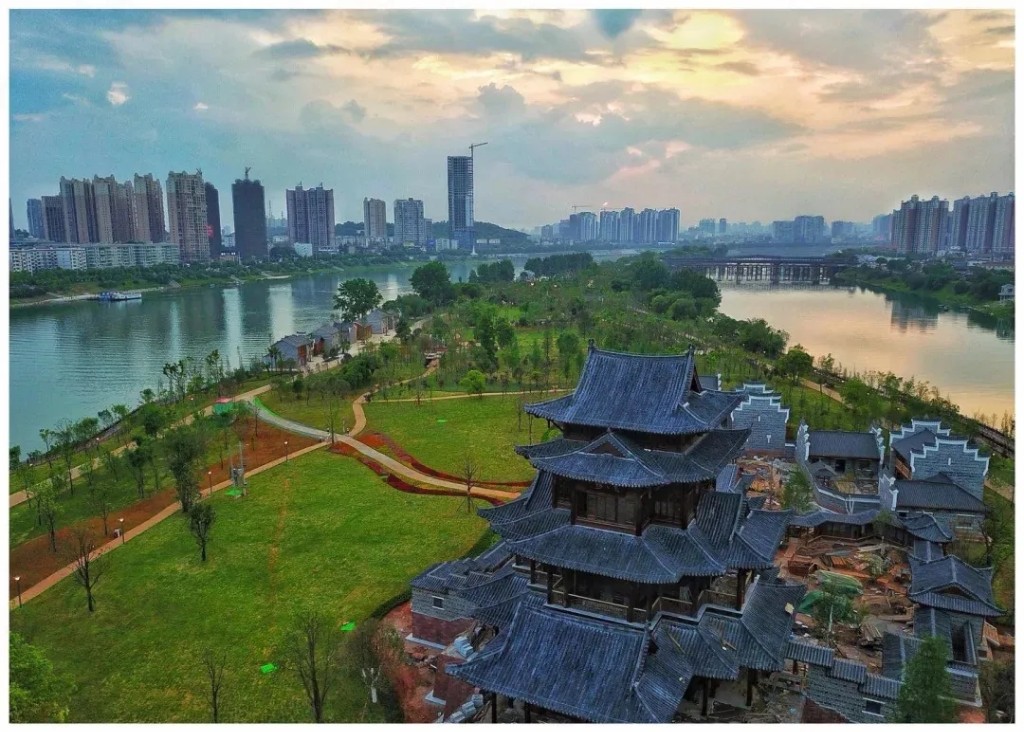
Wang Chuanshan Hometown Ecological and Cultural Resort is located in Qulan Town, Hengyang County. It was the seclusion and scholarly writing place of Wang Fuzhi, an outstanding thinker and philosopher in the Ming and Qing dynasties. The resort has been successively awarded the titles of National Key Cultural Relic Protection Unit, National 3A Tourist Attraction, Hometown of Chinese Poetry, National Ecological Cultural Village, Huxiong Style Cultural Tourism Town, Hunan Provincial Characteristic Tourism Village, Hunan Provincial Classic Cultural Village, and Hunan Provincial Beautiful Rural Demonstration Village.
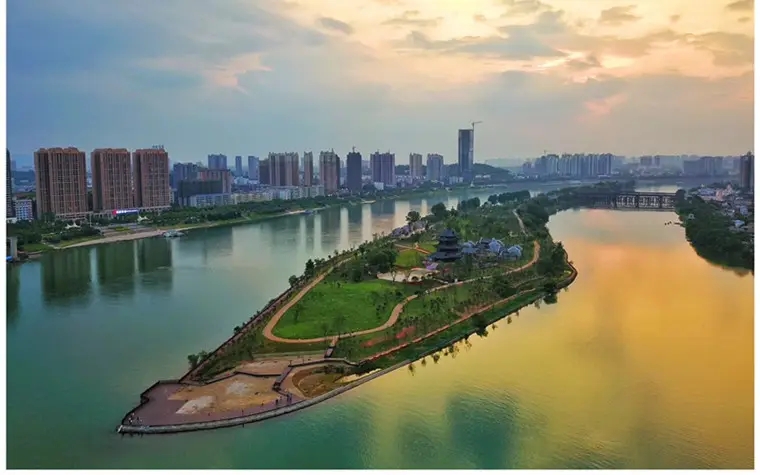
Positioned with the cultural image of "Great Confucian of Heaven and Earth · Chuanshan of Hengyang" and centered on experiencing Chuanshan culture and ideology, the scenic area follows the overall layout of One Core (Xiangxi Thatched Cottage), One Zone (Chuanshan Cultural Town Zone), and Three Parks (Chuanshan Cultural Park, Chuanshan Modern Agriculture Demonstration Park, and Dongluozhai Forest Park).
It is built into the spiritual origin of Huxiang culture, a highland for commemorating Chuanshan culture, and a base for the research of Wang Fuzhi’s ideology, integrating cultural display and exchange at home and abroad, Chuanshan cultural research, training and study tours, leisure agriculture, health and wellness vacation, and intangible cultural heritage inheritance. It aims to build Chuanshan Cultural Town into a national-level characteristic tourism town.
Major scenic spots include Xiangxi Thatched Cottage, Chuanshan Cultural Park, Former Residence of Zhu Shaolian, Tomb of Wang Chuanshan, Chuanshan Modern Agriculture Demonstration Park, Fuzhi Riverside Ecological and Cultural Park, Dongluozhai Forest Park, Shichuan Mountain Ruins, Huxiong Style Cultural Tourism Town, Fuzhi Riverside Scenic Belt, and Sacred Realm Rose Garden.

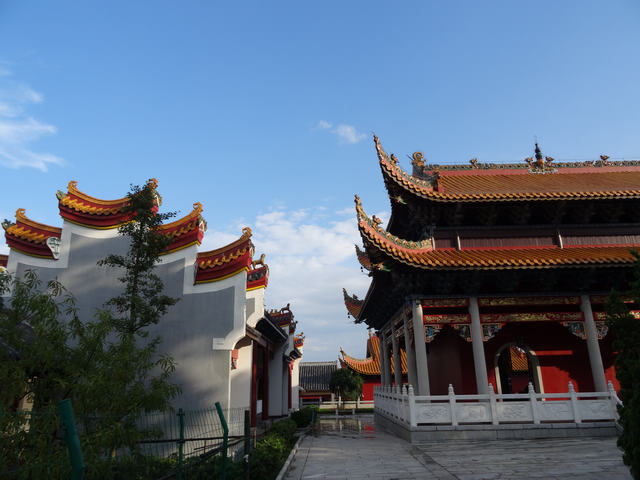
The Former Residence of Tang Qunying is located in Huangni Village, Xinqiao Town, Hengshan County, Hengyang City, Hunan Province. The exhibition hall covers a land area of 13,600 square meters with a building area of 1,800 square meters. Built in 2012, it features an exhibition themed on the life story of Tang Qunying.
The former residence occupies a land area of 325 square meters. Originally constructed in the Qing Dynasty by Tang Xingzhao, father of Tang Qunying, it served as her main residence in her later years. Facing west with its back to the east, the residence adopts a brick-and-wood structure with a grey tile roof and a single-eave hanging gable design. It features wooden floors and lime-earth ground surfaces. The building spans three bays in width and consists of two courtyards with an inner patio. Its layout includes a front gate, a main hall, a transitional hall, side rooms on the left and right, and three rear chambers, totaling eight rooms, with a building area of 273.4 square meters.
On May 19, 2002, the Former Residence and Tomb of Tang Qunying were designated as a Hunan Provincial Cultural Relic Protection Unit in the Notice of the People’s Government of Hunan Province on Announcing Provincial-Level Cultural Relic Protection Units (Xiang Zheng Fa [2002] No. 11).
Tang Qunying (courtesy name Xitao, 1871–unknown) was a native of Hengshan, Hunan. In her early years, she followed Sun Yat-sen to engage in the democratic revolution and became the first female member of the Tongmenghui (Chinese Revolutionary Alliance). After the Wuchang Uprising, she founded the Women’s Support Association and the Relief Team of the Northern Expedition Army, and served as the Captain of the Women’s Northern Expedition Corps. An outstanding patriot, she was praised by Sun Yat-sen as "the heroic female pioneer who founded the Republic of China" and awarded the Second-Class Order of Golden Grain.
To strive for gender equality, Tang Qunying initiated and led China’s first vigorous women’s suffrage movement, emerging as a leader and pioneer of the women’s rights movement. She is hailed as "the dawn of women’s rights in five thousand years" and "the first call of the Sino-Japanese women’s movement". In 1919, Kang Keqing inscribed the tribute "Soul of a Generation of Women" for her. At the Fourth World Conference on Women held by the United Nations in 1993, Tang Qunying was listed as one of the outstanding Chinese female figures of the past century.
In her later years, committed to improving women’s education in China, Tang Qunying successively founded five women’s newspapers and periodicals and ten girls’ schools, making her a renowned female journalist and women’s educator in the early Republic of China.
"Shi Wu Jia" (My Family Residence) is the only surviving original structure of Tang Qunying’s former residence. It bears witness to her birth, growth, daily life and studies. It is the only former residence of an influential female cultural celebrity in Hunan who made remarkable contributions to the revolution during the Old Democratic Revolution period, ranking as a highly precious key cultural relic protection unit.
Tang Qunying’s early dedication to the democratic revolution alongside Sun Yat-sen and her status as the first female member of the Tongmenghui were instrumental in overthrowing the imperial system and establishing a republic. Honored by Sun Yat-sen as "the heroic female pioneer who founded the Republic of China" and praised by Kang Keqing as "Soul of a Generation of Women", she is recognized as one of the Eight Distinguished Chinese Women of the Past Century. Her former residence stands as a precious historical testimony and cultural publicity carrier of her legendary life.
To fight for gender equality, Tang Qunying established the Women’s Suffrage Alliance and spearheaded China’s first women’s suffrage movement. She holds a prominent position in the history of international women’s movements, ranking 12th worldwide.

The World Clock and Watch Culture Museum is located in Hengyang Xidu High-tech Industrial Park, Xidu Town, Hengyang County. As the first clock and watch culture museum in Central China, it holds the honors of National 3A Tourist Attraction, Hunan Provincial Industrial Tourism Demonstration Site, Hengyang Industrial Tourism Demonstration Base, Hengyang Study Tour and Education Base for Primary and Secondary School Students, as well as the Global Academic Exchange Center for Luxury Watch Appraisal.
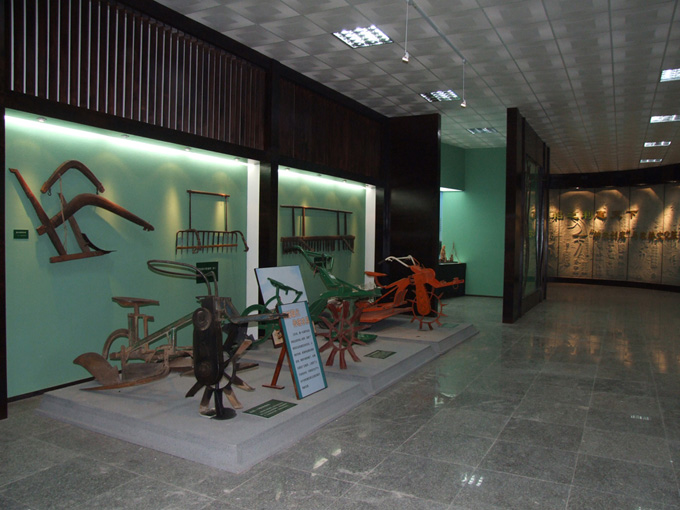
Centering on the presentation and interpretation of clock and watch culture, the museum highlights the history of Su Song, the originator of horology, who invented the core escapement mechanism of timepieces, the development course of Swiss watch brands, the disruption of the traditional horology industry by Japanese quartz watches, and the rise of Chinese timepiece brands. The museum is divided into eight major exhibition zones: the Su Song Memorial Area in honor of the horology pioneer, the Exhibition Area of Ancient Time-Measuring Instruments and Ancient Clock-Making Tools, the Modern Clock & Watch Exhibition Area, the International Brands & Products Exhibition Area, the Domestic Brands & Products Exhibition Area, the 3D Holographic Science Popularization Exhibition Area for Clocks and Watches, the Multimedia Interactive Experience Area, and the DIY Experience Area. It is a distinctive "Tourism Plus" project integrating clock and watch manufacturing factories, horology-themed garden landscapes, and science popularization & study tours of clock and watch culture.

The Shuikoushan Workers' Movement Exhibition Hall was first built in 1969. It is located in the Shuikoushan Lead-Zinc Mining Area of Changning City, Hengyang City—a national key transportation hub, a major city in Central South China, and a renowned historical and cultural city in Hunan Province. It is designated as a Patriotic Education Base of Hunan Province, a National Defense Education Base for All Citizens of Hunan Province, a Demonstration Site for Patriotic Education of Hengyang, a Party Spirit Education Base of Hengyang, and a National AA-Class Red Tourism Scenic Spot.
Basic Overview
Originally constructed in 1969, the exhibition hall covers a building area of 2,300 square meters, consisting of an exhibition building and auxiliary structures. The exhibition building, formerly the Soviet Expert Building, is a Major Historical and Cultural Site Protected at the National Level. Ranking second in China in terms of its founding history, it is the only exhibition hall dedicated to workers' movements in Hunan. It permanently hosts the Basic Exhibition on the Shuikoushan Workers' Movement and is open to the public free of charge.
Affiliated with the Changning Municipal Cultural Heritage Center, the exhibition hall currently has 12 staff members, with functional departments including the General Office, Exhibition & Publicity Department, Cultural Relics Protection & Research Department, and Security Department. Centered on its basic exhibitions and surrounding revolutionary sites, supported by various Party lectures featuring the deeds of martyrs and historical events of the Shuikoushan Workers' Movement, and supplemented by achievements in protecting and utilizing Shuikoushan's industrial heritage, it provides rich on-site and experiential teaching services for Party members and officials.
Basic Exhibition
Composed of a preface hall and four exhibition rooms, the exhibition is divided into five sections:
Roots in the Shang and Zhou Dynasties, Inheriting Millennium Legacy
Feudal Colonial Oppression, Sparking Spontaneous Resistance
Tide of Strikes Resounding Across the Nation
Marching to Jinggangshan, Embarking on a New Journey
Revolutionary Pioneers, Achievements Immortalized in History
Through a wealth of cultural relics, precious photographs, creative prints, and multimedia displays, it comprehensively showcases the glorious course of the Shuikoushan Workers' Movement under the leadership of the Communist Party of China.
The preface hall features a backdrop, a foreword, and slogans defining the historical status of the movement. In Hunan's revolutionary soil, Shuikoushan workers rose up in struggle, establishing the first mine Party organization, the first mine club, the first peasant union, and the first worker-peasant armed force in Hunan. They launched the world-shocking Shuikoushan Workers' Strike and formed a worker-peasant alliance that marched to Jinggangshan. Thus, Shuikoushan became a pioneer of China's workers' movement and a model of worker-peasant alliance in China.
Historical Background
In the late 19th and early 20th centuries, workers at the Shuikoushan Lead-Zinc Mine suffered severe exploitation by feudal bureaucrats and plunder by imperialist powers, living in extreme hardship. The May Fourth Movement in 1919 ignited a nationwide upsurge in the spread of Marxism.
In late April 1922, Mao Zedong personally visited Shuikoushan, lighting the fuse of the workers' movement. On December 5, 1922, over 3,000 workers went on strike, which lasted 23 days and ended in complete victory. Subsequently, workers established schools, supported the May 30th Movement, formed armed forces, launched the Shuikoushan Uprising, and assisted the Southern Hunan Uprising. In 1928, 800 miners marched to Jinggangshan, becoming the backbone of the Red Army. The movement made a significant contribution to the great victory of the Chinese revolution.
Development Progress
Record-Breaking Visitor Numbers
Since free admission in 2011, the hall has received over 1.6 million visitors, averaging more than 150,000 annually—including 800,000 minors and over 500 group visits for Party-building activities. In 2019 alone, it hosted over 200,000 visitors, 130,000 of whom were Party members and officials, and held over 260 sessions for the "Stay True to the Original Aspiration, Keep the Mission in Mind" thematic education.
Fruitful Historical Research
Further research has uncovered forgotten historical truths:
The Shuikoushan Workers' Consumer Cooperative may be the earliest prototype of a bank in the Party's history.
The ordnance workshop established by workers, which repaired and manufactured weapons, was the earliest military arsenal of the People's Army.
The Shuikoushan workers' armed force was organized into the Direct Special Battalion under the headquarters of the Fourth Red Army—the first special battalion in the PLA's history and the predecessor of the later Central Guard Regiment.
The Shuikoushan Workers' Armed Uprising was a major independent workers' uprising in Hunan, historically known as the "Shuikoushan Uprising".
Tailored Video Education
To enrich thematic education, the documentary The Great Shuikoushan Workers' Movement was produced, fully presenting its spirit: firm faith, fearlessness of sacrifice, innovation, pioneering courage, strict discipline, and unity. It deepens officials' understanding of the pioneers' perseverance in ideals and sense of mission amid hardships.
Improved Infrastructure
In 2019, a lecture hall, conference rooms, and reception rooms were added, accommodating over 80 people for meetings and training. Signage was standardized, with traffic signs at highway exits and tourist facilities upgraded—including a visitor center, guide signs, and maps. Renovations included landscaping, public toilets, office roofs, and walls. Full-time cleaners were hired, with 10 new garbage bins ensuring daily waste removal and a clean environment.
Boosting Red and Industrial Tourism
New Shuikoushan Workers' Movement Memorial Hall: Under construction with an investment of ~70 million yuan, it will have a 4,000 ㎡ main building and 3,000 ㎡ exhibition area, leveraging the movement's historical status and rich heritage.
Revolutionary Site Renovation: With a 20 million yuan investment, the Kang's Opera Stage and Kang Hanliu's Restaurant sites will be restored, with surrounding environment improved and tourist facilities built to develop a 4A-class red tourism scenic spot

Cai Hou Ancestral Hall is situated beside Caizi Lake in the southeast urban area of Leiyang City, Hunan Province. It was designated as one of the Sixth Batch of Major Historical and Cultural Sites Protected at the National Level by the State Council.
According to legend, the site was the former residence of Cai Lun, the inventor of papermaking and Cai Lun paper in ancient China. During the reign of Emperor He of the Eastern Han Dynasty, Cai Lun served as Shangfang Ling, the official in charge of manufacturing imperial artifacts. He summarized the papermaking techniques developed since the Western Han Dynasty, and made paper using waste fishing nets, rags, hemp remnants and other raw materials. In the first year of the Yuanxing reign (105 AD), he presented his invention to Emperor He. Later generations built an ancestral hall on the original residence site in his memory.
The exact original construction date is unrecorded. It was rebuilt in the fourth year of the Zhiyuan reign of the Yuan Dynasty (1338) by Chen Zongyi, the prefectural governor. Having undergone multiple rises and falls through history, the existing ancestral hall is a Qing Dynasty building, renovated in 1956 and 1981 respectively. It is a three-yard courtyard-style single-storey brick-and-wood structure with grey tiled roofs.


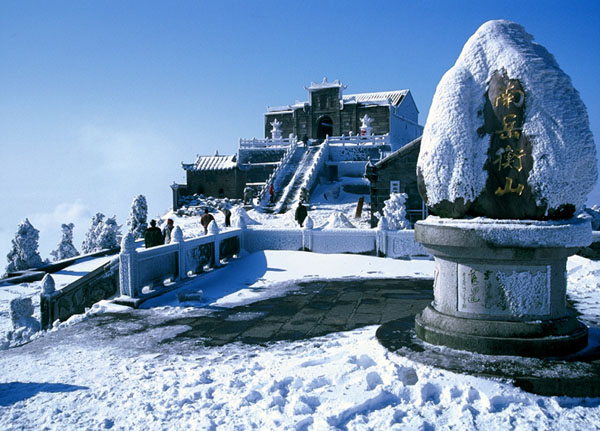
The magnificent and ancient temple of Mount Hengshan is located in Nanyue District, Hengyang City.
The temple is renowned for its ancient building complex consisting of folk ancestral temples, Buddhist temples, Taoist temples and imperial palaces. Covering an area of 120,000 sqm, it is the largest group of ancient buildings in south China and in Five Great Mountains. It is known as “the First Temple in South China” and “the Imperial Palace in South China”.
Originally built in the Sui Dynasty (581-618), the temple has been destroyed by fire for six times, and maintained and rebuilt for 17 times through the Song Dynasty (960-1279), Yuan Dynasty (1271-1368), Ming Dynasty (1368-1644) and Qing Dynasty (1644-1912). The present temple dates from the eighth year of Emperor Guangxu’s reign of the Qing Dynasty (the year of 1882). The temple was put under state protection in 2006.
Admission fee: 58 yuan/person for peak season; 40 yuan/person for off season
Opening hours: 7:30-17:30 (November 1-April 30); 7:00-18:00 (May 1-October 30)
Service hotlines: 0734-5673377/0734-5662416