-- Article list --

The Shuikoushan Workers' Movement Exhibition Hall was first built in 1969. It is located in the Shuikoushan Lead-Zinc Mining Area of Changning City, Hengyang City—a national key transportation hub, a major city in Central South China, and a renowned historical and cultural city in Hunan Province. It is designated as a Patriotic Education Base of Hunan Province, a National Defense Education Base for All Citizens of Hunan Province, a Demonstration Site for Patriotic Education of Hengyang, a Party Spirit Education Base of Hengyang, and a National AA-Class Red Tourism Scenic Spot.
Basic Overview
Originally constructed in 1969, the exhibition hall covers a building area of 2,300 square meters, consisting of an exhibition building and auxiliary structures. The exhibition building, formerly the Soviet Expert Building, is a Major Historical and Cultural Site Protected at the National Level. Ranking second in China in terms of its founding history, it is the only exhibition hall dedicated to workers' movements in Hunan. It permanently hosts the Basic Exhibition on the Shuikoushan Workers' Movement and is open to the public free of charge.
Affiliated with the Changning Municipal Cultural Heritage Center, the exhibition hall currently has 12 staff members, with functional departments including the General Office, Exhibition & Publicity Department, Cultural Relics Protection & Research Department, and Security Department. Centered on its basic exhibitions and surrounding revolutionary sites, supported by various Party lectures featuring the deeds of martyrs and historical events of the Shuikoushan Workers' Movement, and supplemented by achievements in protecting and utilizing Shuikoushan's industrial heritage, it provides rich on-site and experiential teaching services for Party members and officials.
Basic Exhibition
Composed of a preface hall and four exhibition rooms, the exhibition is divided into five sections:
Roots in the Shang and Zhou Dynasties, Inheriting Millennium Legacy
Feudal Colonial Oppression, Sparking Spontaneous Resistance
Tide of Strikes Resounding Across the Nation
Marching to Jinggangshan, Embarking on a New Journey
Revolutionary Pioneers, Achievements Immortalized in History
Through a wealth of cultural relics, precious photographs, creative prints, and multimedia displays, it comprehensively showcases the glorious course of the Shuikoushan Workers' Movement under the leadership of the Communist Party of China.
The preface hall features a backdrop, a foreword, and slogans defining the historical status of the movement. In Hunan's revolutionary soil, Shuikoushan workers rose up in struggle, establishing the first mine Party organization, the first mine club, the first peasant union, and the first worker-peasant armed force in Hunan. They launched the world-shocking Shuikoushan Workers' Strike and formed a worker-peasant alliance that marched to Jinggangshan. Thus, Shuikoushan became a pioneer of China's workers' movement and a model of worker-peasant alliance in China.
Historical Background
In the late 19th and early 20th centuries, workers at the Shuikoushan Lead-Zinc Mine suffered severe exploitation by feudal bureaucrats and plunder by imperialist powers, living in extreme hardship. The May Fourth Movement in 1919 ignited a nationwide upsurge in the spread of Marxism.
In late April 1922, Mao Zedong personally visited Shuikoushan, lighting the fuse of the workers' movement. On December 5, 1922, over 3,000 workers went on strike, which lasted 23 days and ended in complete victory. Subsequently, workers established schools, supported the May 30th Movement, formed armed forces, launched the Shuikoushan Uprising, and assisted the Southern Hunan Uprising. In 1928, 800 miners marched to Jinggangshan, becoming the backbone of the Red Army. The movement made a significant contribution to the great victory of the Chinese revolution.
Development Progress
Record-Breaking Visitor Numbers
Since free admission in 2011, the hall has received over 1.6 million visitors, averaging more than 150,000 annually—including 800,000 minors and over 500 group visits for Party-building activities. In 2019 alone, it hosted over 200,000 visitors, 130,000 of whom were Party members and officials, and held over 260 sessions for the "Stay True to the Original Aspiration, Keep the Mission in Mind" thematic education.
Fruitful Historical Research
Further research has uncovered forgotten historical truths:
The Shuikoushan Workers' Consumer Cooperative may be the earliest prototype of a bank in the Party's history.
The ordnance workshop established by workers, which repaired and manufactured weapons, was the earliest military arsenal of the People's Army.
The Shuikoushan workers' armed force was organized into the Direct Special Battalion under the headquarters of the Fourth Red Army—the first special battalion in the PLA's history and the predecessor of the later Central Guard Regiment.
The Shuikoushan Workers' Armed Uprising was a major independent workers' uprising in Hunan, historically known as the "Shuikoushan Uprising".
Tailored Video Education
To enrich thematic education, the documentary The Great Shuikoushan Workers' Movement was produced, fully presenting its spirit: firm faith, fearlessness of sacrifice, innovation, pioneering courage, strict discipline, and unity. It deepens officials' understanding of the pioneers' perseverance in ideals and sense of mission amid hardships.
Improved Infrastructure
In 2019, a lecture hall, conference rooms, and reception rooms were added, accommodating over 80 people for meetings and training. Signage was standardized, with traffic signs at highway exits and tourist facilities upgraded—including a visitor center, guide signs, and maps. Renovations included landscaping, public toilets, office roofs, and walls. Full-time cleaners were hired, with 10 new garbage bins ensuring daily waste removal and a clean environment.
Boosting Red and Industrial Tourism
New Shuikoushan Workers' Movement Memorial Hall: Under construction with an investment of ~70 million yuan, it will have a 4,000 ㎡ main building and 3,000 ㎡ exhibition area, leveraging the movement's historical status and rich heritage.
Revolutionary Site Renovation: With a 20 million yuan investment, the Kang's Opera Stage and Kang Hanliu's Restaurant sites will be restored, with surrounding environment improved and tourist facilities built to develop a 4A-class red tourism scenic spot

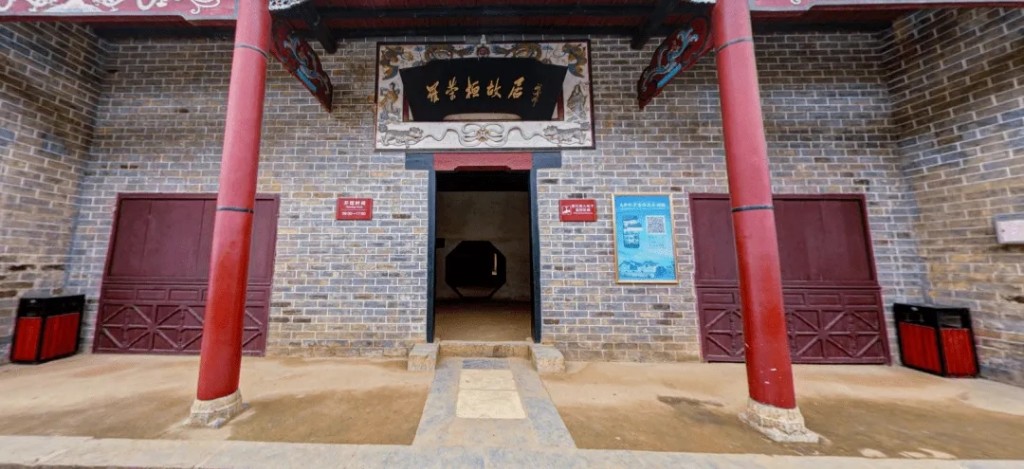
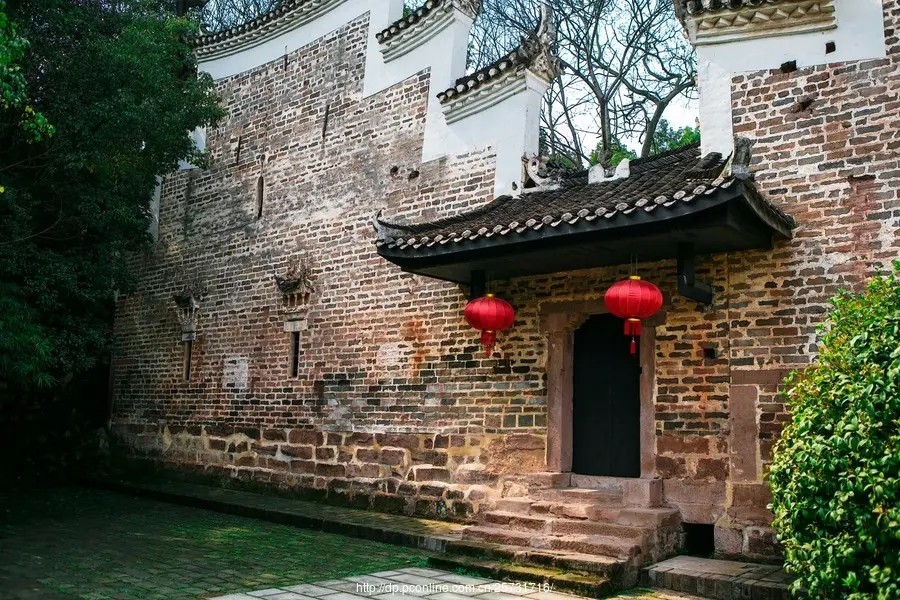
Wang Chuanshan, a philosopher in the late Ming and early Qing dynasties, is a synthesizer of China’s simple materialist thinking. His former residence, with grey walls and black tiles, is located at Xiangxi Thatched Cottage in Qulan Town, Hengyang County, Hengyang City, surrounded by a large area of lotus ponds. In front of the courtyard stand two tall and vigorous cypress trees.
After experiencing turmoil of dynasty change, Wang Chuanshan retired and wrote more than 400 volumes in this quaint residential building, leaving behind the treasures of traditional Chinese philosophy and Hunan culture.
He proposed the concept of “Humanistic Pragmatism”, advocated for the integration of knowledge and action, emphasized the academic research should serve the reality and sought to inherit and carry forward the traditional Chinese culture. His thoughts still have important contemporary value in various fields such as philosophy, history, and politics.
Wang Chuanshan’s Hometown Ecological and Cultural Tourism Area is built based on Xiangxi Thatched Cottage. With Chuanshan Cultural Park, Chuanshan Modern Agriculture Demonstration Park, Fuzhi Riverside Ecological Cultural Park, Shichuanshan Site and other scenic spots, it aims to create a Hunan cultural spiritual source and Chuanshan cultural memorial highland that integrates such functions as Chinese and foreign cultural exhibition and exchange, Chuanshan cultural research, training and study tour. It attracts a large number of tourists to come for tourism and study tours every year.
Hengyang City, as the hometown of Wang Chuanshan, has many precious historical sites. Fuzhi Lane, located in Yanfeng District, is one of them.
“Fuzhi Lane used to be an unnamed alley about 40 meters long and 2 meters wide. At its end stands the statue of Wang Chuanshan in Wangyaping,” said Long Bin, Party secretary of Yanjiang Community in Yanfeng District.
Wangyaping, located at the foot of Huiyan Peak, is the birthplace of Wang Chuanshan. Now, after it has been reconstructed, Fuzhi Lane appears with a new look. Relying on cultural landscapes such as the exhibition hall, statue, and cultural walls, they are endowed with practical ideological connotations, integrating Chuanshan culture into daily life.
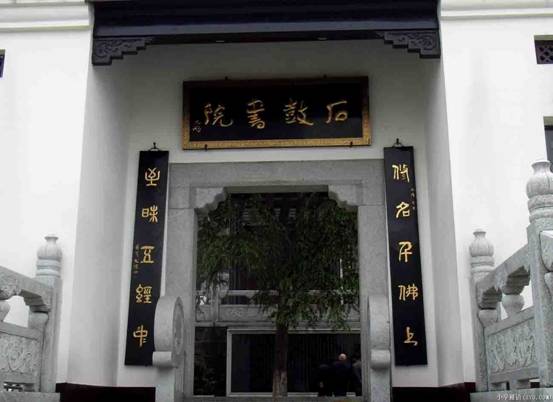
The Chuanshan Academy, located on Dongzhou Isle, is a popular destination for the study of Chuanshan culture and an important cultural context of Hunan.
Zhang Xianhe, the magistrate of Hengyang County, built the Chuanshan Academy at the Wang Family’s Ancestral Hall in Wangyaping in 1878.
The academy moved to Dongzhou Isle in 1885, and Wang Kaiyun, the master of Chinese culture, was appointed as the head of the academy. Many talented individuals such as Yang Du, Qi Baishi, and Zeng Xi also came from this school.
From then on, the Chuanshan Academy became the most prestigious academy in the late Qing Dynasty and continued to play an educational and teaching role until the end of the 20th century. Relying on the academy, Chuanshan Thought has become an important force in promoting modern Hunan culture to the historical stage.
In 2019, to commemorate the 400th anniversary of Wang Chuanshan’s birth, Hengyang City held a series of activities with the theme of “promoting Chuanshan spirit and enhancing cultural confidence”, including the Wang Chuanshan Thought International Academic Seminar and the first China (Hengyang) Chuanshan Academy Cultural Tourism Festival. Every year thereafter, there is an event to celebrate Wang Chuanshan’s birth, which has exerted extensive influence on the commemoration of Wang Chuanshan and the dissemination of Hunan culture.
Since 2020, the “Chuanshan Forum” for enterprise development in Hengyang City has been regularly held at Chuanshan Academy, building a platform for enterprise exchange and lectures.
Relying on the Chuanshan culture, schools in Hengyang City regularly organize study and practice activities. A large number of seminars on traditional Chinese culture, cultural lectures, and themed reading activities are held in Hengyang. Chuanshan culture has become a valuable brand of Hengyang to promote the development of its cultural and tourism industry.
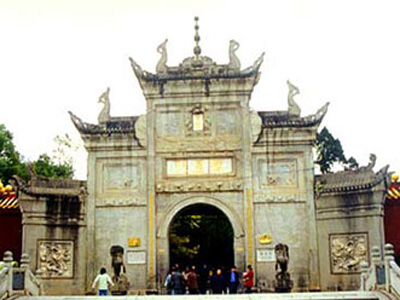
Beizhi Street was first built in the Tang Dynasty, and its name first appeared in the Song Dynasty. It’s a place where merchants, talents, academies and temples gather.
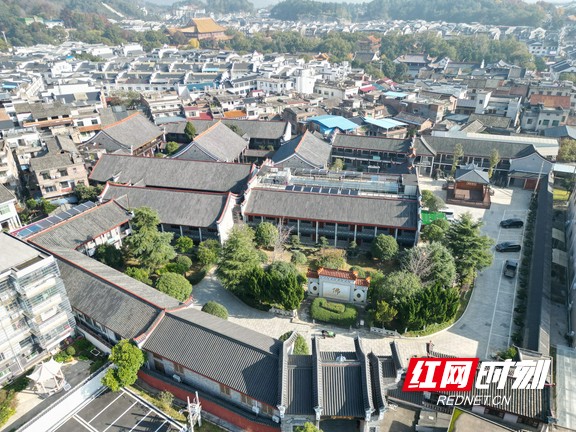
Beizhi Street is located in Yuemiao Community, Zhurong Subdistrict, Nanyue District, Hengyang City, on the west side of Nanyue Temple. It starts from Jiangjun Bridge in the east and ends at Jinsha Road in the west, with a total length of about 350 meters.
It is the western gateway of Nanyue Temple. Because of its rich historical and cultural resources, it was listed as a provincial historical and cultural block in 2021.
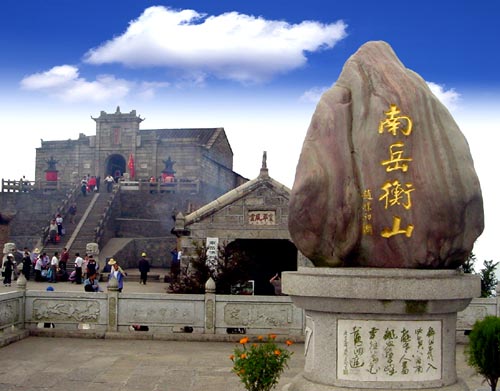
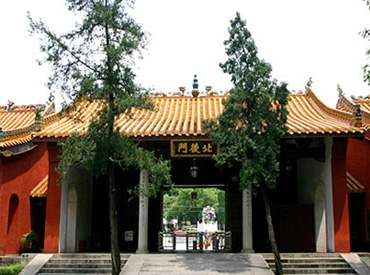
Beizhi Street is the only access to Mount Heng, with long-standing sacrificial and religious culture. Nanyue Temple, a national key cultural relic protection unit, is located here. It’s the most well-preserved historical street in Nanyue Ancient Town.
Nanyue Temple serves as a place for ancient emperors to worship the Fire God, Zhu Rong. The tradition of worship has continued to this day and has developed into a distinctive folk pilgrimage activity. The block has also become a place to receive pilgrims during the worship period. Folk sacrificial activities have also become a unique cultural landscape of Mount Heng.
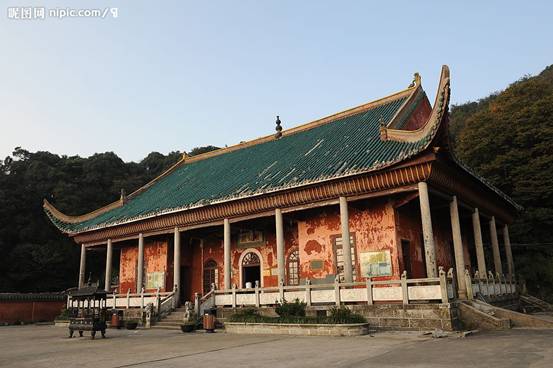
Dashan Temple, built in 568AD, is one of the five major jungles of Nanyue. The existing buildings were rebuilt in the 22nd year of the Emperor Guangxu’s reign of the Qing Dynasty, covering an area of 10,969 square meters.
Nanyue Ancient Town flourished due to the worship activity of Nanyue Temple. It’s because of the numerous temples on Beizhi Street that the traditional pilgrimage and sacrificial industry thrives.
After visiting the unique cultural landscapes of Beizhi Street, like Xiangshan Temple, Tian Han’s former residence and Dashan Temple, one can glimpse the thousand-year history of Nanyue.
Now, Nanyue District is also implementing the renovation project of Beizhi Street.


1.
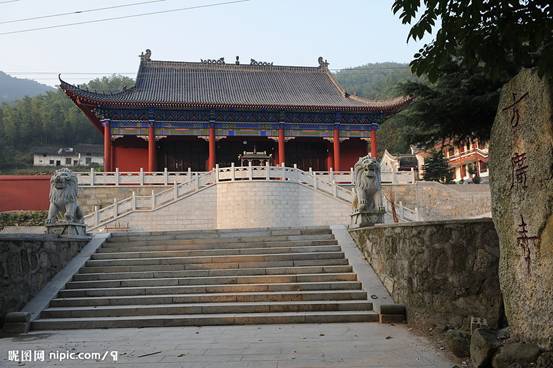
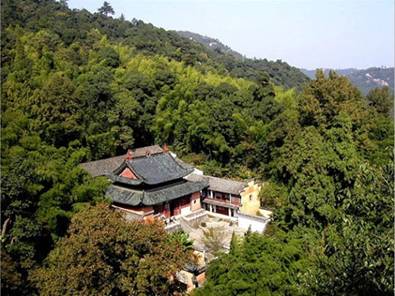
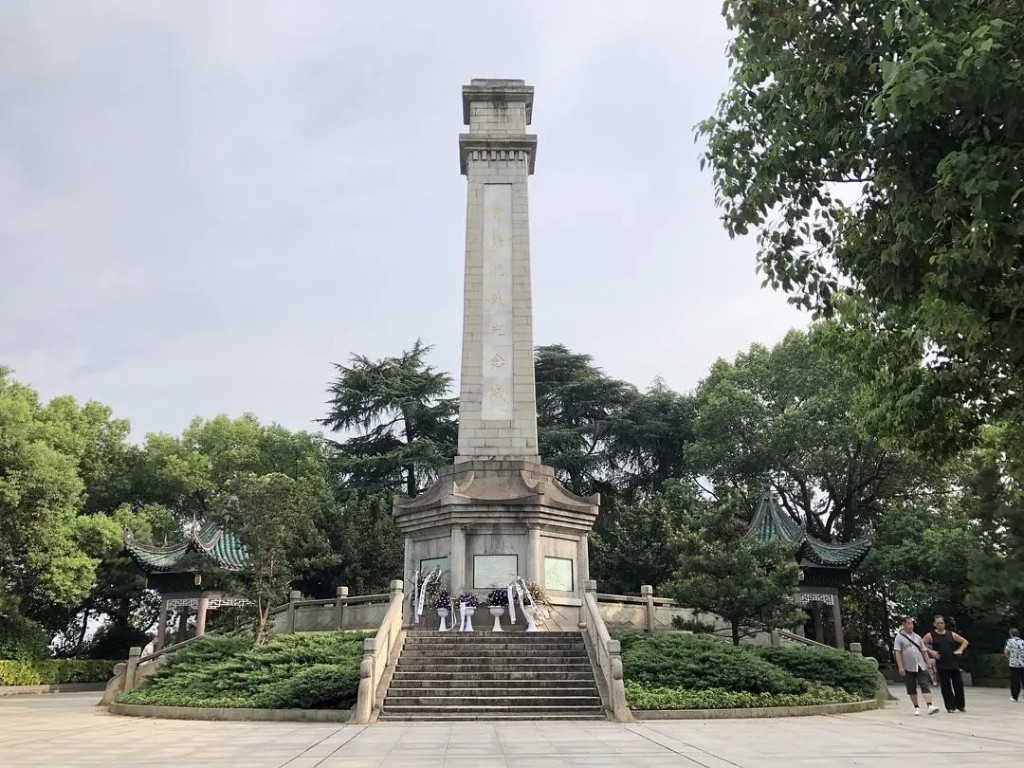
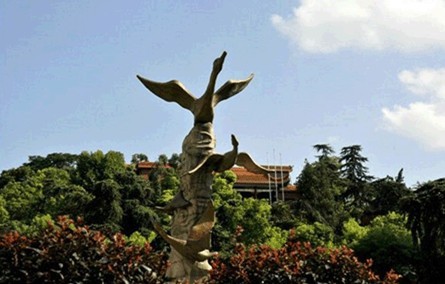
Huiyan Peak is the first of 72 Nanyue peaks. This famous Tang Dynasty poet Dufu wrote about the peak, saying that each year the swallow from the north will never go further south, and wouldn’t return home until the next spring. Entering the gate of the mountain, visitors will first see the half-hill pavilion. Further along, after turning across “the hundreds` ladders,” visitors will reach the mountain where the Yanfeng Temple is located. The temple is one of the four great temples of Zen Buddhism where a lot of eminent monks visit.
2. Zhu Hui Pagoda