-- Article list --
BEIJING, Sept. 14 (Xinhua) -- China firmly opposes official interactions and engagements of any form between the Taiwan authorities and countries having diplomatic ties with China, and does not allow interference in its internal affairs by any external forces, foreign ministry spokesperson Guo Jiakun said Monday.
Guo made the remarks at a regular press briefing in response to a media report that some Panamanian lawmakers recently set up a so-called "Panama-Taiwan parliamentary exchange group" and U.S. lawmakers attended the launch of the group via video link.
According to the report, Panamanian President Jose Raul Mulino reiterated that "foreign relations are directed by the Executive," and that parliamentarians' engagements with Taiwan "does not mean that the Executive endorses them."
There is but one China in the world and Taiwan is an inalienable part of China's territory, Guo said.
"We urge those few politicians to see the real picture. To cross the line on the Taiwan question will lead to serious consequences," he said.
The establishment of this so-called "parliamentary exchange group" seriously violates the one-China principle upheld by Panama, the spokesperson said.
"We noted the statement of the Panamanian government and hope that Panama will honor its commitment to the one-China principle with real actions to uphold the political foundation of China-Panama relations," Guo said.
China urges the United States to abide by the one-China principle and the three China-U.S. joint communiques, stop sending the wrong message to "Taiwan independence" separatist forces, and stop disrupting and sabotaging China-Panama relations, the spokesperson said.
BEIJING, Sept. 14 (Xinhua) -- China will take further steps to support child-rearing, including making childcare more accessible and affordable, to build a birth-friendly society and boost its birth rate, according to health officials on Monday.
Lei Haichao, head of the National Health Commission (NHC), told a press conference that continuous efforts will be made to promote the integrated development of services at kindergartens and nursery centers, and to support communities and employers in setting up childcare facilities.
The aim is to ensure that families can access childcare services close to their homes or workplaces and at relatively affordable prices, Lei explained.
The country will work to raise coverage of childcare services among young children to effectively reduce families' costs of having, raising and educating children, he said.
The country will also work to improve access to pediatric care at grassroots medical institutions, he noted.
By the end of this year, 1,000 more community-level medical and health institutions will be capable of offering pediatric care compared with 2025, Lei said, adding that by that time, over 95 percent of the country's township-level clinics and community health service centers are expected to have the capacity to provide relevant services.
More than 3,000 pediatricians have been sent from higher-level hospitals to grassroots medical institutions to strengthen pediatric services at the community level, Lei said.
China has developed a full-cycle maternity support system covering pre-pregnancy, pregnancy and childbirth, and child-rearing, with measures that include maternity allowances, childcare subsidies, medical insurance reimbursement and affordable childcare services, to ease the financial burden on families with children.
A total of 12,562 early pregnancy care clinics have been established, covering almost all counties, said Lei. Pregnant women can visit these clinics in the early stages of pregnancy for counseling and other services. If there is a risk of miscarriage, the clinics can help women assess the risk and take preventive measures.
In 2025, China's maternal mortality rate and infant mortality rate dropped to 13.4 per 100,000 live births and 3.8 per 1,000 live births, respectively, placing China among the leaders in these indicators among upper-middle- and high-income countries and countries with populations exceeding 100 million.
In terms of incentives, the country introduced a nationwide childcare subsidy program in 2025, offering an annual tax-free subsidy of 3,600 yuan (about 530 U.S. dollars) for each child under the age of three. It also began waiving childcare and education fees for the final year of kindergarten in the 2025 autumn semester.
As of August, more than 25 million infants and toddlers had received childcare subsidies for 2026, and roughly 24 million children enrolled in kindergartens had benefited from the fee-waiving policy.
Also, 260 million people are currently covered by maternity insurance, and many regions are expanding coverage to allow flexible workers to enroll in maternity insurance alongside employee medical insurance.
These policies are among China's broader efforts to build a birth-friendly society amid declining birth rates and an aging population.
Building a "birth-friendly society" has become a key focus of China's 15th Five-Year Plan (2026-2030). The outline sets out measures, including incentives to encourage births and efforts to reduce the costs of childbirth, childcare and education.
It says the goal is to stabilize the number of newborns and support long-term balanced population development.
"China's population currently stands at 1.405 billion, and the fundamentals of China as a populous country remain unchanged," said Lei.
Although the number of newborns has declined in recent years, it has remained at around 8 million, a number very few countries can match, he added.
BETTER HEALTH FOR ALL
Officials at the press conference also expounded on other key aspects of a national health plan for the 2026-2030 period unveiled in July, including making health services more accessible, inclusive, comprehensive and continuous.
China has built the world's largest healthcare service system, with more than 1.1 million medical and health institutions nationwide, while over 90 percent of residents can reach their nearest healthcare facility within 15 minutes, said Guo Yanhong, deputy head of the NHC.
However, the system still falls short of people's needs in some respects, Guo noted, urging a shift of efforts from ensuring access to improving quality, with faster progress in developing a high-quality, efficient and integrated healthcare service system.
For instance, community health centers and health centers in central townships should gradually expand their medical service capabilities, develop specialty departments suited to local needs, and improve their capacity to diagnose and treat common and frequently occurring diseases and provide health management services.
Efforts should also be made to further strengthen the workforce of rehabilitation and nursing professionals and step up the training of rehabilitation nurses and therapists, to have seven rehabilitation physicians and 16 rehabilitation therapists per 100,000 people across the country by the end of 2030, Guo said.
Lei noted that the demographic trend of the growing divergence in population changes across regions, with population development becoming increasingly uneven. With various factors considered, over the next five years, demand for healthcare services, particularly for healthcare professionals, is expected to continue growing in China, he said.
China will therefore expand the training of medical students via increased enrollment in high-quality undergraduate and master's programs, targeted training programs for medical students to serve in rural areas, and a special program for university graduates to work as rural doctors, the official said.
Through closer coordination between medical education and healthcare, China will continue to increase its number of medical professionals while making healthcare positions more attractive via improvements in remuneration and personnel incentive systems, so that medical workers are willing to build long-term, stable careers. Efforts will also be made to foster a social environment that respects medical professionals and values healthcare workers, said Lei.
BEIJING, Sept. 11 (Xinhua) -- Chinese Premier Li Qiang has signed a State Council decree promulgating regulations to strengthen the management of local market regulatory authorities nationwide. The regulations will help them better perform their duties.
The 19-article regulations, which call for streamlining local market regulatory mechanisms and optimizing the staffing of local market regulatory authorities, will take effect on Nov. 1.
According to the regulations, such authorities' duties include registering self-employed individuals within their respective administrative areas, conducting routine oversight of food production and sales, handling market complaints, and cracking down on irregularities.
Highlighting the need to improve services and foster a favorable business environment, the regulations stipulate that local market regulatory authorities must conduct regulatory activities in accordance with the law and make every effort to minimize disruption to market entities' normal production and operations.
Authorities should also strengthen communication with market entities and consumers, ensure transparency in their work, and provide standardized, convenient and efficient administrative services, according to the regulations.
Safeguarding fair market competition has remained high on China's development agenda, as the country places greater emphasis on building a unified national market and fostering a favorable business environment.
To this end, the outline of China's 15th Five-Year Plan (2026-2030) calls for greater efforts to improve market regulatory rules, unify standards and enhance regulatory capabilities, thereby fostering a market order characterized by high quality, reasonable prices and healthy competition.
BEIJING, Sept. 12 (Xinhua) -- Carlos Alberto Corro Martin used to work for Ebro, an iconic brand of Spain's auto sector that had once faded into memory after its factories fell silent and jobs disappeared.
In 2024, with Chinese automaker Chery partnering with Spanish automaker EV Motors, the legendary brand was revived. Electric models rolled off production lines, creating some 1,000 local jobs.
"I'm very happy to see it return to the market," said Corro Martin, now a Chery dealer. "I believe the cooperation can open even broader prospects for the Spanish auto industry."
Supported by battery technology advantages, intelligent systems and supply-chain efficiency, Chinese new energy vehicle (NEV) brands are not just winning the hearts of global consumers, but also generating greater spillovers beyond the market expansion -- creating local jobs, supporting industrialization, and making the green transition more affordable and achievable.
In the first eight months, China's total auto exports reached 7.153 million units, up 66.7 percent, including 3.435 million NEVs, a 1.2-fold increase, according to the China Association of Automobile Manufacturers.
Rather than simply shipping cars, many Chinese automakers are building manufacturing and research facilities overseas. In South Africa, Chery inaugurated a manufacturing plant in Rosslyn in July, retaining all 692 employees, with expectations of creating nearly 3,000 jobs across the supply chain.
"Chery's investment will pave the way for technology transfer, automation, digitalization and advanced manufacturing systems," said South African Deputy President Paul Mashatile, adding that these developments will strengthen South Africa's industrial capacity.
In Brazil, Chinese automaker BYD is embedding R&D, production, sales, services and supply chains into the local economy. Its plant in the state of Bahia employed 5,500 direct workers as of July this year, 86 percent of them from Bahia. Once fully operational, it is expected to support 20,000 direct and indirect jobs, with the company aiming for local suppliers to account for over 50 percent of components by 2027.
The expanding footprints of overseas investment came along with the increasing popularity of Chinese NEVs across diverse markets. In Europe, new-car registrations of Chinese brands have for two consecutive months surpassed those of Japanese automakers. In Southeast Asia, consumers in Thailand and Singapore have queued for popular Chinese NEV models, while in the Middle East, Chinese brands have continued to gain traction even amid regional instability.
Chinese automakers are also tailoring vehicles to local demands. Chery, now present in over 130 countries and regions, optimized acceleration and hill-climbing for South America's mountains and strengthened interior sealing for the Middle East's deserts.
Chinese NEV brands are especially gaining market share in the Middle East, Africa, Southeast Asia and other parts of the Global South, according to Ron Zheng, senior partner of Roland Berger and Asia head of automotive practice.
"For consumers in these emerging markets, Chinese NEVs are not only affordable but also offer superior features," Zheng said.
In Malaysia, Zeekr, the premium NEV brand under Chinese automaker Geely, entered the market in December 2024. Within months, Zeekr vehicles were more visible on Malaysian roads.
"Previously, Malaysians may have associated Chinese cars mainly with affordability," said Zarul Fadzly, sales manager for Zeekr's KLCC and Johor Bahru outlets. "But with the entry of Zeekr and other Chinese brands, they have experienced firsthand the safety, performance and quality of the vehicles. Their perception has changed. Now they are more inclined to pursue the performance and quality of Chinese brands."
On the broader impact of Chinese brands entering Malaysia, Fadzly added: "They bring more advanced technology, so other brands will follow suit and compete. Eventually the biggest beneficiaries are consumers -- everyone is competing to improve technology."
Beyond cost-effectiveness and technological advantages, Chinese NEVs are also accelerating the global energy transition. The International Energy Agency (IEA) estimated that the global electric vehicle fleet displaced about 1.7 million barrels of oil demand a day in 2025, with China accounting for roughly 1 million barrels a day.
The increasing cost-competitiveness of electric vehicles, along with tighter standards to cut carbon emissions, is poised to drive market growth, pushing up the share of electric vehicles in global car sales to around 50 percent in 2035 from 25 percent in 2025, according to an IEA report.
"China's NEV industry offers the world an alternative to the Western high-cost green transition path, making green transition no longer a privilege of developed countries, but an affordable development opportunity for all nations," said Zhu Yifang, deputy chief engineer at the China Automotive Strategy and Policy Research Center.
Still, Chinese automakers' overseas expansion is currently in its early stages, far from reaching the globalization level of traditional automotive powerhouses, Zheng from Roland Berger said.
Roland Berger forecasts that by 2030, overseas sales of Chinese passenger car brands will grow to about 10 million units, with local manufacturing accounting for more than 50 percent.
With that growth on the horizon, China stresses that its aim is shared progress, not dominance. Wan Gang, honorary president of the China Association for Science and Technology and a former minister of science and technology, said China is building its automotive strength to share its achievements with the global community.
"We strive to make the global auto industry strong as a whole and to solve the common problems we face -- oil, emissions, affordable mobility for ordinary people, climate and the environment, among others," he said.

BEIJING, Sept. 12 (Xinhua) -- With just a tap on a screen, Ms. Wang watched herself instantly transformed from a modern fashionista into Mu Guiying, her favorite Peking Opera character from centuries ago. This AI-powered experience was presented by the Jingju Theater Company of Beijing at the ongoing 2026 China International Fair for Trade in Services (CIFTIS).
Wang, a longtime Peking Opera fan and a first-time CIFTIS visitor from Beijing, remembered how getting an opera costume photo or video once meant tracking down a specialized studio in the city. It was a process that was both expensive and time-consuming. "Now, with AI technology showcased at the services trade fair, everyone can easily realize their Peking Opera dream."
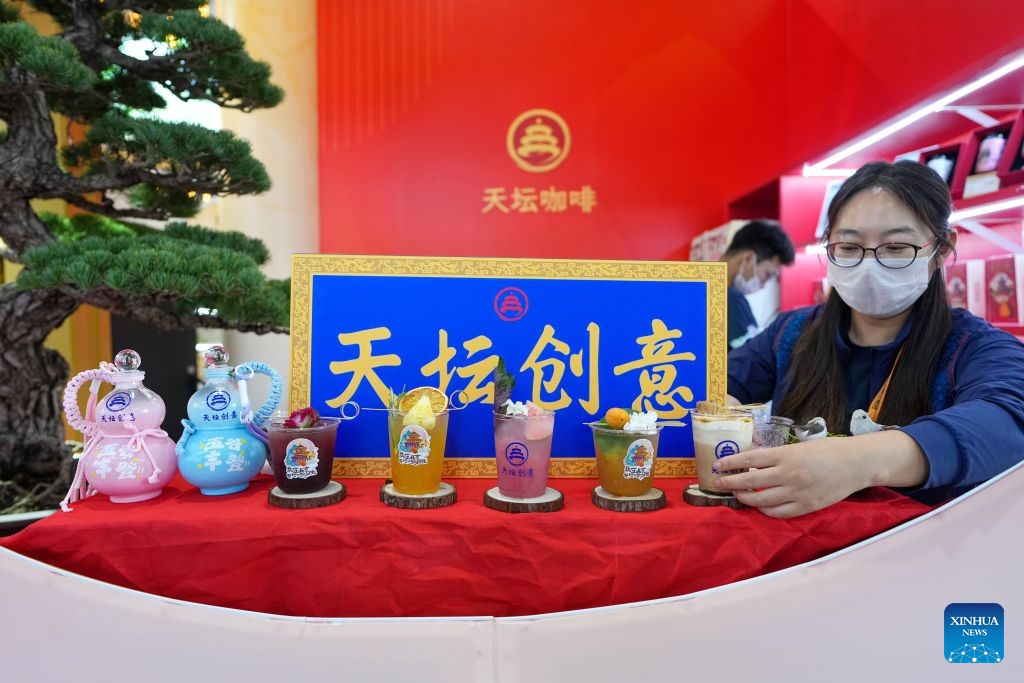
Beyond this immersive experience, the 2026 CIFTIS, running from Sept. 9 to 13 at Shougang Park in Beijing, has brought together 413 exhibitors at the themed exhibition area for culture and tourism services, showcasing emerging models of cultural and tourism integration.
But AI's reach goes beyond the culture and tourism pavilion. Throughout the fair, humanoid robots offer bilingual explanations, brain-computer interfaces create digital paintings, and AI 360-degree photo booths generate blockbuster-style videos in real time -- all pointing to a broader trend: China's consumption is upgrading from goods to experiences.
SERVICE CONSUMPTION ON THE RISE
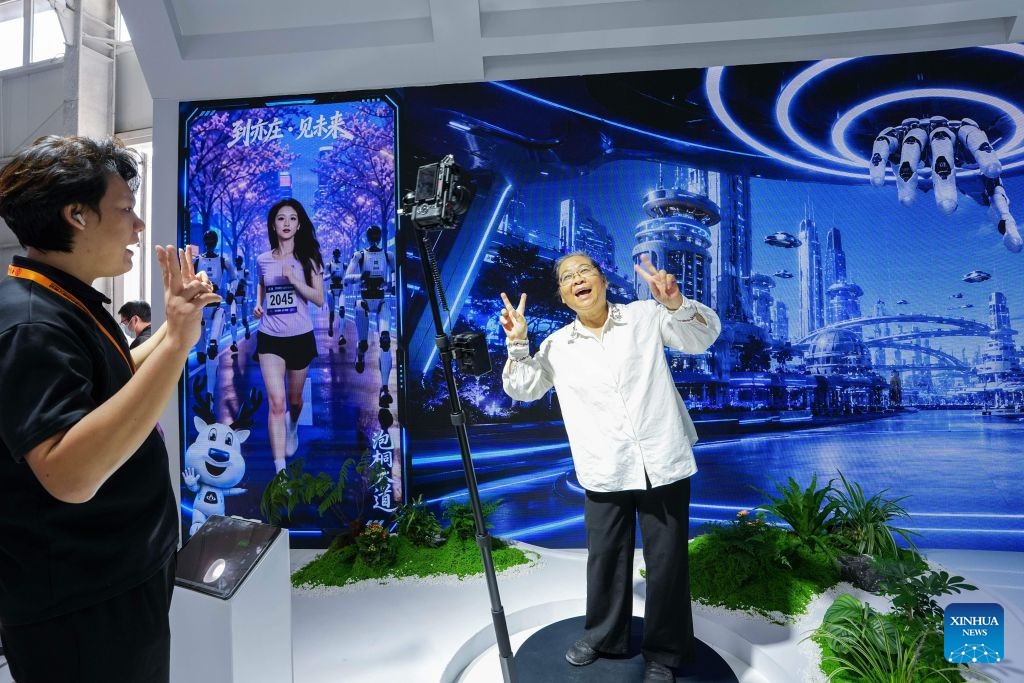
For the first time, this year's CIFTIS set up a "China Services" exhibition zone, showcasing more than 140 cases covering 12 major areas of services trade. Nearly 40 percent of the cases feature core technologies such as AI, large models and intelligent agents.
The "China Services" pavilion also shines a light on new business models and scenarios in the world of services trade. Exhibits range from age-friendly solutions designed to bridge the digital divide, to smart childcare platforms that provide integrated health management from birth through preschool.
Behind the bustling booths lies huge growth momentum and potential for China's services sector, said Wang Min, president of the China General Chamber of Commerce, at a forum during the fair.
Wang noted that people's consumption focus has been shifting from being dominated by goods to a balanced emphasis on both goods and services, with digital technologies spawning new business forms such as emotional consumption, immersive experiences and cross-border services consumption.
Official statistics echo the sentiments of many speakers like Wang at the CIFTIS. In the first seven months of this year, retail sales of services rose 5 percent year on year, outpacing growth in retail sales of consumer goods by 3.9 percentage points.
The growth came as China's per capita spending on services reached 13,602 yuan (about 2,009 U.S. dollars) in 2025, accounting for 46.1 percent of total per capita consumption expenditure.
With the steady growth of people's disposable income and improvements in the domestic consumption environment, Chinese consumers' spending on services is expected to further grow in the 15th Five-Year Plan period (2026-2030), analysts noted.
According to a government plan issued by the State Council in April, the country aims to elevate the total scale of the services industry to over 100 trillion yuan by 2030.
To unlock this potential, authorities have rolled out a series of policies and initiatives. In July, China released its first five-year plan dedicated exclusively to expanding consumption, further positioning service consumption as a priority.
The plan calls for steadily raising the share of per capita service consumption expenditure, with targeted support for elderly care, childcare, culture and tourism, health and sports services.
For Li Jun, director of the Chinese Academy of International Trade and Economic Cooperation under the Ministry of Commerce, the services sector's leap toward the 100-trillion-yuan mark represents not simple expansion, but a systemic upgrade in structure and growth drivers.
"The popularity of the culture, tourism, education and sports exhibition areas at CIFTIS is a vivid illustration of this trend," Li said.
CHINESE SERVICES OFFER GLOBAL OPPORTUNITIES
At the sports services exhibition area, "China Hawk Eye," a Chinese-developed sports system, became a popular attraction among professional fair visitors and sports fans.
With multiple high-speed cameras capturing ball trajectories from different angles and algorithms reconstructing disputed moments into visualized 3D images, the system now serves multiple international professional events.
The system exemplifies how China has posted rapid growth in services trade. Latest official data showed that in the first seven months of this year, the country's services trade totaled nearly 4.45 trillion yuan, up 8.3 percent year on year.
In particular, knowledge-intensive services increased 6.6 percent to 1.96 trillion yuan, accounting for 44.1 percent of total services trade.
In a video address to the Global Trade in Services Summit, a landmark event during CIFTIS, World Intellectual Property Organization Director General Daren Tang hailed China's rapid growth in services trade, saying that the country's strong exports of knowledge-intensive services are supported by the intellectual property and innovation ecosystem.

A report released at CIFTIS on Wednesday also highlighted the growing strength of China's services brands. China ranks second globally with 21 brands in the world's 100 most valuable trade in services brands, with a combined worth of 876.8 billion U.S. dollars, according to the report, "Trade in Services 100 2026," by brand valuation consultancy Brand Finance.
Alex Haigh, managing director of Brand Finance Asia Pacific, said by leveraging the synergies of digital platforms, communications networks and large financial institutions, Chinese trade in services brands are rising rapidly, reflecting a new trend of extending "Made in China" to "China services" and "China brands."
China's efforts to actively promote services trade and open up its services sector wider are creating more opportunities for countries and businesses around the world, experts said.
Noting that international services trade facilitation still faces barriers, Zhao Ping, president of the Academy of the China Council for the Promotion of International Trade, called for further leveraging the role of CIFTIS to promote trade and investment liberalization and facilitation.
BEIJING, Sept. 11 (Xinhua) -- China's Ministry of Commerce on Friday voiced "grave concerns" and "firm opposition" over a U.S. Central Intelligence Agency (CIA) official's remarks on taking Chinese enterprises as allegedly legitimate targets for espionage, urging an immediate cessation of such activities.
"The U.S. side's brazen claims that Chinese enterprises are legitimate targets for espionage have thoroughly ripped off the fig leaf behind which intelligence agencies covertly steal secrets, exposing the bandit logic of hegemony in broad daylight," a ministry spokesperson said.
China solemnly urges the U.S. side to immediately cease all espionage activities against China, including against Chinese enterprises, and to stop all actions that undermine China's sovereignty, security and development interests, said the spokesperson.
China possesses "the firm will and ample means" to resolutely take necessary measures in accordance with laws and regulations, such as the Counter-Espionage Law, to severely punish illegal and criminal acts and firmly safeguard the legitimate and lawful rights and interests of Chinese enterprises, according to the spokesperson.
The comments came after CIA Deputy Director Michael Ellis recently stated that the United States is engaging in a broader range of espionage against China including Chinese enterprises, claiming that Chinese firms in areas such as artificial intelligence, semiconductors and biotechnology are legitimate targets of such activities.
The U.S. moves to overstretch the concept of national security, blur the boundaries between competition and security, and even frame economic competition as a so-called "threat" are essentially driven by the zero-sum, Cold War mentality, the spokesperson said.
"U.S. intelligence agencies' acts to interfere with normal economic competition severely damage the expectations of businesses worldwide and sabotage the global market environment for fair competition," the spokesperson stated.
While the U.S. side has long accused its trading partners of harming its interests through intelligence theft, U.S. intelligence agencies have engaged in large-scale cyber espionage and intelligence theft around the world. Now, they flagrantly violate international trade rules and intellectual property protection norms by targeting economic competitors through espionage activities, the spokesperson noted, criticizing the U.S. side for applying double standards.
Refuting U.S. claims that China poses military and economic threats as "a bandit's rhetoric that inverts black and white" and "malicious slander," the spokesperson called the U.S. acts as suppression and smearing against China.
"China's technological breakthroughs in fields such as artificial intelligence, semiconductors, and biotechnology are the fruits of the dedicated efforts of Chinese researchers and enterprises, by no means prey to be arbitrarily coveted by U.S. intelligence agencies," the spokesperson said.
Noting U.S. anxiety over China's technological progress, the spokesperson stated that espionage and hegemonic suppression cannot halt the innovative strides of Chinese enterprises, nor can they win genuine technological leadership.
BEIJING, Sept. 11 (Xinhua) -- Relevant parties need to earnestly respect China's sovereignty and the rule of law in Hong Kong, Chinese foreign ministry spokesperson Mao Ning said on Friday.
Mao made the remarks in response to a related query noting that individual politicians from the United States and other Western countries have repeatedly voiced so-called "concern" over the "Hong Kong Alliance" case, on which a Hong Kong court handed down the sentence on Friday.
Mao said China has made clear its just position on the "Hong Kong Alliance" case, and the rule of law is upheld in Hong Kong. The central government firmly supports the Hong Kong Special Administrative Region (SAR) in lawfully safeguarding national security and fighting activities endangering national security, she added.
Mao said that relevant parties need to stop making irresponsible remarks on the SAR's handling of judicial cases, and stop interfering in Hong Kong's judicial affairs, which are China's internal affairs, in any form.
BEIJING, Sept. 11 (Xinhua) -- Chinese Premier Li Qiang has signed a State Council decree promulgating regulations to strengthen the management of local market regulatory authorities nationwide. The regulations will help them better perform their duties.
The 19-article regulations, which call for streamlining local market regulatory mechanisms and optimizing the staffing of local market regulatory authorities, will take effect on Nov. 1.
According to the regulations, such authorities' duties include registering self-employed individuals within their respective administrative areas, conducting routine oversight of food production and sales, handling market complaints, and cracking down on irregularities.
Highlighting the need to improve services and foster a favorable business environment, the regulations stipulate that local market regulatory authorities must conduct regulatory activities in accordance with the law and make every effort to minimize disruption to market entities' normal production and operations.
Authorities should also strengthen communication with market entities and consumers, ensure transparency in their work, and provide standardized, convenient and efficient administrative services, according to the regulations.
Safeguarding fair market competition has remained high on China's development agenda, as the country places greater emphasis on building a unified national market and fostering a favorable business environment.
To this end, the outline of China's 15th Five-Year Plan (2026-2030) calls for greater efforts to improve market regulatory rules, unify standards and enhance regulatory capabilities, thereby fostering a market order characterized by high quality, reasonable prices and healthy competition.
BEIJING, Sept. 10 (Xinhua) -- Chinese President Xi Jinping has urged resolute efforts to prevent major accidents after a foreign cargo ship caught fire in east China's Shandong Province.
The cargo ship caught fire on Thursday morning while undergoing repairs at a port in the city of Qingdao, Shandong, causing major casualties.
Xi, also general secretary of the Communist Party of China (CPC) Central Committee and chairman of the Central Military Commission, called for intensified efforts to search and rescue people who are missing and provide support for those affected.
In his instructions, he demanded efforts to promptly determine the cause of the accident and hold those responsible accountable.
Xi also required local governments and related departments to draw lessons from the accident, thoroughly identify and address fire hazards, ensure the effective implementation of preventive measures, resolutely prevent major accidents, and safeguard people's lives and property.
Premier Li Qiang called for immediate search and rescue operations for the trapped people, as well as full efforts to treat the injured, properly handle follow-up work, and guard against secondary disasters.
Li, also a member of the Standing Committee of the Political Bureau of the CPC Central Committee, urged the Work Safety Commission under the State Council to thoroughly identify workplace safety risks and take concrete steps to prevent major accidents.
The Ministry of Emergency Management has dispatched a work team to the site to guide rescue efforts, while the provincial authorities of Shandong have mobilized resources to carry out on-site response efforts.
BEIJING, Sept. 10 (Xinhua) -- Chinese President Xi Jinping will attend the 18th BRICS Summit in New Delhi from Sept. 12 to 13, a Chinese foreign ministry spokesperson announced on Thursday.
Over the past two decades, BRICS has grown into a major platform for cooperation among emerging markets and developing countries, with an ever-expanding role in global affairs.
China, as a staunch supporter and active participant in BRICS, has consistently upheld the BRICS Spirit of openness, inclusiveness and win-win cooperation, working with its partners to turn shared aspirations into practical cooperation and advance common development.
At the upcoming summit, Xi will join other leaders in charting a new course for the high-quality development of greater BRICS cooperation, pooling the collective strength of the Global South and contributing stability and positive momentum to a world undergoing profound changes.
BUILDING STRONGER BRICS
In March 2013, Xi attended the fifth BRICS Summit in Durban, South Africa. It was his first international summit as Chinese president.
"We, the five BRICS countries, come from four different continents. The grand goal of fostering partnership for common development and the noble cause of promoting democracy in international relations and advancing peace and development of mankind have brought us together," he said in a keynote speech at the summit.
Xi called on BRICS countries to move toward the goal of integrated markets, multi-tiered financial network, connectivity by land, air and sea, and greater cultural exchanges.
Two years later, at the seventh BRICS Summit held in Ufa, Russia, Xi called for building a partnership for world peace, common development, inter-civilization dialogue and more effective global economic governance.
When China was the BRICS chair back in 2017, Xi proposed the "BRICS Plus" cooperation model at the ninth BRICS Summit in Xiamen, calling for getting more emerging markets and developing countries involved in the group's concerted endeavors for cooperation and mutual benefits.
In October 2024, the 16th BRICS Summit in Kazan, Russia, marked the first BRICS leaders' offline summit since the group's expansion. "It is for our shared pursuit and for the overarching trend of peace and development that we BRICS countries have come together," Xi said in a speech at the summit.
Building on this vision, Xi proposed building a BRICS committed to peace, innovation, green development, justice and closer people-to-people exchanges.
Xi has advanced BRICS cooperation through "highly constructive proposals," bringing more Global South countries that share a vision of a multipolar world into dialogue and practical cooperation, thereby strengthening the appeal and influence of BRICS, said Alexander Gusev, director of Russia's Institute for Strategic Planning and Forecasting.
Today, the BRICS has expanded to 11 member countries and 10 partner countries, becoming a force for advancing a multipolar world and greater democracy in international relations.
BRICS countries account for nearly half of the world's population, around 30 percent of the global economy and one-fifth of global trade.
"China seeks the greatest common ground for cooperation through equal dialogue, builds consensus around shared interests, and continuously strengthens the cohesion and capacity for action of BRICS cooperation," said Mohamed Hussein, first deputy head of Egypt's State Information Service.
BRICS is a platform with great potential while strengths and differences among its members are an asset, said Marcos Cordeiro Pires, a professor of political and economic sciences at the Sao Paulo State University.
In a world undergoing profound changes, the BRICS is amplifying the voices of Global South countries in demands for better governance, more security and the right to development, said Pires.
BRICS IN ACTION
At Xiamen Port in southeast China's Fujian Province, a major hub for international shipping, the BRICS Go-Global Express officially kicked off in late July, providing a new bridge for Chinese companies to expand into BRICS markets abroad.
The inaugural event focused on Nigeria, which officially became a BRICS partner country last year. Hassan Mohammed, commissioner of the Trade Division at the Consulate General of Nigeria in Shanghai, said the BRICS Plus framework had created more platforms for exchanges and brought the two countries closer together.
At the 12th BRICS Summit in November 2020, Xi announced China's plan to set up a BRICS Partnership on New Industrial Revolution innovation center in Xiamen.
Since its establishment, the center has facilitated more than 100 cooperation projects, with a total investment of over 62 billion yuan (9.24 billion U.S. dollars). It has also launched a scholarship for emerging industries, helping BRICS countries cultivate talent across a range of fields, including industry and communications.
Delivering results has been central to the BRICS agenda. As Xi once put it, "BRICS is not a talking shop, but a task force that gets things done."
By the end of 2025, the New Development Bank, whose establishment Xi personally championed, had approved 139 projects with total financing of about 43 billion dollars, bringing tangible benefits to people in Global South countries through green energy, transport infrastructure and access to clean drinking water.
In 2021, Xi proposed the Global Development Initiative at the general debate of the 76th session of the United Nations General Assembly. Five years on, the initiative is complementing and reinforcing the BRICS cooperation mechanism, bringing development further to the forefront of the international agenda.
China has since launched initiatives to expand BRICS cooperation in areas including deep-sea resources, the digital economy, green industries and clean energy. It has also proposed new programs in artificial intelligence and digital education.
BRICS and the Global Development Initiative have increasingly complemented and reinforced each other, said Siti Mutiah Setiawati, a lecturer at Gadjah Mada University in Indonesia.
Together, they have brought greater attention to development on the international agenda, and helped translate shared aspirations into practical outcomes for emerging markets and developing countries, she said.
ADVANCING GOVERNANCE REFORM
In September last year, Xi proposed the Global Governance Initiative (GGI) at the "Shanghai Cooperation Organization Plus" Meeting in the northern Chinese port city of Tianjin.
Seven days later, when addressing a virtual BRICS Summit, Xi said the GGI "is aimed at galvanizing joint global action for a more just and equitable global governance system."
BRICS countries are increasingly finding common ground on issues ranging from development and a more multipolar world to global governance reform. At the 2024 BRICS Summit, Xi called for building the group into "a vanguard for advancing global governance reform."
The GGI provides an important framework for BRICS to advance global governance reform, helping strengthen the UN-centered international system and make global governance more just, equitable and representative, said B. R. Deepak, professor of Chinese and China Studies at the Centre of Chinese and Southeast Asian Studies, Jawaharlal Nehru University.
This vision has also been reflected in Xi's calls for greater cooperation among BRICS countries. At the "BRICS Plus" leaders' dialogue in Kazan, Russia, Xi called on BRICS countries to become the main driving force for common development, play an active and leading role in the global economic governance reform, and make development the core of international economic and trade agenda.
At the BRICS Business Forum in Johannesburg, South Africa, in 2018, Xi also called on BRICS countries to firmly support the multilateral trading regime, advance global economic governance reform and increase the representation and voice of emerging markets and developing countries.
Concrete actions have accompanied these calls on reforming major international financial institutions. BRICS countries have put forward clear positions on reforms of the International Monetary Fund (IMF) quota system and the World Bank's shareholding structure.
The Rio de Janeiro Declaration, adopted at the 17th BRICS Summit held last year in Rio de Janeiro, Brazil, stressed that further quota realignment in the IMF should increase the shares of emerging markets and developing economies.
As for the World Bank, the declaration called for "increased voice and representation of developing countries, underpinned by a shareholding realignment that corrects their historic underrepresentation."
"The greatest contribution of BRICS over the last two decades has been its role in changing the conversation about global political governance," said Ronney Ncwadi, professor and director of the School of Economics, Development and Tourism at Nelson Mandela University.
"BRICS has demonstrated that emerging and developing economies are no longer just recipients of global rules, but are increasingly participating in shaping those rules," said Ncwadi.
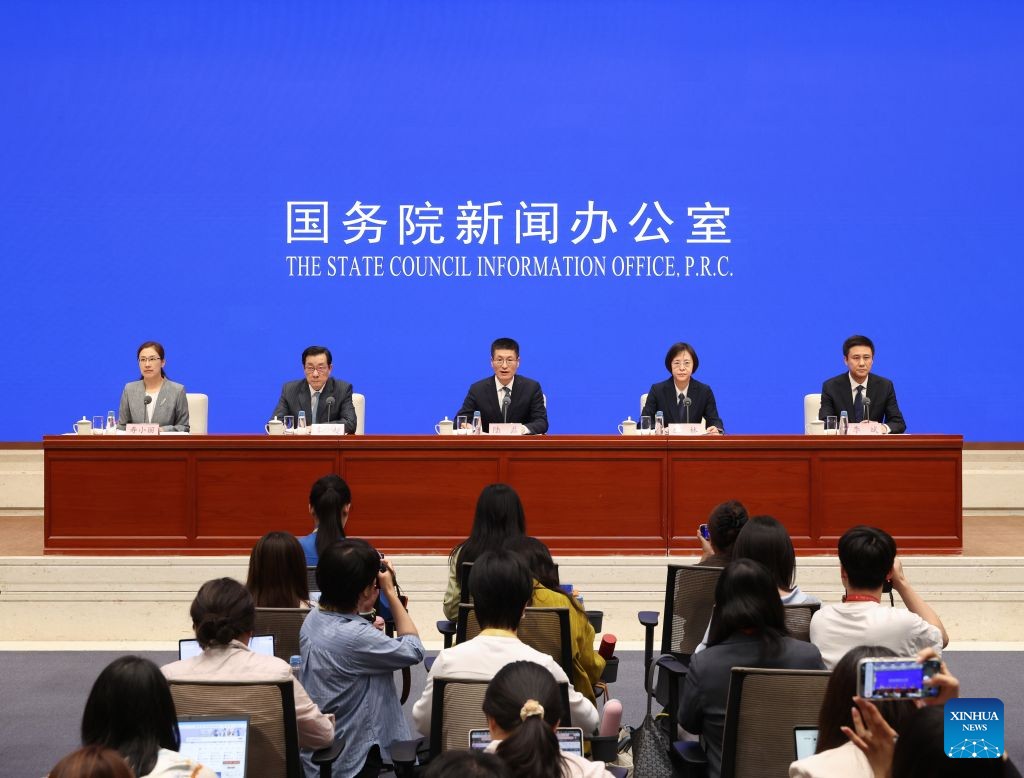
BEIJING, Sept. 10 (Xinhua) -- China has issued a plan to strengthen its financial sector during 2026-2030, focusing on preventing financial risks, strengthening financial supervision, and promoting high-quality development.
The office of the Central Financial Commission formulated the plan in coordination with relevant financial authorities, said Lu Lei, deputy governor of the People's Bank of China, at a press conference on Thursday.
By 2030, China aims to put in place the overall framework of a modern financial system with Chinese characteristics, ensure that financial regulation policies are well coordinated and effective, optimize the structure of the financial system, ensure rigorous and effective financial supervision, and make financial risk prevention and control targeted and efficient, according to the plan.
Other goals for 2030 include continued improvements in the quality and effectiveness of financial support for economic and social development, a comprehensive legal framework for the financial sector, steady expansion of high-standard financial opening up, and continued increases in the sector's international influence and competitiveness.
The plan aims to largely establish a highly adaptive, competitive, and inclusive modern financial system with Chinese characteristics by 2035, laying a solid foundation for further boosting China's strength in finance.
Key tasks outlined in the plan include improving the financial macro-regulation system, strengthening financial supervision, effectively preventing and defusing financial risks, serving the real economy more proactively and effectively, promoting high-quality development of the financial sector, and expanding high-standard financial opening up.
BEIJING, Sept. 9 (Xinhua) -- The 2026 China International Fair for Trade in Services (CIFTIS) opened Wednesday in Beijing, as China steps up efforts to expand opening-up in services trade at the outset of the 15th Five-Year Plan period (2026-2030).
Running through Sept. 13 at Shougang Park, a former industrial site and venue for the Beijing 2022 Winter Olympics, the fair has drawn participants from 90 countries, regions and international organizations, with over 1,800 companies exhibiting on-site. Among them are 473 Fortune Global 500 firms and other industry leaders, including Honeywell, Johnson & Johnson and Siemens.
Themed "Global Services, Shared Prosperity," this year's CIFTIS features a Global Trade in Services Summit, co-hosted by China's Ministry of Commerce and the Beijing municipal government, together with the United Nations Conference on Trade and Development and the World Intellectual Property Organization (WIPO). A series of forums and business matchmaking activities will also be held during the fair.
During the summit, Zimbabwean Vice President Constantino Chiwenga said the CIFTIS is expected to create many investment opportunities across conferencing, exhibition, infrastructure, and digital services, adding that it will help Zimbabwe identify opportunities for trade in services, build export capacity, and attract credible partners across technology, finance, tourism, education and health care.
Alexander Poulev, deputy prime minister and minister of Economy, Investment and Industry of Bulgaria, said at the summit that trade in services is an important pillar of the China-Bulgarian relationship. "We want to see more Bulgarian products reaching the Chinese market and more Bulgarian companies building long-term partnerships with Chinese businesses," he said.
More than 100 new products and services will make their debut at the fair, covering fields such as information and communications, fintech, and digital and intelligent healthcare.
Another highlight is a new overseas expansion services roadshow area, which offers Chinese companies one-stop professional support to enter foreign markets and expand the global footprint of Chinese services.
"Going global today is no longer just about competitive pricing, but also about adapting to different rules, managing compliance and navigating risks," said Li Yao from KPMG China, adding that the new service area comes at an opportune time.
The core exhibition area also debuts a showcase of more than 140 innovation cases spanning all 12 categories of services trade, including artificial intelligence, large language models, and intelligent agents, offering a glimpse of where China's services sector is headed.
Advancing trade in services and promoting opening up and cooperation in the services sector is not only China's choice but also a global necessity, Chinese Vice Premier Ding Xuexiang said in a keynote speech at the summit. He noted China's efforts in actively promoting trade in services and opening up its services sector wider, which are creating more opportunities for countries and businesses around the world.
The fair itself offered a glimpse of that openness in action. Norway, this year's guest country of honor, presented a pavilion featuring a wide range of exhibits, including health and nutrition, green transition, and design and lifestyle.
Henning Kristoffersen, commercial counselor of the Norwegian Embassy in Beijing, said the opportunity allows Norway to show a much broader picture of its commercial relationship with China. "What we want to do at CIFTIS is to broaden it further into services, technology, culture and knowledge-based cooperation," he said. China is Norway's largest trading partner in Asia, with around 160 Norwegian companies operating in China, he added.
Klaus Hoseth, CEO of Hoseth Technology, a Norwegian fish-processing technology firm, is attending CIFTIS for the first time and looking to cooperate with Chinese robotics and AI companies. "We hope to improve automation and efficiency in our production line, and leverage Chinese open-source AI technologies to make factory systems smarter," he said. He also noted the strong potential for cooperation between China's vast market and Norway's marine food industry.
The interest shown by international participants comes as China's services trade continues to grow.
China has posted rapid growth in services trade, with strong exports of knowledge-intensive services supported by the country's IP and innovation ecosystem, said WIPO Director General Daren Tang in his video address to the summit.
Latest official data showed that in the first seven months of 2026, China's services trade totaled nearly 4.45 trillion yuan (about 656.6 billion U.S. dollars), up 8.3 percent year on year.
A report released at CIFTIS on Wednesday also highlighted the growing strength of China's services brands. China ranks second globally with 21 brands in the world's 100 most valuable trade in services brands, with a combined worth of 876.8 billion U.S. dollars, according to the report titled "Trade in Services 100 2026" released by Brand Finance, a leading brand valuation consultancy.
Advancing high-quality development of services trade is a key task in the outline of China's 15th Five-Year Plan (2026-2030), which calls for intensified efforts to optimize negative list management of services trade, ease cross-border restrictions, encourage services exports, and foster knowledge-intensive services trade.
China is ready to strengthen cooperation with all sides to jointly protect "our blue home" and build a brighter shared future for the maritime community, a senior official said on Tuesday.
He Guangshun, chief engineer at the Ministry of Natural Resources, made the remarks during the opening ceremony of the high-level meeting of the 22nd Heads of Asian Coast Guard Agencies Meeting in Hangzhou, the capital of Zhejiang province.
Outlining the nation's progress in the maritime sector, He said that China has launched a pilot program in recent years to identify marine carbon sinks and assign monetary value to the carbon captured by coastal ecosystems, including its expanding mangrove forests, seagrass beds and seaweed farms.
Marine carbon sinks refer to coastal and deep-ocean environments that absorb and store atmospheric carbon dioxide within their biomass and underlying sediments.
The senior official emphasized China's commitment to protecting the marine environment through its participation in relevant international treaties and frameworks, and called for coordinated action to address rising sea levels and biodiversity loss.
Noting that China has signed cooperation agreements with over 50 countries and international organizations and has launched more than 100 related projects, He called on other Asian coast guard agencies to help safeguard their shared "blue home".
During the meeting, the China Coast Guard presented its new marine carbon sink law enforcement model. The framework requires maritime polluters to remedy ecological damage and restore the ocean's carbon sequestration capacity, marking a shift from a traditional punishment-focused approach to maritime supervision.
Following the opening ceremony, a 90-minute special session featuring academic presentations elaborated on the new enforcement model.
Zhao Yingfei, a China Coast Guard law enforcement officer who moderated the session, said on the sidelines of the meeting that the agency is moving beyond punishment-focused maritime policing to fully implement the new model. She said that the framework leverages legal measures to quantify ecological harm from maritime violations and mandate targeted ecological restoration by responsible parties.
Domestically, the mechanism safeguards China's marine ecological environment and advances sustainable growth for maritime industries, Zhao said, adding that internationally, it marks China's proactive contribution to global ocean governance.
The China Coast Guard plans to fully embed the updated enforcement approach into all front-line maritime operations.
Wang Kaiqiang, deputy director of the China Coast Guard, said that the high-level meeting served as a key platform to showcase the carbon sink law enforcement model as a benchmark for modern ocean governance worldwide.
"We must adopt a holistic approach that addresses both the symptoms and root causes of maritime risks," Wang said, calling for closer practical cooperation to build a tighter maritime community with a shared future.
The agenda for this year's meeting included crackdown on illegal maritime activities, search-and-rescue operations, marine ecological protection, information sharing, joint drills and capacity building.
Apart from the special session on maritime carbon sink law enforcement, the meeting also featured a dedicated session on the Global Security Initiative, designed to strengthen regional ocean governance and address common maritime challenges.
Liu Zhixu, head of the China Coast Guard law enforcement department's international cooperation division, said that the special briefing aimed to advance the vision of a "maritime community with a shared future" and to share practical experience in balancing maritime security and ecological protection.
Liu noted that the innovative meeting arrangements reflected China's foresight and exemplary role in "blue governance", establishing the country as a forward-thinking partner in regional maritime cooperation.
The organizers said that the high-level meeting had brought together delegates from 23 countries and regions, as well as two international organizations.
This year marked China's first time organizing the high-level meeting, following its chairing of the North Pacific Coast Guard Forum last year.
Chinese judicial authorities are stepping up efforts to combat organized crime, pledging to fully perform their supervisory and adjudication duties to maintain social stability and ensure public safety.
The Supreme People's Procuratorate, China's top procuratorate, announced on Tuesday that prosecutors nationwide have charged 900 people with organized crime offenses since a special campaign began in July.
The campaign specifically targets crimes committed through online platforms and "soft violence", including extortion through nude chats, illegal lending, unlawful debt collection, public opinion-based blackmail, false compensation claims and forced consumption, the SPP said.
Prosecutors nationwide have also been instructed to focus on crimes such as stalking, harassment, intimidation, threats and blackmail, it said.
Over the past two months, prosecutors have charged 25 people with illegal debt collection, 19 with nude chat extortion and eight with public opinion-based blackmail. Seven judicial personnel suspected of misconduct related to such cases are also under investigation, according to the SPP.
The investigations demonstrate the authorities' firm stance on eliminating any protective networks within the judicial system, it said.
Courts are also stepping up efforts to maintain social stability through their rulings. By the end of last month, 163 people involved in 12 criminal groups had been sentenced to prison terms ranging from 10 months to life for organized crime offenses, according to the Supreme People's Court, China's top court.
The cases involved groups exploiting online platforms and using psychological tactics to conduct illegal lending, debt collection and labor-related scams, as well as groups exploiting children.
In one case, a gang leader surnamed Li was sentenced to nearly five years in prison for using high-interest loans and threats to force victims to repay debts, causing them injuries and financial losses.
In another case in Rizhao, Shandong province, a gang led by an individual surnamed Ma infiltrated construction sites through job-hunting platforms and extorted more than 200,000 yuan ($29,758) by instigating conflicts and making threats. Ma was sentenced to six years in prison.
The top court has called on courts at all levels to continue targeting organized crime in key industries and regions, with a focus on activities that provoke public anger and threaten social order and safety.
Chen Kai, a criminal lawyer at the Nanjing office of Gaopeng &Partners, said organized crime has evolved beyond traditional forms of violence to include online debt collection and cyber blackmail.
"These groups manipulate public opinion as a weapon, threatening to release damaging information unless paid off," Chen said in the law firm's official WeChat account. "Such actions can lead to multiple charges, including extortion and public disturbance, and are a primary target of the current crackdown."
According to Chen, a typical scheme involves gang members digging up damaging information about an enterprise or individuals associated with it and then demanding payment in exchange for keeping the information confidential. If the ransom is not paid, they release the materials online.
Chen emphasized the importance of evidence in handling such cases, highlighting the need to clearly distinguish criminal conduct from lawful conduct, as well as ordinary crimes from organized crime.
"By applying legal principles and thinking, accuracy and fairness in handling these cases can be ensured, which is crucial in the fight against organized crime," he said.
BEIJING, Sept. 7 (Xinhua) -- A book introducing Xi Jinping Thought on Ecological Civilization has been published by the Higher Education Press and the People's Publishing House.
Since the 18th National Congress of the Communist Party of China (CPC) in 2012, the CPC Central Committee with Comrade Xi Jinping at its core has approached ecological conservation from the perspective of ensuring the sustainable development of the Chinese nation.
With a profound understanding of the important position and strategic significance of ecological conservation in the cause of socialism with Chinese characteristics for a new era, the CPC Central Committee has vigorously advanced theoretical, practical and institutional innovation in this field, put forward a series of new ideas, new thinking and new strategies, led historic, transformative and comprehensive changes in China's ecological conservation, and developed Xi Jinping Thought on Ecological Civilization.
The book introducing the thought, compiled under the organization of the Publicity Department of the CPC Central Committee and the Ministry of Ecology and Environment, consists of an introduction and nine chapters, totaling about 170,000 Chinese characters.
It systematically expounds on the significance, theoretical framework, essence, connotations and practical requirements of Xi Jinping Thought on Ecological Civilization.