-- Article list --
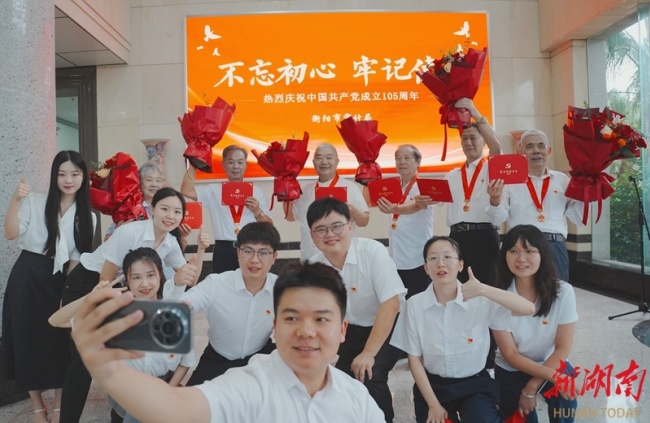
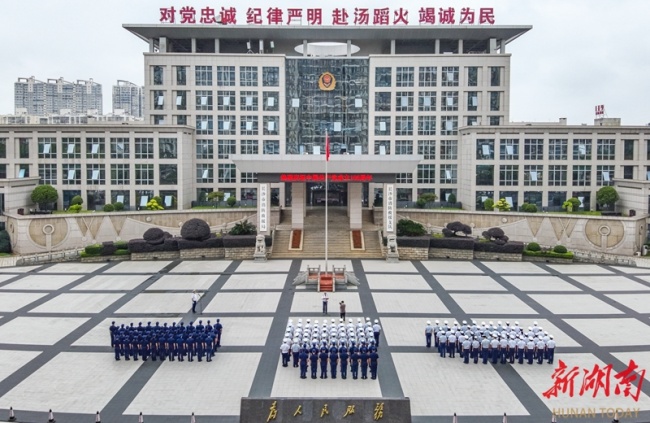
On July 1, young Party members of the Audit Bureau of Hengyang City take a photo with veteran Party members who have a 50-year Party membership. To mark the 105th founding anniversary of the Communist Party of China (CPC), a variety of celebrations were organized across the province that day, aiming to further reinforce the political commitment and convictions of Party members and cadres, and foster a stronger sense of dedication to serving the people.
On July 1, veteran Party members with 50-year Party membership are honored with commemorative medals at the Audit Bureau of Hengyang City. To mark CPC's 105th founding anniversary, a variety of celebrations were organized across the province that day, aiming to further reinforce the political commitment and convictions of Party members and cadres, and foster a stronger sense of dedication to serving the people.
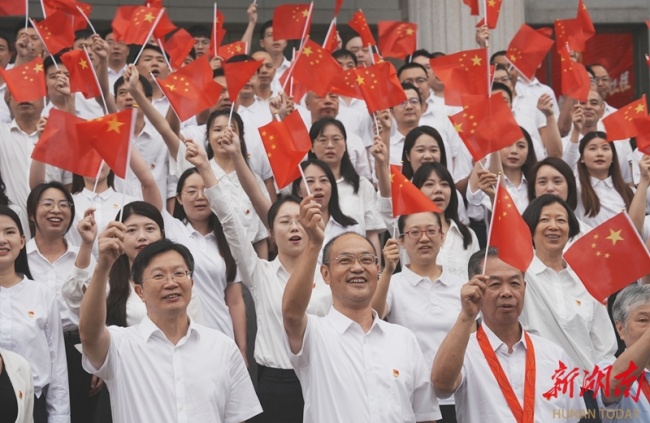
On July 1, Party members and the public chorus the song "Without the Communist Party, There Would Be No New China" at the Audit Bureau of Hengyang City. To mark CPC's 105th founding anniversary, a variety of celebrations were organized across the province that day, aiming to further reinforce the political commitment and convictions of Party members and cadres, and foster a stronger sense of dedication to serving the people.
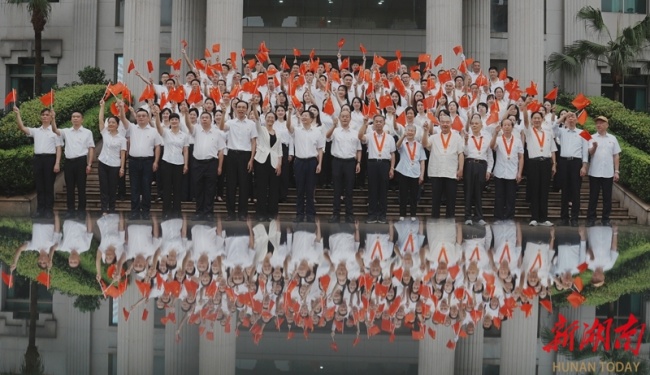
On July 1, Party members and the public chorus the song "Without the Communist Party, There Would Be No New China" at the Audit Bureau of Hengyang City. To mark CPC's 105th founding anniversary, a variety of celebrations were organized across the province that day, aiming to further reinforce the political commitment and convictions of Party members and cadres, and foster a stronger sense of dedication to serving the people.
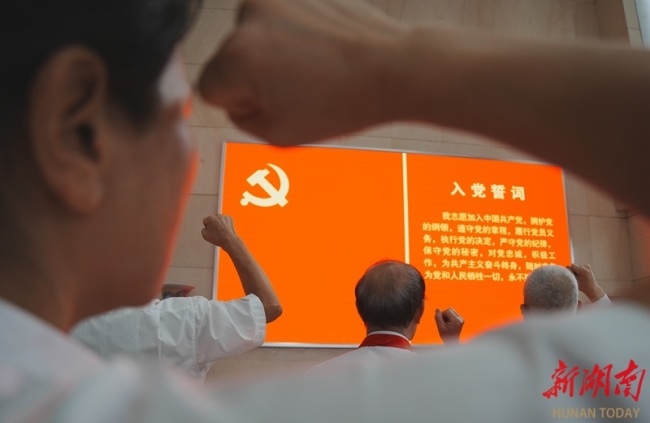
On July 1, Party members and cadres review the Party admission oath at the Audit Bureau of Hengyang City. To mark CPC's 105th founding anniversary, a variety of celebrations were organized across the province that day, aiming to further reinforce the political commitment and convictions of Party members and cadres, and foster a stronger sense of dedication to serving the people.
The Changsha Fire and Rescue Brigade holds a flag-raising ceremony on the morning of July 1. To mark CPC's 105th founding anniversary, a variety of celebrations were organized across the province that day, aiming to further reinforce the political commitment and convictions of Party members and cadres, and foster a stronger sense of dedication to serving the people.
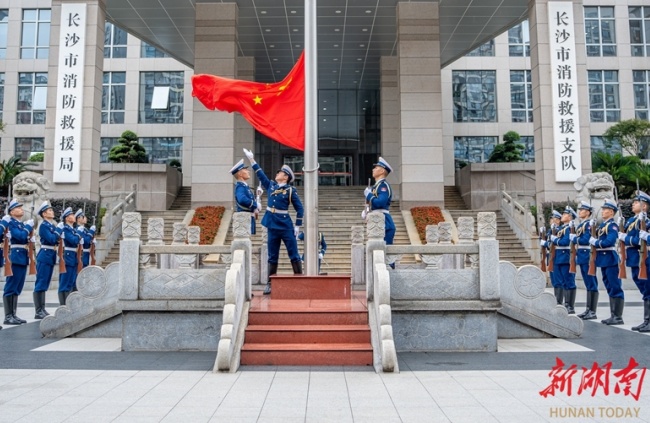
The Changsha Fire and Rescue Brigade holds a flag-raising ceremony on the morning of July 1. To mark CPC's 105th founding anniversary, a variety of celebrations were organized across the province that day, aiming to further reinforce the political commitment and convictions of Party members and cadres, and foster a stronger sense of dedication to serving the people.
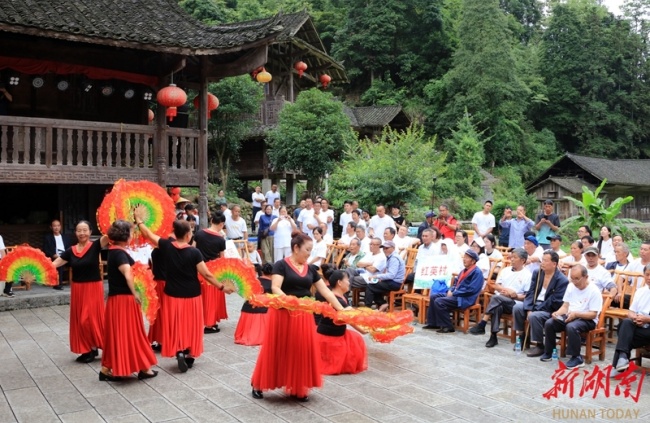
On July 1, Party members from Touche Village in Hongyanxi Town, Longshan County, and five other neighboring villages and residential communities, gather at a "Hunan Village Meeting Hall" in Touche Village, celebrating the birthday of the Party with songs and dances. To mark CPC's 105th founding anniversary, a variety of celebrations were organized across the province that day, aiming to further reinforce the political commitment and convictions of Party members and cadres, and foster a stronger sense of dedication to serving the people.
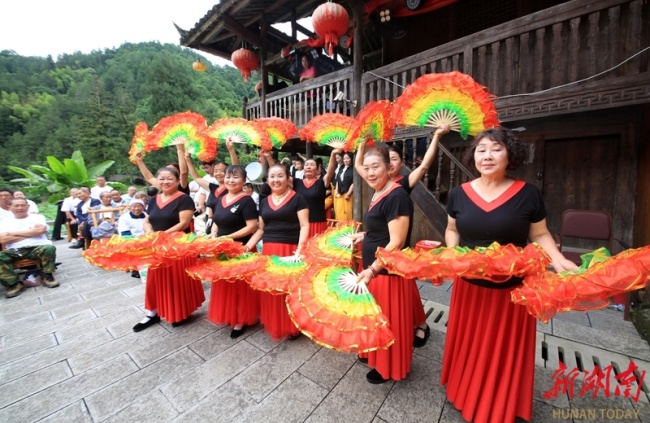
On July 1, Party members from Touche Village in Hongyanxi Town, Longshan County, and five other neighboring villages and residential communities, gather at a "Hunan Village Meeting Hall" in Touche Village, celebrating the birthday of the Party with songs and dances. To mark CPC's 105th founding anniversary, a variety of celebrations were organized across the province that day, aiming to further reinforce the political commitment and convictions of Party members and cadres, and foster a stronger sense of dedication to serving the people.
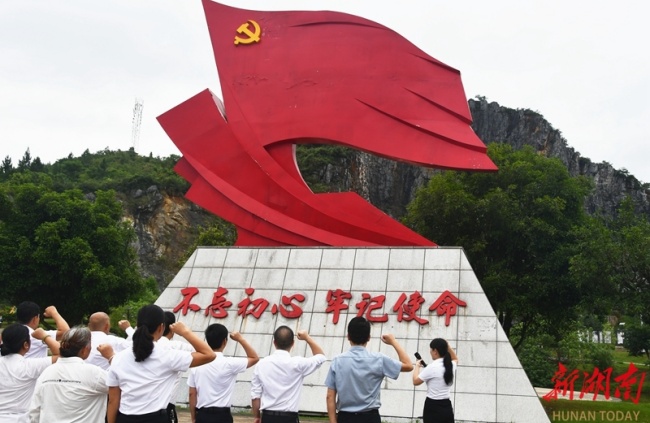
On July 1, Party members review the Party admission oath at Dangjian Park in Jiangyong County. To mark CPC's 105th founding anniversary, a variety of celebrations were organized across the province that day, aiming to further reinforce the political commitment and convictions of Party members and cadres, and foster a stronger sense of dedication to serving the people.
On July 1, Party members review the Party admission oath at Dangjian Park in Jiangyong County. To mark CPC's 105th founding anniversary, a variety of celebrations were organized across the province that day, aiming to further reinforce the political commitment and convictions of Party members and cadres, and foster a stronger sense of dedication to serving the people.
Leaders of political parties and governments from countries worldwide have recently sent messages and letters to the Central Committee of the Communist Party of China (CPC) and General Secretary Xi Jinping of the committee, extending warm congratulations on the 105th anniversary of the founding of the CPC.
Kim Jong Un, general secretary of the Workers' Party of Korea and president of the State Affairs of the Democratic People's Republic of Korea, said that the CPC has led the Chinese people in overcoming various difficulties and obstacles, and has vigorously advanced the great cause of socialism with Chinese characteristics.
Kim said that he firmly believes that under the leadership of the CPC with General Secretary Xi at its core, the Chinese people will continue to achieve brilliant accomplishments in their endeavor to build China into a great modern socialist country in all respects and to realize the Second Centenary Goal.
Prabowo Subianto, general chairman of Indonesia's Great Indonesia Movement Party (Gerindra) and president of Indonesia, said that the CPC's achievements in successfully leading China in poverty alleviation and improving the well-being of its people have consistently served as a model for Gerindra.
Recep Tayyip Erdogan, chairman of Türkiye's Justice and Development Party (AK Party) and Türkiye's president, said that he highly commends General Secretary Xi's initiatives and vision aimed at safeguarding global stability and prosperity. The AK Party hopes to strengthen inter-party exchanges with the CPC and promote further deepening of cooperation between the two countries, he said.
Mahmoud Abbas, chairman of the Palestine Liberation Organization Executive Committee and president of the State of Palestine, said the Palestinian side firmly adheres to the one-China policy, supports China in safeguarding its national sovereignty and territorial integrity, and wishes the Chinese people and the CPC continued progress.
Kenyan President and United Democratic Alliance Leader William Ruto said that the achievements of the CPC have inspired constructive reflections among the Global South on development and governance, and further strengthened Kenya's determination to pursue a path of transformative growth.
Serbian President Aleksandar Vucic said that the indomitable spirit demonstrated by the CPC and the Chinese people has brought hope to all peoples committed to peace, development and multilateralism.
Serbia is ready to work with China to jointly implement the four major global initiatives proposed by Xi, and to effectively address current global challenges, he said.
Leaders worldwide who also extended congratulations included the leader of the Maldives' People's National Congress and Maldivian President Mohamed Muizzu, Belarusian President Alexander Lukashenko, Nauruan President David Adeang, President of Malaysia's People's Justice Party and Malaysian Prime Minister Anwar Ibrahim, Secretary-General of Singapore's People's Action Party and Singaporean Prime Minister Lawrence Wong, President of the Leaders Party of Vanuatu and Vanuatu Prime Minister Jotham Napat, and Leader of Samoa's FAST Party and Samoan Prime Minister Laaulialemalietoa Leuatea Polataivao Fosi Schmidt - among others.
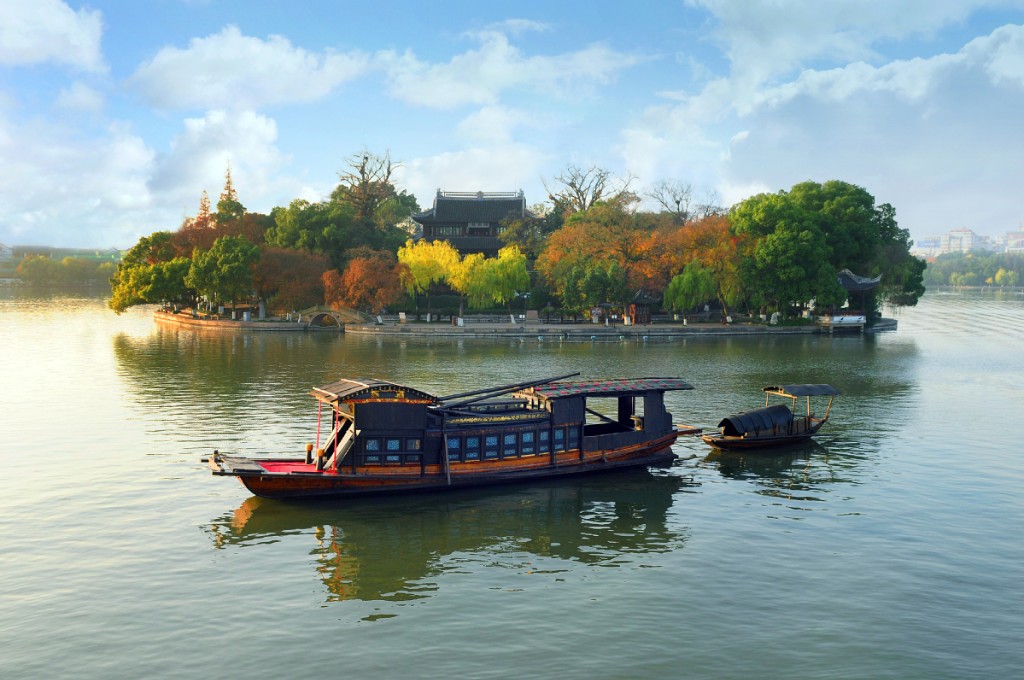
The Red Boat on Nanhu Lake in Zhejiang province's Jiaxing is an icon in the history of the Communist Party of China.
The Communist Party of China, founded in 1921, has been the sole governing party of the People's Republic of China since 1949. Truly, in these 105 years, Chinese society has undergone remarkable transitions in a variety of dimensions. It has ushered in a new era of socialism with Chinese characteristics, eradicated absolute poverty, and finished building a moderately prosperous society in all respects. These are unprecedented milestones, outcomes, and historic feats. Despite these achievements, the CPC has now set out on a new journey to achieve the Second Centenary Goal of developing China into a great modern socialist country through the "Chinese path to modernization", which was put forward during the 20th National Congress of the CPC held in October 2022.
In the new journey, the leadership of the CPC will continue to be the defining feature of socialism with Chinese characteristics. That is why its contribution to socioeconomic development, national rejuvenation and people's well-being will remain sustainable.
President Xi Jinping has stressed the importance of meeting the needs of the people. That has always been China's strategy — of putting people first, over and above, everything else.
Second, the commitment to embracing globalization and multilateralism remains unshakable, given the emphasis on the need to promote high-level opening-up, and promote the sustainable development of cooperation platforms such as the Belt and Road Initiative and the Forum on China-Africa Cooperation.
Likewise, the cooperation platforms have accelerated social and economic development in developing countries, particularly African countries.
In a nutshell, given China's deep integration with the global economy, stability and growth of the economy are central to global economic recovery in the era after COVID, the Russia-Ukraine conflict and the oil crisis triggered by the US-Iran war.
Third, modernization cuts across all priorities. This means that China's development would be informed, as in the past, by the dynamics of the day, both regionally and globally. As always, this development will be blended with Chinese characteristics. In this regard, continuous adjustment to the unfolding future challenges and opportunities becomes a basic rule.
In other words, the capacity for adaptation to the changing circumstances has to be developed, nurtured and enhanced.
Indeed, the main drivers for coping with the unfolding dynamics, whether climate change or pandemics, are human capacity development and scientific and technological innovations.
Fourth, in the future, adherence to the Five Principles of Peaceful Coexistence will remain firmly anchored on solid ground when cooperating with other countries, both developed and developing. This commitment is underpinned by the national policy of opening up to the outside world, which is guided by the principle of mutual benefit.
It should be noted that the above-mentioned principles were put forward in 1954, and their spirit was widely recognized at the 1955 Bandung Conference. Subsequently, they inspired the establishment of the Non-Aligned Movement, whose principles China has consistently supported and adhered to.
Fifth, the emphasis China placed on promoting peace and development is another area of continuity. Indeed, it should be noted that China did not launch aggressive wars or plunder foreign resources to become the world's second-largest economy.
However, China's aversion to war and love for peace should not mean it will look the other way if its territorial integrity and sovereignty are violated by an external force.
The five areas analyzed above, added to China's track record of unwavering commitment to globalization and multilateralism, its upholding of governance principles, and a leadership that "walks the talk", make us more than confident that China's development has gained renewed momentum, that, on the one hand, will continue to profoundly impact the world in all spheres, and, on the other hand, will enable China to, ultimately, build a modern socialist country that is prosperous, strong, democratic and culturally advanced, harmonious, and beautiful.
We sincerely congratulate the CPC, the PRC leadership and the Chinese people for the work well done. Keep it up!
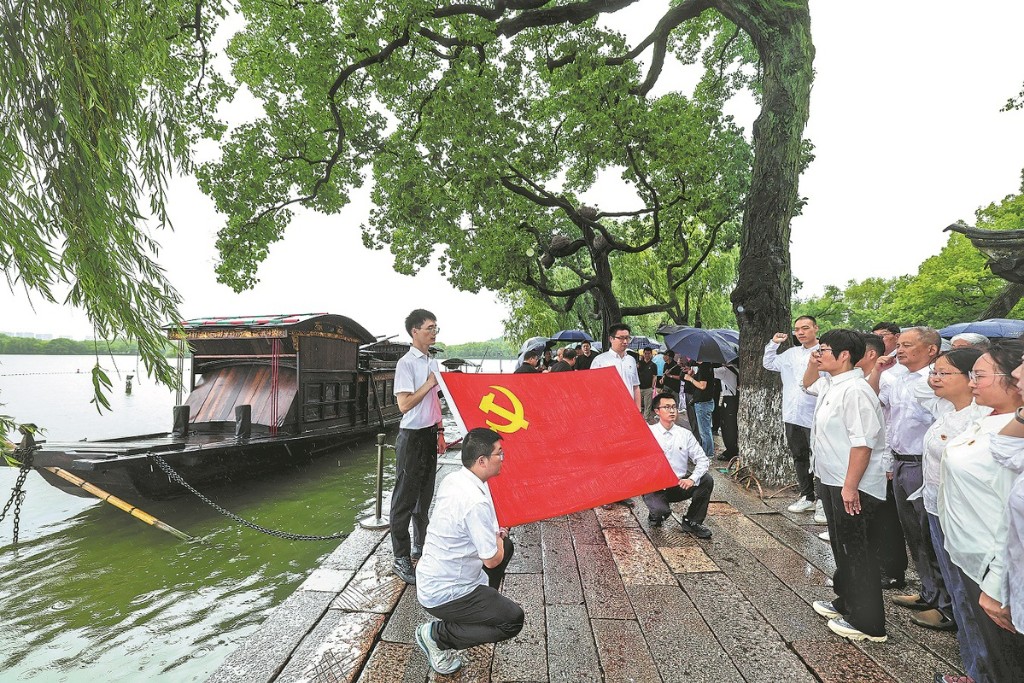
Representatives of Party members from the Nanhu community in Jiaxing, Zhejiang province, and the Xintiandi community in Shanghai renew the oath of joining the Communist Party of China beside a replica of the boat, now referred to as the Red Boat, on which CPC founders concluded their first meeting in 1921, on Nanhu Lake in Jiaxing, on Tuesday.
At the Museum of the Communist Party of China, a site in Beijing devoted to permanent and comprehensive exhibitions of the CPC's history, there is a large wall motto that reads: "This country is its people; the people are the country."
Many visitors come to the wall and raise their phones to take a photo, capturing in a single frame a theme that Xi Jinping, general secretary of the CPC Central Committee, placed at the center of his speech at the ceremony in 2021 marking the 100th anniversary of the CPC's founding.
As the Party has fought to establish and consolidate its leadership over the country, it has, in fact, been fighting to earn and keep the people's support, Xi said. The Party has in the people "its roots, its lifeblood and its source of strength", he added.
Five years on, as the CPC celebrates its 105th anniversary on Wednesday, more and more foreign diplomats and international observers have said that the meaning of the people-centered approach, a fundamental principle of the CPC, has become clearer to them through the changes they have witnessed in China and in the lives of its people.
For Khalil Hashmi, Pakistan's ambassador to China, the CPC's people-centered approach is best understood through results he has seen with his own eyes — above all, the scale of China's poverty reduction.
"I think results and actions speak louder than words," Hashmi said, noting that China's success in lifting hundreds of millions of people out of poverty was unprecedented in human history.
China declared victory in its fight against absolute poverty in 2021, when all 98.99 million rural residents living below the current poverty line had been lifted out of poverty, 832 poor counties had been removed from the poverty list, and 128,000 impoverished villages had shaken off poverty.
To Hashmi, poverty reduction is the clearest measure of what governance can mean for ordinary people. It shows how a long-term national goal can be translated into changes in people's lives through sustained leadership, strategy and implementation, he said.
Hashmi served at the Pakistani embassy in Beijing from 2008 to 2010, before returning as ambassador in 2023. He said the contrast between the two postings gave him a direct view of how China's development has reshaped the country's environment, economy and society.
Beijing's air quality and urban environment has improved markedly, he said. The expansion of high-speed rail has made travel between cities faster and more convenient, becoming part of daily life for many people.
China's progress in green technologies offered another example. From electric vehicles and batteries to charging stations, solar panels and wind turbines, China has built an ecosystem of increasingly affordable technologies that serve Chinese consumers and are also accessible to many developing countries, Hashmi said.
For him, these changes were evidence of the Party's ability to set a direction, mobilize resources and sustain implementation over time.
"At its core, the vision, the leadership, the strategy and the policy come from the CPC," he said.
Sisouphanh Keobandavong, a senior official with the Lao Ministry of Foreign Affairs, said China's progress is closely linked to the CPC's people-centered development philosophy.
By putting the common interests and well-being of the people first, China has achieved major advances in economic development, scientific and technological innovation and living standards, he said.
That experience, particularly in poverty reduction and rural vitalization, is of direct relevance to Laos, where poverty reduction remains an important task, Sisouphanh said.
For Laos and other developing countries, the lessons include set-ting clear development goals around national interests and people's well-being, directing support to less-developed areas, and shaping policies through research, monitoring and evaluation, he added.
Other observers said that putting people at the center also requires the ability to keep development goals consistent long enough for them to make a difference in people's lives.
Fazeel Najeeb, Maldivian ambassador to China, said one feature that has stood out to him is the continuity that marks China's policies.
In some developing countries, development priorities may change from one government to the next, making it difficult for long-term plans to produce lasting results, he said, noting that China sets priorities through five-year plans, carries them out steadily and builds on them in subsequent planning periods. "I think one of the most important aspects of the system is the continuity of policies," Najeeb said, calling it one of the most striking features of China's governance.
Such continuity matters, he said, because development requires time before its benefits can be fully seen in people's lives.
The importance of the consistency of strategy and the direction behind it also stood out to Ion Chicu, former prime minister of Moldova.
For example, the development of the Guangdong-Hong Kong-Macao Greater Bay Area showed the long-term impact of reform and opening-up, as well as China's sustained focus on high technology, he said.
For any country or people, hard work alone may not lead to success without the right strategy and direction, he noted, adding that in China's case, long-term vision has enabled people's efforts to produce tangible development achievements.
Davidson I. Ishmael, minister of state in Barbados' Ministry of Health and Wellness, said China's people-centered governance can also be seen in the opportunities created for individuals to build businesses and pursue careers.
During his visit to the Greater Bay Area, Ishmael said he heard stories of people who became entrepreneurs through opportunities generated by the region's development, and of others who had been able to pursue careers in globally competitive industries.
He said that such stories show how development can translate into personal opportunities.
China's opening-up is not only about strengthening the country's connections with the world, Ishmael said, but also about enabling its own people to share in the opportunities created by development.
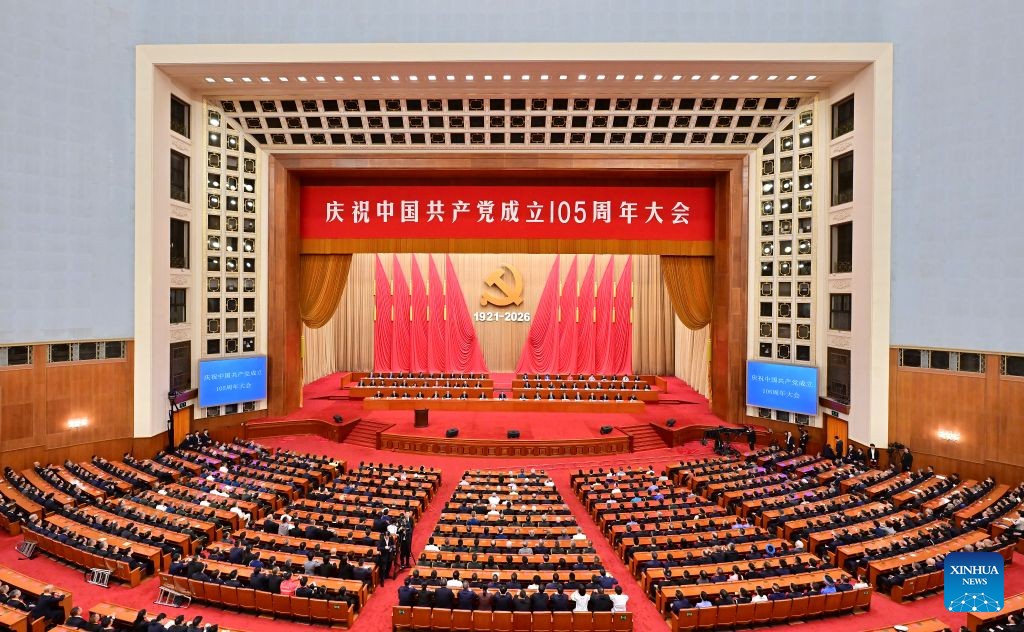
A gathering in celebration of the 105th founding anniversary of the Communist Party of China (CPC) started at the Great Hall of the People on Wednesday morning in central Beijing.
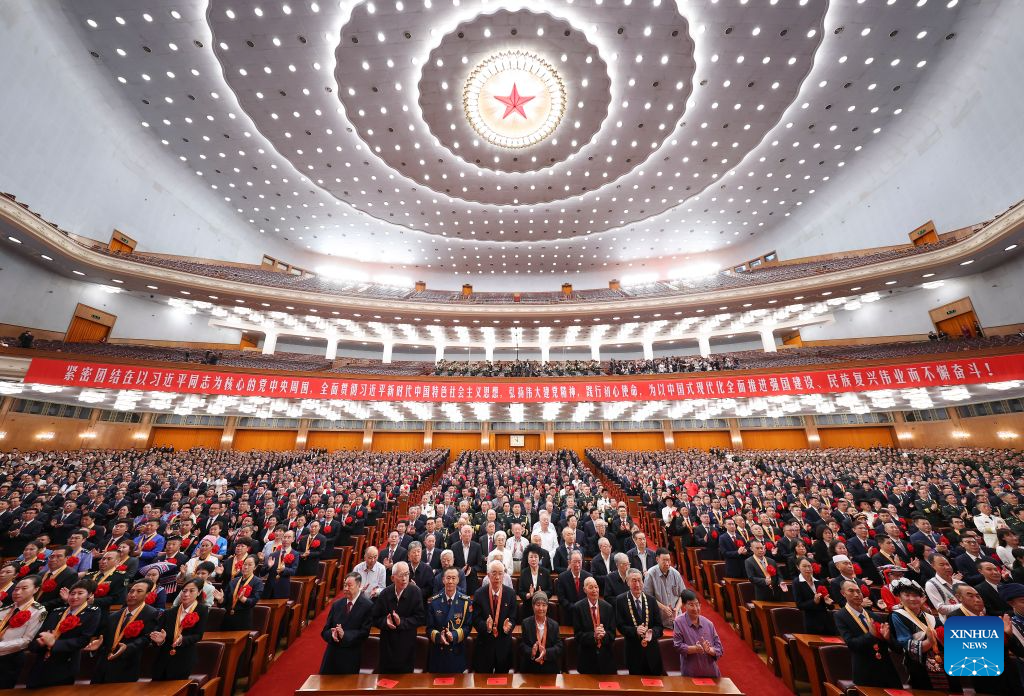
A gathering in celebration of the 105th founding anniversary of the Communist Party of China (CPC) is held at the Great Hall of the People in Beijing, capital of China, July 1, 2026.
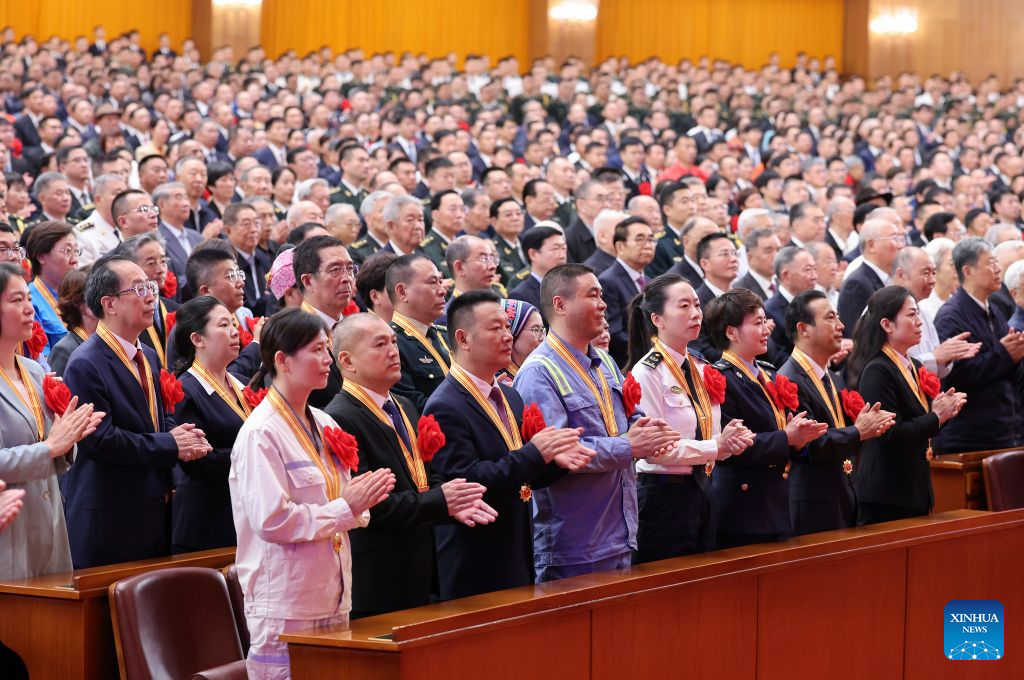
A gathering in celebration of the 105th founding anniversary of the Communist Party of China (CPC) is held at the Great Hall of the People in Beijing, capital of China, July 1, 2026.
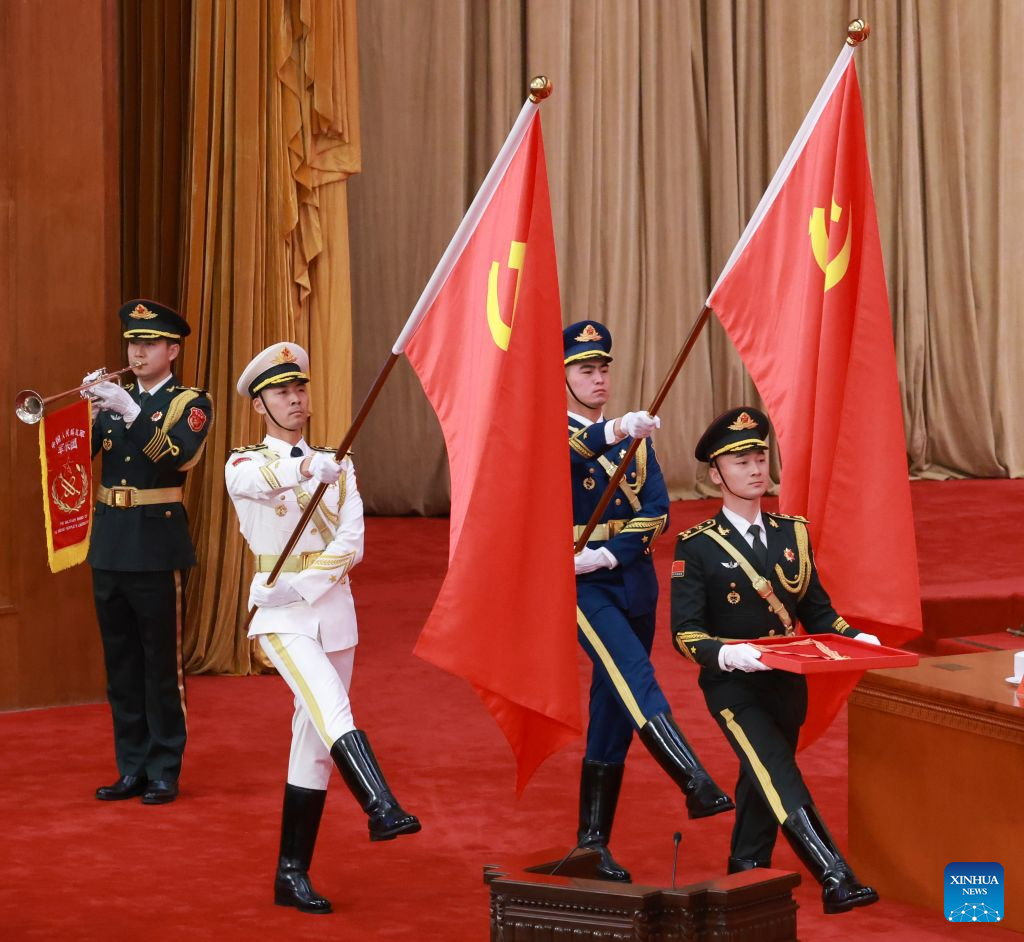
Honor guards escort the July 1 Medal into the Great Hall of the People in Beijing, capital of China, July 1, 2026. A gathering in celebration of the 105th founding anniversary of the Communist Party of China (CPC) was held at the Great Hall of the People on Wednesday morning in central Beijing.
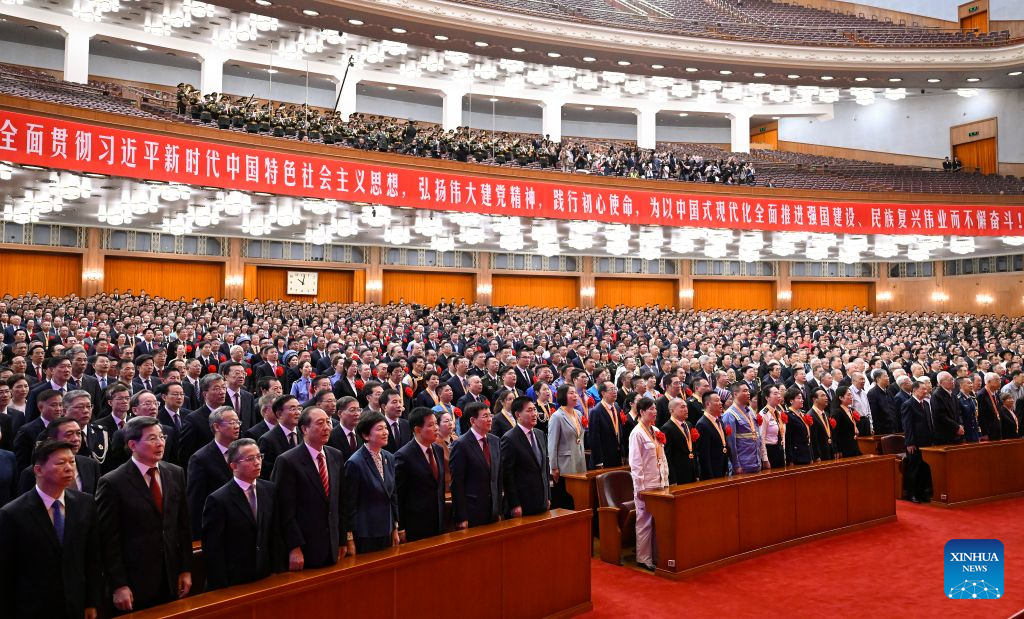
A gathering in celebration of the 105th founding anniversary of the Communist Party of China (CPC) is held at the Great Hall of the People in Beijing, capital of China, July 1, 2026.
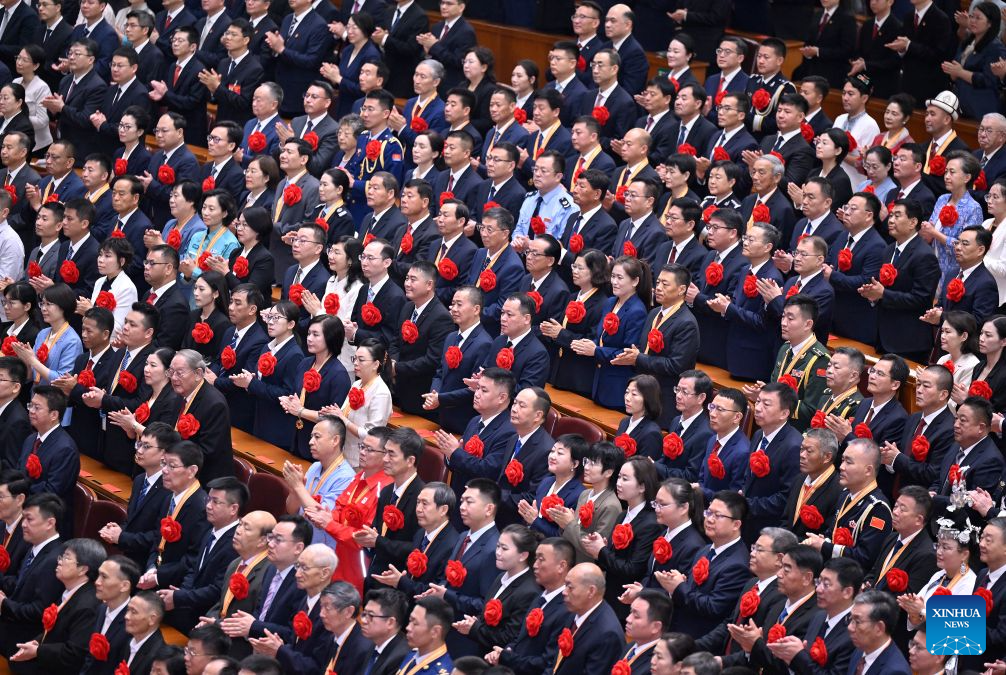
A gathering in celebration of the 105th founding anniversary of the Communist Party of China (CPC) is held at the Great Hall of the People in Beijing, capital of China, July 1, 2026.
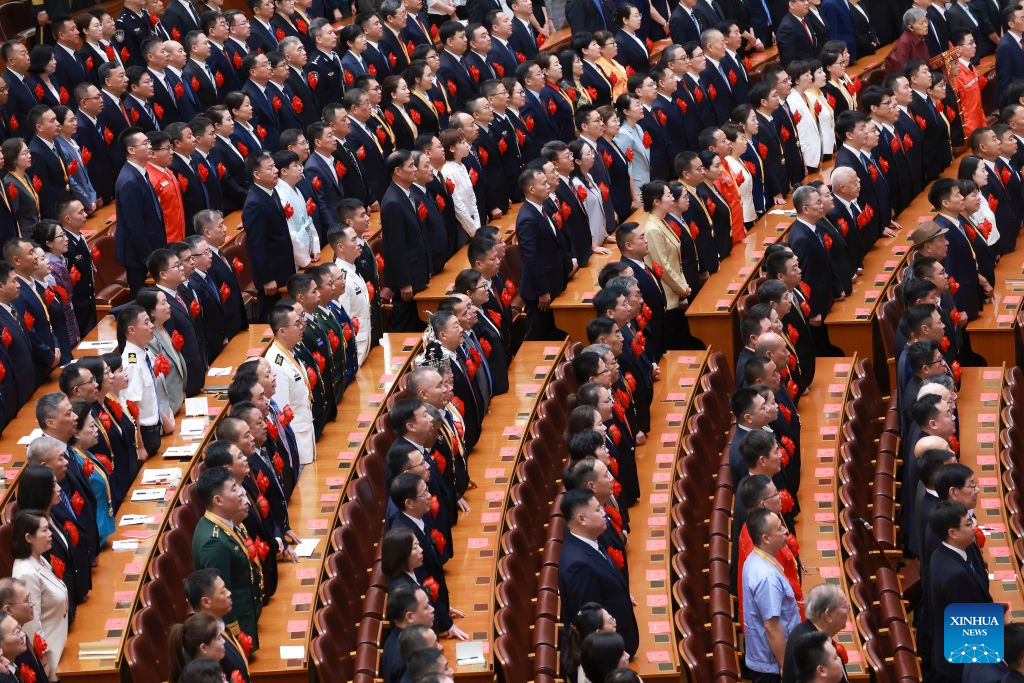
A gathering in celebration of the 105th founding anniversary of the Communist Party of China (CPC) is held at the Great Hall of the People in Beijing, capital of China, July 1, 2026.
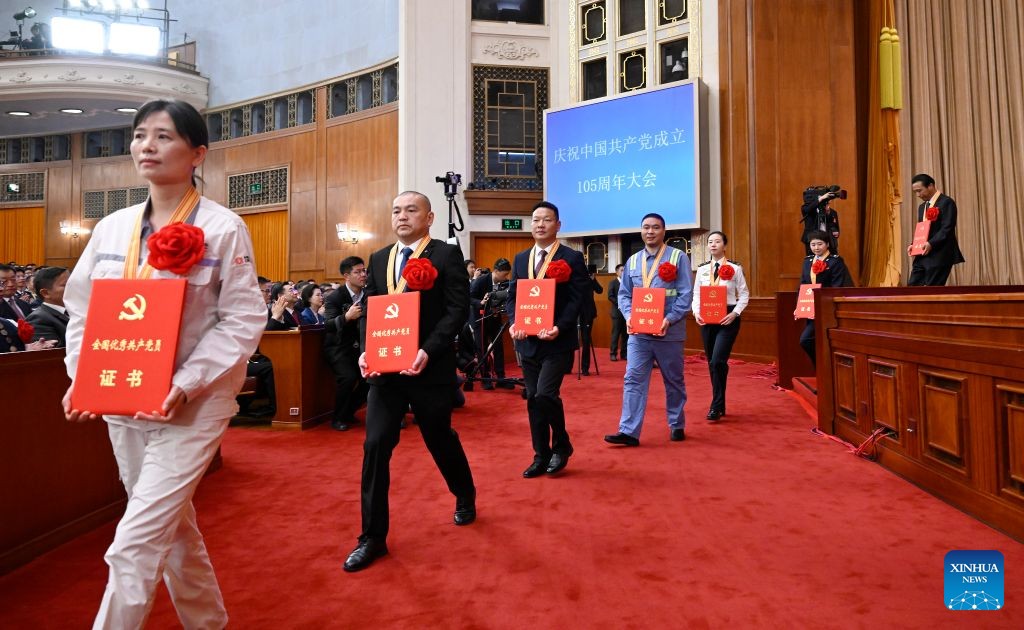
Representatives of outstanding Party members, Party workers, and primary-level Party organizations from across the country are pictured at a gathering in celebration of the 105th founding anniversary of the Communist Party of China (CPC) at the Great Hall of the People in Beijing, capital of China, July 1, 2026.
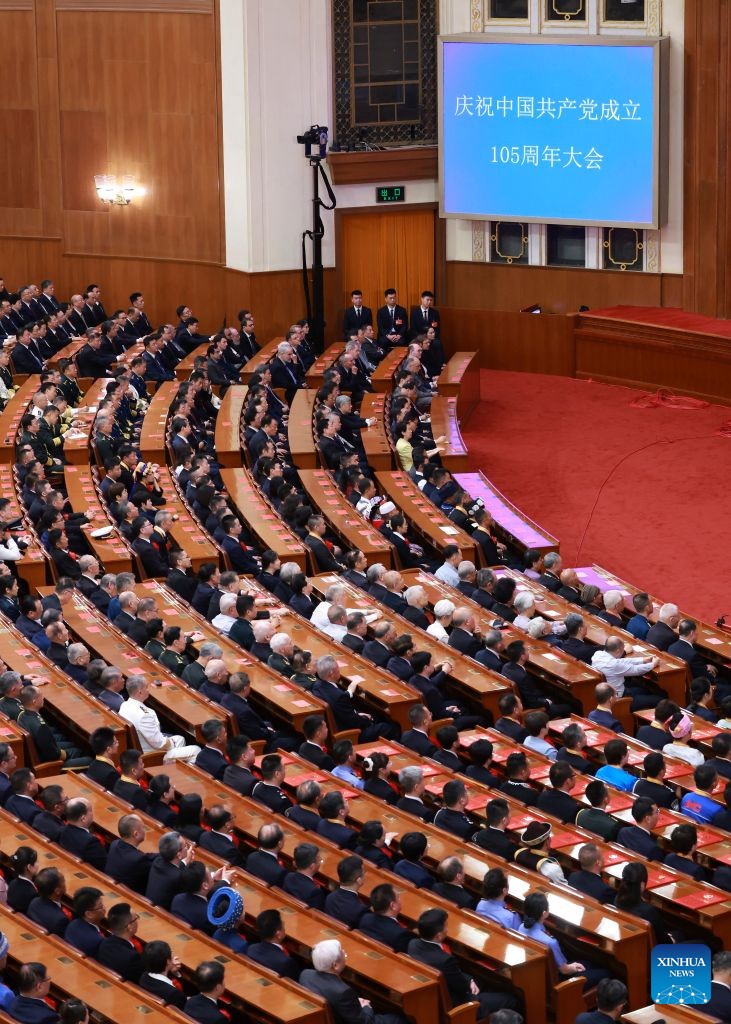
A gathering in celebration of the 105th founding anniversary of the Communist Party of China (CPC) is held at the Great Hall of the People in Beijing, capital of China, July 1, 2026.
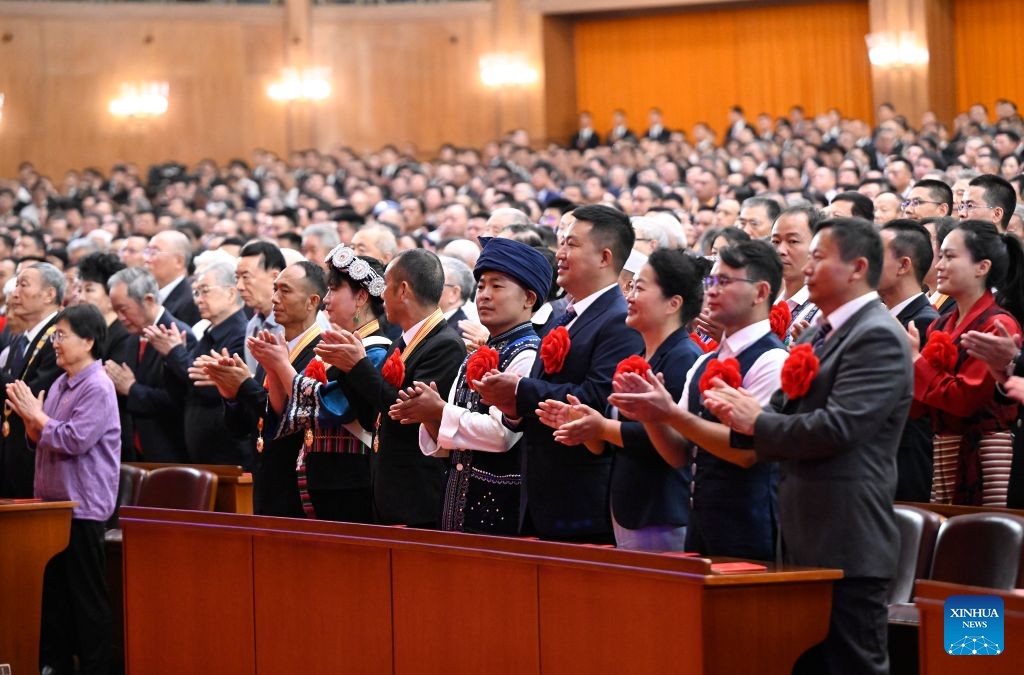
A gathering in celebration of the 105th founding anniversary of the Communist Party of China (CPC) is held at the Great Hall of the People in Beijing, capital of China, July 1, 2026.
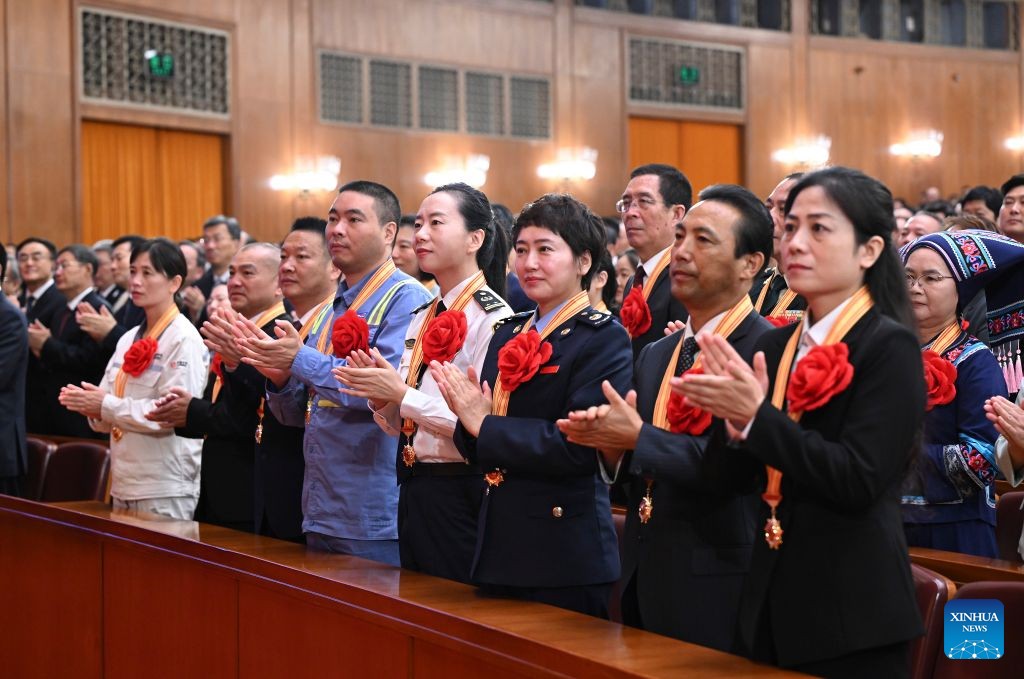
A gathering in celebration of the 105th founding anniversary of the Communist Party of China (CPC) is held at the Great Hall of the People in Beijing, capital of China, July 1, 2026.
China's latest five-year blueprint doesn't just pledge to develop new quality productive forces -- it maps out exactly how to get there.
The outline of the 15th Five-Year Plan (2026-2030), adopted on Thursday, places the integration of technological and industrial innovation in a prominent position, aiming to move lab-born technologies onto factory floors to unlock trillion-yuan opportunities across its real economy sectors.
These high-value opportunities stem from the plan's designation of new-generation information technology, new energy, new materials, intelligent connected new energy vehicles, robotics, biomedicine, high-end equipment and aerospace as strategic emerging industries for priority development.
The plan also spotlights quantum technology, biomanufacturing, hydrogen and nuclear fusion energy, brain-computer interfaces, embodied AI and 6G as future industries to be nurtured.
China's emerging pillar industries are expected to break the 10-trillion-yuan benchmark by 2030, while frontier technologies are poised to mushroom into an entirely new high-tech sector over the next decade.
CORPORATE ROLE
Tech firms are rapidly striving to harness the tremendous growth potential of this new wave propelled by innovation. Humanoid robots wowed audiences at this year's Chinese New Year gala with their kungfu moves and natural interactions with people. Now, these breakout stars are moving from spectacle to real-world deployment.
Galbot, the walnut-cracking sensation of the festival gala, recently debuted at a Beijing pharmacy -- locating drugs on shelves and retrieving them with precision.
Chinese-made smart robots are also training on multiple automotive factory floors, showcasing the vast potential of deploying such intelligent machines for real-world efficiency gains. In January, UBTECH, a humanoid robot developer in Shenzhen, struck a deal to supply robots to aviation giant Airbus for use in its manufacturing facilities.
These vibrant corporate innovation activities reflect China's push to put enterprises front and center in venture investment, R&D and commercialization.
The new five-year plan calls for greater corporate participation in decision-making, implementation and data sharing for major national sci-tech projects. It also encourages leading tech companies to form "innovation consortia" for collaborative research on key technologies and pilot demonstrations.
In Hangzhou, an innovation hub in eastern China, Deep Robotics is benefiting from this academia-industry collaboration mechanism. Last July, this leading Chinese private robotics startup teamed up with Zhejiang University to launch a postdoctoral workstation. The first researcher has since started work at the facility.
According to the major development targets for the 2026-2030 period outlined in this year's government work report, China projects an average annual increase of at least 7 percent in nationwide R&D spending. Enterprises account for over 77 percent of this investment currently, a level comparable to the United States and Japan.
GOV'T BACKING
At the just concluded national legislature session, a lawmaker from Hubei, a central Chinese province, revealed that basalt fiber, which was used as a special material for the national flag showcased on the moon's far side in the 2024 Chang'e-6 mission, has already been applied to firefighter uniforms by local teams. The rapid tech transfer was made possible by their pilot testing platform.
The 15th Five-Year plan highlights the rollout of such pilot testing platforms, including a national AI application pilot base. These government-backed facilities bridge the gap between research findings and corporate profits.
The blueprint maps out how China plans to achieve original innovation from zero to one -- viewed as a strategic capability that cannot be acquired from abroad -- and continuously scale it up.
"If lab R&D achieves the '0 to 1' breakthrough, then pilot testing aims to complete '1 to 10,' and enterprises are responsible for turning '10' into thousands and millions," said Liu Qing, director of the Yangtze River Delta National Innovation Center.
Additionally, to enable its vast legacy manufacturing sector to benefit quickly from AI-powered digitalization, Chinese authorities have introduced a tiered smart factory certification system, offering eligible facilities preferential treatment in taxation, financing, bidding and IPOs.
As of 2025, China has built over 35,000 basic-level, more than 8,200 advanced-level, over 500 excellence-level and 15 flagship smart factories nationwide.
At a busy training facility in western suburban Beijing, humanoid robots were using VR and motion capture system to learn practical skills like warehouse operations, material sorting, and product packaging. This is a humanoid robot school jointly built by the government and a private firm. Similar facilities are already operating in Shanghai, Wuhan, and Hangzhou.
These efforts are also reflected in the use of national research funds. The National Natural Science Foundation of China has partnered with four private pharmaceutical firms through a joint fund to bankroll solutions to technical bottlenecks these companies are eager to overcome.
Exploring "sandbox regulation," or testing frontier tech in a controlled, isolated environment to foster new businesses, has also been written into the plan.
GLOBAL OPPORTUNITIES
China's economic agenda stands ready to bring dividends to foreign investors. The plan seeks to channel foreign investment into advanced manufacturing, modern services, high-tech sectors, and green energy and environmental technologies. It also aims to attract multinational companies to set up regional headquarters and R&D centers in China.
An increasing number of global investors have taken note of this shift. Last October, AstraZeneca's new global R&D center was opened in Beijing, marking the British pharmaceutical giant's sixth global strategic R&D center and its second in China, following its first in Shanghai.
"We are seeing a transition from 'growth at all costs' to industrial upgrading," said Shirley Yinghua Shen, Greater China tax policy leader of Ernst & Young (China) Advisory Limited. "The focus is no longer just on attracting capital, but on integrating foreign technology into China's new quality productive forces."
Another pharmaceutical giant, Bayer, has also expressed strong optimism. "Through a series of favorable policies for foreign investment, it has consolidated the development expectations of enterprises," Sue Wang, vice president of Public Affairs and Sustainability, Bayer China, told Xinhua.
Bayer is looking forward to "continuing investment in China under the blueprint of the 15th Five-Year Plan, seizing opportunities in the Chinese market, and working with partners to bring more innovative solutions to market," said Wang.
"The coming half-decade marks a pivotal transition period for China's economy, moving from high-speed growth to high-quality development," said Hu Jinbo, a national advisor and chemist from the Chinese Academy of Sciences.
"Tech innovation will serve as the core engine driving this transformation while injecting new growth momentum into the global economy," he added.

This photo taken on March 12, 2026 shows the Great Hall of the People ahead of the closing meeting of the fourth session of the 14th National People's Congress (NPC) in Beijing, capital of China.
The outline of the 15th Five-Year Plan (2026-2030) for national economic and social development signals a clear shift toward higher-quality, innovation-led growth, while placing the improvement of people's social well-being at the forefront, said Gerald Mbanda, a Rwandan publisher and researcher.
With embodied artificial intelligence (AI), brain-computer interfaces and 6G mobile communications featuring prominently in documents released during the "two sessions," innovation is set to drive China's high-quality development in the new stage.
Experts around the world highlighted that, driven by quality improvement, technological upgrading and structural optimization, the country's 15th Five-Year Plan (2026-2030) is expected to continue boosting domestic development and channel its innovations into global cooperation.

People visit the 34th Harbin International Economic and Trade Fair in Harbin, capital of northeast China's Heilongjiang Province, May 19, 2025.
INNOVATION FOR PEOPLE'S WELL-BEING
The outline of the 15th Five-Year Plan (2026-2030) for national economic and social development signals a clear shift toward higher-quality, innovation-led growth, while placing the improvement of people's social well-being at the forefront, said Gerald Mbanda, a Rwandan publisher and researcher.
"It is an important indicator that the government leadership puts first the interest of the people," he said.
China's 15th Five-Year Plan highlighted "new quality productive forces," with a focus on scientific advancement, industrial upgrading, and long-term development, said Richard A. Black, a senior scholar with the Schiller Institute.
Black said the plan reflects a view that long-term prosperity depends on a commitment to "the real economy" -- manufacturing, infrastructure and energy systems.
Marcela Vera, an economist at Chile's University of Santiago, said that while innovation in the West tends to be confined to big firms using tech barriers to protect profits, it is widely applied to advance social development and enhance people's well-being in China.
Citing his experience in China, Dennis Munene Mwaniki, executive director of the China-Africa Center at the Africa Policy Institute in Kenya, said that China has become a leading nation in AI development and integration.
He recalled visiting a hotel where a robot served him, noting that such machines can also handle jobs far too risky for humans, like welding.
He added that China has developed AI capable of detecting some health conditions early, improving the healthcare system and saving lives. It has also been "instrumental" in agriculture, he said, helping cultivate crops resistant to harsh conditions, delivering people from hunger and starvation.

Experts perform an orthopedic surgery with a robotic system at the Tongzhou branch of Beijing Anzhen Hospital in Beijing, capital of China, Feb. 3, 2026.
INNOVATION FOR SHARING
Experts pointed out that the policy priorities unveiled at the "two sessions" further cemented China's role as a global innovation hub while creating major opportunities for global cooperation.
Mwaniki said that China's AI has been effectively applied through international cooperation and partnerships, noting that the country has worked with African countries to breed climate-resilient crops in regions where people are dying from hunger.
Ismael Buchanan, a senior lecturer at the College of Arts and Social Sciences of the University of Rwanda, expressed a similar view.
"I believe African countries could greatly benefit from learning from Five-Year Plans launched by the Chinese government," he said, suggesting that they strengthen trade and partnerships with China, a path many are already actively pursuing.
European countries are also closely following the "two sessions," looking forward to sealing some deals.
"For the outside world, especially for Europe, it is important to see where the new space for China's further growth lies," said Marina Ragus, deputy speaker of the National Assembly of Serbia.
Ragus said that China's "sustained investment in innovation, advanced production lines and automation" has driven structural transformation, generated employment and improved living standards.
Clemens Schuette, chairman of the board of the German-Chinese Business Association, said China has evolved from "a low-cost manufacturing base into a major market and an important innovation hub," citing BMW, Volkswagen, Siemens and BASF as examples of companies expanding local research and engineering capacities in China.
German firms are increasingly recognizing China's role as a global innovation leader, he noted. "Many companies are expanding cooperation with Chinese partners not only to remain competitive in China but also to benefit globally," he said.
Satyajit Bose, professor of Practice at Columbia University, praised China's role in expanding the global reach of clean energy. The 15th Five-Year Plan's emphasis on "high-quality development" demonstrates a commitment to ensuring that growth must incorporate environmental sustainability and structural upgrading, Bose said.
Describing renewable energy as a "promising part of Chinese development," he noted that falling solar production costs have made clean power more accessible to lower-income countries and created opportunities for longer-term cooperation.
China's annual "two sessions" have drawn elevated global attention this year, as lawmakers prepare not only to set the agenda for the coming year but also to approve a plan that could shape the country's trajectory through the end of the decade.
The meetings of China's top legislature and top political advisory body convene against a backdrop of deepening global turbulence. As geopolitical rivalries increasingly flout established rules and conflicts escalate in the Middle East, the international order faces unprecedented strain.
Policy choices of China -- the world's second-largest economy and home to 1.4 billion people -- reverberate far beyond its borders. The direction set at this year's "two sessions" will therefore be closely watched, particularly as many look to China for signals of stability in an increasingly uncertain world.
Currently under legislative review, the draft 15th Five-Year Plan maps out how China will advance over the next five years toward the goal of basically achieving modernization by 2035. A distinctive feature of this modernization is its emphasis on peaceful development.
In the next five years, China is expected to work with neighbors to advance integrated development and maintain overall stability in its relations with major nations, according to the draft plan.
At a press conference on China's foreign policy held on the sidelines of the legislative session, Foreign Minister Wang Yi reaffirmed that China will not pursue hegemony as its strength grows, nor does it subscribe to the logic that the world can be run by major countries.
Analysts say that China's preference for peace stems in part from a deep-seated cultural and historical instinct.
For much of its millennia-long history, China ranked among the world's leading nations. Its influence tended to travel through commerce, ideas and cultural exchanges, rather than through conquest or colonization.
The ancient Silk Road carried caravans across continents, while admiral Zheng He's maritime voyages in the 15th century reached as far as Africa, leaving behind silk, tea and porcelain -- not forts, colonies or cannon fire.
This restraint was a deliberate choice, integral to classical Chinese statecraft. "The Art of War" elevates victory without battle as the highest strategic ideal, and ancient thinkers warned that powers addicted to conflict would ultimately exhaust themselves.
Modern history reinforced the national psyche more brutally. After the Opium War of 1840, China endured invasions, bullying and humiliation at the hands of Western powers. Japan's invasion, beginning in the early 1930s and continuing through World War II, left deep and lasting scars on the country.
These experiences hardened an aversion to war and fostered a conviction that recovery and rejuvenation must come through internal effort rather than external expansion.
The decades since the founding of the People's Republic of China in 1949 have validated this path. The country has not initiated a war or seized an inch of foreign territory, yet it has grown into the world's second-largest economy and maintained that position for more than a decade.
This stance reflects not only the cultural continuity of the Chinese nation, but also the founding philosophy of the governing Communist Party of China (CPC).
Peaceful development is no diplomatic platitude; it is embedded in the country's institutional fabric -- explicitly codified in both the national Constitution and the Constitution of the CPC.
By proposing to build a community with a shared future for humanity in 2013, China's message has been clear: In an era fraught with challenges, humanity's enemies are not one another, but war, poverty, hunger and injustice.
No one can fight these battles alone, nor can any hope to carve out a path by only looking after their own interests. Instead, the world must come together to build a common future.
On a deeper structural level, China's reassurances for the world come from the fact that the country maintains its ties with the wider world through trade and production networks.
The country boasts all the industrial categories listed in the UN industrial classification. As the world's largest goods trader and one of the largest consumer markets, China trades extensively with more than 160 countries and regions.
Such interdependence is arguably one of the most effective safeguards for global security, as mutual economic stakes can help mitigate geopolitical rivalry.
The upcoming 15th Five-Year Plan is expected to carry this model of global engagement into the next phase. It will likely see China open its doors wider, promote balanced trade, and improve the overseas layout of its industrial and supply chains.
Amid these extensive economic linkages, China has maintained a defensive military posture. Its defense spending remains modest across key relative indicators, including the share of GDP, per capita defense expenditure, and defense expenditure per military personnel member.
For instance, China's defense spending has consistently stayed below 1.5 percent of GDP for many years. By contrast, NATO members have decided to ramp up their defense expenditure to 5 percent of GDP by 2035.
To the east, Japan's defense spending per capita in the 2025 fiscal year was three times China's, while its spending per defense personnel member was more than twice that of China.
China adheres to a no-first-use policy on nuclear weapons. It is the second-largest financier of UN peacekeeping operations, and the leading contributor of troops among the permanent members of the UN Security Council.
The country aspires to peace, yet it recognizes that maintaining peace requires vigilance.
There are a plethora of ways to defend peace, uphold security and deter war, but military capability remains the ultimate backstop. China is unequivocal in defending its sovereignty, security and development interests. That resolve must never be underestimated.
As China's annual "two sessions" get underway, "new quality productive forces," a signature concept proposed by President Xi Jinping, has emerged as a key theme set to shape the nation's future economic development.
While taking part in a deliberation with his fellow deputies from the Jiangsu Province delegation at the national legislative session on Thursday, Xi noted that developing new quality productive forces is crucial for promoting high-quality development and enhancing economic competitiveness.
First put forward in 2023 by Xi, also general secretary of the Communist Party of China (CPC) Central Committee and chairman of the Central Military Commission, the concept of new quality productive forces has seen its essence and pathways come into sharper focus.
During the "two sessions" in 2024, Xi stressed the need to seize the opportunities to nurture emerging and future industries, and to transform and upgrade traditional industries at the same time.
One year later, also at "two sessions," Xi once again stressed the pivotal role of new quality productive forces, emphasizing that sci-tech innovation and industrial innovation form the fundamental path to foster these forces.
Artificial intelligence (AI), as a representative of the new quality productive forces and a standout in China's sci-tech advancements, is now driving upgrading and innovation across industries -- a process Xi has closely followed with keen interest.
At a group study session of the Political Bureau of the CPC Central Committee in 2018, Xi likened AI to a "lead goose," underscoring that "AI is a strategic technology driving this round of technological revolution and industrial transformation."
Another such group study session that Xi presided over in 2025 once again turned the spotlight to AI. Days later, Xi visited the Shanghai Foundation Model Innovation Center -- an AI incubation hub that is home to over 100 startups.
At the center, he was presented with a range of AI-driven equipment and systems -- robots autonomously gathering experimental data that facilitates drug development; mechanical arms mastering complex tasks for smarter production lines; and AI-powered sorters that can identify waste precisely. This vibrant cluster of innovation is a microcosm of China's broader AI push, where cutting-edge technologies are moving rapidly from labs to real-world scenarios.
China has abundant data resources, a complete industrial system, and huge market potential, offering broad prospects for AI development, said Xi, calling for stronger policy support and talent cultivation in this regard.
Driven by this sustained focus and reinforced by policy support at various levels, China's AI sector has advanced in leaps and bounds. From the notable debut of DeepSeek to the recently tested text-to-video tool Seedance 2.0, the AI sector has witnessed breakthroughs one after another, and proves to be a generative ground for the rise of new quality productive forces.
By the end of 2025, China was already home to over 6,200 AI enterprises, with the core AI industry valued at more than 1.2 trillion yuan (about 173.9 billion U.S. dollars). AI-related industries are expected to exceed 10 trillion yuan by 2030.
The draft outline of the country's 15th Five-Year Plan (2026-2030), which was submitted to the national legislature for examination on Thursday, shows that AI will be further harnessed to advance basic science, transform traditional and frontier industries, create new consumption scenarios, innovate governance, and enrich people's daily life.
Beyond AI, Xi is also keeping an eye on other emerging and future-oriented industries.
During this year's first group study session of the Political Bureau of the CPC Central Committee in January, he emphasized that cultivating industries of the future is of great significance for developing new quality productive forces, building a modernized industrial system, improving the people's quality of life, and promoting people's well-rounded development and all-round social progress.
Then on Feb. 9, Xi came to Beijing's E-Town -- a hotbed for emerging and future industries -- where he visited a national information technology innovation park, once again turning his attention to representative sci-tech innovations.
The numbers speak for themselves: In 2025, the added value of China's high-tech manufacturing enterprises above the designated size increased by 9.4 percent from the previous year; the export value of high-tech products rose by 13.2 percent; and the output of service robots, memory chips and 3D printing equipment all saw double-digit growth. Emerging and future industries are making greater contribution to the country's economy, fundamentally reshaping its structure.
Under the leadership of Xi, China is navigating a clear course, backed by steadfast top-level design. The draft outline of the new five-year plan has put forward the goal of accelerating the development of strategic emerging industries, including next-generation information technology, new energy and new materials. It also aims to transform future industries such as quantum technology, biomanufacturing and brain-computer interfaces into fresh growth drivers for the economy.
Xi's vision for new quality productive forces gives equal weight to revitalizing traditional industries. His message is clear: Traditional industries will not be abandoned, but renewed.
During a 2025 visit to Yangquan Valve Co., Ltd., a century-old enterprise in north China's Shanxi Province, Xi pointed out that it is imperative to respond to market demand and enhance sci-tech innovation to breathe new life into traditional industries.
Engineers in the company have developed innovative products like hydrogen-pipeline ball valves, opening new markets while enhancing the company's core capabilities.
Its evolution exemplifies how old firms renew themselves: By focusing on innovation and boosting investment in research and development, the company has earned itself the designation of "little giant" -- a title for outstanding specialized, high-tech small and medium-sized enterprises.
"Transforming and upgrading traditional industries can also foster new quality productive forces," Xi once said. "Even established enterprises can achieve high-end, smart and green transformation."
Chinese Foreign Minister Wang Yi held a press conference on Sunday on the sidelines of the fourth session of the 14th National People's Congress.
Wang answered questions of journalists from home and abroad on China's foreign policy and external relations. Here are some highlights from the press conference.
On head of state diplomacy
Heads-of-state diplomacy is the anchor of Chinese diplomacy.

On China-Russia ties
China-Russia relations remain "as steady as rock" despite test of winds, rains.

On APEC
China is committed to translating the goal of building an Asia-Pacific community into concrete action and turning the blueprint into reality as it hosts the Asia-Pacific Economic Leaders' Meeting in Shenzhen, Guangdong province, this year.

On U.S.-Iran conflict
China calls for an immediate stop to military operations in the Middle East to prevent further escalation and avoid the spillover of the conflict.

On global governance
Over 150 countries and international organizations have voiced support for the Global Governance Initiative; Leading status of the UN must be strengthened, not weakened.

On China-U.S. ties
China and the U.S. can't change each other, but can change how they get along; China is always committed and open to cooperation with the U.S..

On neighborhood diplomacy
China always places neighboring region a priority in its diplomatic agenda.

On China-Europe ties
China-Europe relations have been regaining strength; China is not a competitor but a global partner.

On China-Africa ties
For 70 years, China-Africa friendship has withstood changes in international circumstances.

On globalization
Pursuing protectionism is akin to locking oneself in a dark room; Principle is to leave no country behind, pathway is for countries to draw on each other's strengths.

On China-Japan ties
The future of China-Japan relations hinges on Japan's choice

On South China Sea
Peace, cooperation and friendship should be the new narrative in the South China Sea.

On China-India relations
SCO Tianjin Summit brought about further improvement in China-India relations

On Taiwan question
Taiwan has been an integral part of China since ancient times; Taiwan's DPP is the root cause of disruption to peace and stability across the Taiwan Strait.

On community with shared future for mankind
Our enemies are not each other, they are poverty, war, hunger and injustice.


The State Council Information Office (SCIO) holds a press briefing on the draft Outline of the 15th Five-Year Plan (2026-2030) in Beijing, capital of China, on March 7, 2026.
Over one third of China's major development targets for the 2026-2030 period will focus on resolving the pressing difficulties and problems that concern the people most, an official told a press conference Saturday.
To tangibly improve the educational and health standards of the people, the draft outline of the 15th Five-Year Plan sets targets to increase the average years of education for the working-age population, the average life expectancy, and the number of medical staff per 1,000 people, said Zheng Bei, deputy head of the National Development and Reform Commission (NDRC).
China will strive to increase the share of nursing beds in elderly care institutions and provide more high-quality nursing services to address the needs of seniors with functional disabilities and dementia, she said.
Liu Dechun, an NDRC official in charge of social development, said at the press conference that the draft outline urged efforts to improve the childcare services and increase the rate of kindergarten enrollment of infants under the age of three by six percentage points.
To foster a more birth-friendly society, work will be done to expand the coverage of maternity insurance and fully implement parental leave, Liu said.
From the martial arts performance of humanoid robots to the global buzz around Seedance 2.0, an AI video-generation model, China's latest innovations have captivated the world since the dawn of the Year of the Horse.
"Innovation is development; innovation is the future," Chinese President Xi Jinping has stressed. Since taking the helm of the country, Xi has keenly grasped the momentum of a new wave of technological and industrial transformation, steering China to pursue an innovation-driven development strategy with greater resolve.
Today, China's surge in innovation is not only strengthening the bedrock for its domestic development but also creating new opportunities for the world. As the annual "two sessions" convene in the opening year of the 15th Five-Year Plan period (2026-2030), the world looks to China for its new blueprint -- one that promises innovative development and a shared future of win-win cooperation.
A VISIONARY STRATEGY
The innovations that have dazzled the world are rooted in a far-reaching blueprint and realized through steady, deliberate effort at every step.
In 2013, at the first "two sessions" convening after the 18th National Congress of the Communist Party of China (CPC), Xi emphasized the need to unswervingly pursue an independent innovation path with Chinese characteristics, deepen scientific and technological system reform, continuously open up new prospects for national innovation and development, and promote China's transformation from a major economy to a strong economic power.
Both the 13th and 14th five-year plans placed a strong emphasis on technological innovation. In the recommendations for formulating the 15th Five-Year Plan, "technology" and "innovation" appear 46 times and 61 times, respectively.
In the eyes of Clemens Schuette, chairman of the board of the German-Chinese Business Association, innovation is not a temporary policy priority for China, but a clear and steadfast long-term strategic choice.
China's in-depth implementation of its innovation-driven development strategy is not only a rational response to the trend of the times, but also a move that will profoundly shape the path of global innovation, he observed.
"Innovation is the primary driving force behind development," Xi said. He has put forward a series of top-level designs and major initiatives to drive innovation-led development.
China has entered a vital period when new industrialization, application of information technology, urbanization and agricultural modernization are advancing in tandem. This synchronous surge is creating boundless opportunities and generating unprecedented momentum for indigenous innovation.
A clear path has been mapped out: to drive industrial innovation through technological breakthroughs. By leveraging disruptive and cutting-edge technologies to cultivate new industries, business models, and growth engines, China aims to fully unleash new quality productive forces.
The strategy has also shaped a forward-looking industrial landscape. China is actively developing future industries, scaling up emerging sectors and upgrading traditional industries, steadily transforming innovation potential into economic growth.
The international community has shown strong interest in China's innovation-driven growth. During recent visits to China, foreign leaders have come face to face with the country's intelligent manufacturing: South Korean President Lee Jae Myung shook hands with a Chinese robot; Uruguayan President Yamandu Orsi rode on a Chinese high-speed train; and German Chancellor Olaf Scholz tried out a driver-assistance system developed through collaboration between Chinese and German companies.
The World Intellectual Property Organization (WIPO)'s Global Innovation Index 2025 shows that China's innovation index has entered the top 10 worldwide for the first time.
A CONCENTRATED EFFORT
Why does China succeed in innovation? It is a question frequently raised by international observers.
During his visit to a national information technology innovation park in Beijing in February 2026, Xi urged efforts to concentrate strength on major undertakings and pool all quality resources to secure breakthroughs.
China's innovation advance, many analysts say, benefits from its ability to marshal resources.
The country's recommendations for formulating the 15th Five-Year Plan call for improving the new system for mobilizing resources nationwide and adopting unconventional measures to drive decisive breakthroughs in core technologies across entire chains in key fields such as integrated circuits, industrial machine tools, high-end equipment, basic software, advanced materials, and biomanufacturing.
Lawrence Loh, director of Centre for Governance and Sustainability at National University of Singapore Business School, said this approach stands out internationally.
It is good that the new five-year plan is a whole-of-nation approach to raise the level of innovation capacity in both private and public sectors and across all administrative levels of the country, Loh said.
China's innovation strategy is distinct in its ability to align national priorities, public needs and market demand.
It deploys cutting-edge technologies across the entire spectrum: from the celestial heights of space exploration, exemplified by the Chang'e lunar missions, to the grassroots level, where 5G-enabled telemedicine brings world-class care to remote rural communities. International analysts point to this seamless ecosystem as a key differentiator.
China's innovation development also draws strength from global collaboration.
Today, China has established scientific and technological cooperation with more than 160 countries and regions. Chinese new-energy vehicles are produced in factories in Europe, while European automakers carry out joint research and development in China. Multinational pharmaceutical companies are setting up research hubs in China, and Chinese innovative drugs are expanding overseas through models of joint development and joint commercialization.
A JOINT ACTION
"Innovation is an important driving force that propels world development," Xi said at the 28th Asia-Pacific Economic Cooperation (APEC) Economic Leaders' Meeting in November 2021, highlighting the central role innovation plays in the world's progress.
China's push for international cooperation in science and technology mirrors a consistent principle: innovation should benefit the entire world.
As Xi has pointed out, as a new round of sci-tech revolution and industrial transformation continues to evolve, mankind needs international cooperation, openness and sharing more than ever in order to address common development problems.
During the Shanghai Cooperation Organization (SCO) Tianjin Summit, the parties adopted a statement on further advancing cooperation in science, technology, and innovation and announced the establishment of the China-SCO Sci-Tech Innovation Cooperation Center.
China is emerging as a pivotal force in the global landscape of innovation. The BeiDou Navigation Satellite System provides services to more than 140 countries and regions, while China's high-speed rail technology offers solutions for upgrading transportation networks worldwide.
China's innovation drive has never been confined to itself. Through platforms such as the Belt and Road Initiative, the SCO and BRICS, China shares technology and market opportunities with the world, said Ruslan Yesin, head of the Department of the Central Committee of the Communist Party of Belarus on SCO and BRICS interaction.
China will "promote balanced trade" this year by expanding imports while stabilizing exports, a strategy that aims to turn its domestic market into development opportunities shared by trading partners worldwide, officials and economists said.
"China will leverage its super-sized domestic market advantages to expand imports of agricultural products, quality consumer goods, advanced technology equipment and key components," said Commerce Minister Wang Wentao on Friday.
As the world's second-largest import market, China possesses substantial untapped market potential underpinned by its rapidly expanding middle-income group, Wang said at a news conference on the sidelines of the fourth session of the 14th National People's Congress, the country's top legislature.
"Exports and imports function like the two wheels of a vehicle — the more balanced they are, the smoother and farther the vehicle travels," Wang said.
The General Administration of Customs said China's imports totaled 18.48 trillion yuan ($2.68 trillion) in 2025, accounting for around 10 percent of global imports.
Robert Koopman, former chief economist at the World Trade Organization, said that over the next five to 10 years, "an important evolution in China's role is going to shift toward being a big center of demand" for the rest of the world.
In November, China launched the "Big Market for All: Export to China" campaign — a series of events designed from the perspective of its trading partners to expand import channels and promote the entry of more high-quality products and services from around the world into China.
"In an era of rising protectionism and unilateralism, a market of such scale and openness has become perhaps the world's most sought-after resource," said Liao Fan, director of the Chinese Academy of Social Sciences' Institute of World Economics and Politics.
The import-friendly efforts also align with Beijing's push to boost consumption as Chinese households increasingly seek diverse products and services that foreign suppliers are well-positioned to provide, said economists and executives.
Marshall Mills, the International Monetary Fund's senior resident representative in China, said that China's rebalancing toward consumption-led growth would help narrow global trade imbalances and support stronger, more sustainable development worldwide, as the country's large current account and trade surpluses are expected to decrease over time amid the rebalancing process.
Zhang Ying, managing director of French software company Dassault Systemes Greater China, said that China's "unique innovation atmosphere and vast market prospects" offer massive possibilities for foreign businesses.
Zhang added that the company plans to strengthen its presence in new energy vehicles, smart manufacturing and the low-altitude economy to seize emerging opportunities.
Meanwhile, Commerce Minister Wang emphasized the need to stabilize exports in the face of a "complex and severe" external environment.
Wang said China will accelerate the development of digital and green trade, and promote the export of artificial intelligence products and green power equipment to foster new momentum for foreign trade.
Moreover, China will accelerate negotiations for more free trade agreements and expand its "circle of friends" to help enterprises better connect with diverse markets, Wang said, adding that overall exports in 2025 grew 6.1 percent year-on-year, despite a 19.5 percent plunge in shipments to the United States.
*At the ongoing "two sessions" in Beijing, the strategic importance of domestic demand has been underscored in both the government work report and the draft outline of the 15th Five-Year Plan (2026-2030).
*Boosting consumption hinges fundamentally on boosting confidence, and China is doubling down on policy support to unleash consumer potential.
*Beyond young urban consumers, who are the major drivers of new forms of spending, China is also unlocking the consumption potential of rural and elderly population groups.
*Technological innovation is emerging as a powerful engine for consumption expansion and upgrading.
Getting people to spend more has emerged as a major economic task for China in 2026 and beyond, aligning with the country's broader shift toward a consumption-driven growth model.
At the ongoing "two sessions" in Beijing, the strategic importance of domestic demand has been underscored in both the government work report and the draft outline of the 15th Five-Year Plan (2026-2030).
Amid a complex and challenging international environment, the work report stressed the need to remain committed to expanding domestic demand, pledging a range of measures to stimulate consumption -- a pivotal pillar of domestic demand.
This focus is further reinforced in the draft outline, which states that China aims to "achieve a notable increase in household consumption as a share of gross domestic product, making domestic demand a more prominent economic driver" during the five-year period.

A boy eats tanghulu, a traditional Chinese snack consisting of sugar-coated haws or fruits, at a tanghulu-themed fair in Jiaozhou, east China's Shandong Province, Feb. 18, 2026.
The foundations are already solid. Last year, China's total retail sales of consumer goods exceeded 50 trillion yuan (about 7 trillion U.S. dollars) for the first time, with consumption contributing 52 percent to economic growth, up 5 percentage points from the previous year.
China's consumer market -- the world's second-largest -- is undergoing a profound shift from scale expansion to quality upgrading, with diverse measures being rolled out to unlock its immense potential.
POLICY EMPOWERMENT
Boosting consumption hinges fundamentally on boosting confidence, and China is doubling down on policy support to unleash consumer potential.
The government work report places "building a robust domestic market" first among the major tasks for 2026. It also lists a series of concrete measures, including the allocation of 250 billion yuan in ultra-long special treasury bonds to support consumer goods trade-in programs, the establishment of a 100-billion-yuan fiscal-financial coordination fund to facilitate domestic demand expansion, and the broadening of loan interest subsidies coverage for consumers and service entities.
These policies build on the remarkable achievements of the trade-in program, which generated combined sales of 3.92 trillion yuan in 2024 and 2025, benefiting consumers on 494 million occasions, according to data from the Ministry of Commerce.
National legislator Liu Hui, who is a technician at Jiangling Motors Co., Ltd. in east China's Jiangxi Province, has observed the tangible benefits of China's pro-consumption policies in the new energy vehicle (NEV) sector.

People view new energy vehicles at a shopping mall in Chaoyang District of Beijing, capital of China, Feb. 11, 2026.
"Several of my neighbors and relatives last year took advantage of the trade-in subsidies to swap their old cars for NEVs," he said. "And a young technician in our factory saved nearly 20,000 yuan on an NEV purchase by using the trade-in subsidy and the government's interest subsidy on consumer loans."
"Such policies not only spur investment but also boost consumption," he said.
Beyond short-term stimuli, China is also focusing on long-term empowerment to transform consumption from a policy-driven target into a natural choice for people.
According to the government work report, the country will implement an income growth plan for urban and rural residents, rolling out a range of practical measures to boost the earnings of low-income groups, increase property incomes, and refine the remuneration and social security systems.
NEW CONSUMPTION
As incomes rise and the economy shifts toward quality growth, consumption is expanding from goods to experiences and from function to emotion, fueling the rise of new types such as spending on the debut economy, the pet economy, China-chic products and immersive experiences.

Tourists have fun at sunset at the Harbin Ice-Snow World, the world's largest ice-and-snow theme park, in Harbin, northeast China's Heilongjiang Province, Jan. 18, 2026.
This trend is highlighted in the draft outline, which pledges to "unleash the potential of service consumption" and "promote the expansion and upgrading of goods consumption." Additionally, the government work report pledges to upgrade services to the benefit of consumers, develop a number of new, high-profile consumption scenarios, and move faster to nurture new areas of consumption growth.
Zhang Xiaowen, a national legislator from northeast China's Liaoning Province and chairperson of Dongbei Piano Instruments Co., Ltd., is tapping into this trend by integrating piano manufacturing with music education and cultural tourism.
"As consumption upgrades and music education becomes more widespread, consumers are demanding higher-quality, more personalized pianos, which requires us to adjust our product mix and develop series tailored to different groups," she said. The company is also building a "piano culture hub" that combines production, education and travel, creating immersive experiences that resonate with young people and cultural consumers.
Beyond young urban consumers, who are the major drivers of new forms of spending, China is also unlocking the consumption potential of rural and elderly population groups.

Elderly residents play games at a senior care center in Beijing, capital of China, Feb. 10, 2026.
According to the draft outline, efforts will be made to improve the quality and efficiency of county-level commercial activities, strengthen rural express delivery services, enrich the supply of age-friendly products and senior care services, and cultivate leading enterprises and renowned brands in the silver economy.
Wu Fenggang, a national political advisor and economist at Jiangxi Institute of Socialism, noted that elderly consumers are "shifting from basic needs to quality, smart and service-based products," creating new opportunities for the silver economy in a graying China.
TECH AS A CATALYST
As the draft outline promises to "lead new supply with new demand and create new demand with new supply," technological innovation is emerging as a powerful engine for consumption expansion and upgrading.
With "achieving greater self-reliance and strength in science and technology to develop new quality productive forces" highlighted in the development blueprint, technology is now reshaping consumption across multiple sectors.
According to the document, China will further integrate AI with consumption upgrading. It plans to develop AI-native applications for productivity and companionship, advance next-generation intelligent terminals including AI-powered smartphones, computers and intelligent robots, and expand new scenarios for intelligent service consumption.

People visit a MINISO LAND store in Guangzhou, south China's Guangdong Province, Oct. 28, 2025.
At the "future factory" of Wensli Group Co., Ltd. in east China's tech hub of Hangzhou, Zhejiang Province, rows of smart printing machines stand at the ready. When consumers design personalized silk scarves through the company's AIGC model, plain white fabric can be transformed into an exquisite printed scarf in as little as half an hour.
"We are exploring the application of AI in production," said Tu Hongyan, a national legislator and chairperson of the company. "Today's consumers, especially young people, crave quality, personalization and emotional value, and we will continue to innovate and optimize supply to meet the needs."
National legislator and tech expert Zhou Di believes innovation in the supply of high-quality consumption options is the key to enhancing people's intrinsic motivation to spend. He said that the integration of technology with consumption in areas like smart homes, health monitoring and age-friendly products should be promoted further.

A press conference for the fourth session of the 14th National People's Congress (NPC) on economy is held in Beijing, capital of China, March 6, 2026.
Senior Chinese officials on Friday elaborated on the country's policy mix for this year, aimed at ensuring resilient economic growth, fostering innovation-driven new engines, and promoting balanced trade to share more market opportunities with the rest of the world.
China has set a target of 4.5 to 5 percent for gross domestic product growth this year, while pledging to strive for better results in practice, according to a government work report submitted Thursday to the country's top legislature for deliberation.
Speaking at a press conference on the sidelines of the fourth session of the 14th National People's Congress, Zheng Shanjie, head of the National Development and Reform Commission, noted that the country has the confidence to cope with risks and market volatility and achieve its development goals.
"More proactive and effective" macro policies will be implemented, he said, emphasizing a policy package that combines fiscal, monetary, investment, employment and consumption measures.
Stressing a strong fiscal support, Finance Minister Lan Fo'an told the press conference that China's fiscal expenditure, new government bond issuance and central transfers to local authorities will all reach record highs this year.
Total investment in infrastructure, public services and other key areas, including power grids, computing power, education and health care, is expected to exceed 7 trillion yuan (about 1 trillion U.S. dollars) in 2026.
Expanding domestic demand remains a top priority this year, with particular focus on building a robust domestic market.
A total of 250 billion yuan in ultra-long special treasury bonds will be earmarked for consumer goods trade-in programs, with another 100 billion yuan for introducing a package of coordinated fiscal and financial policies to support private investment and consumer spending.
Meanwhile, Pan Gongsheng, governor of the People's Bank of China, said the central bank will flexibly and effectively employ a range of policy instruments, including cuts to required reserve ratios and interest rates, to create a sound monetary environment for development.
Pan also said the country will respond firmly to external shocks amid a complex global environment, noting that authorities will closely monitor external shocks -- from geopolitical tensions to financial market swings -- and stand ready to contain any potential spillovers.
BALANCED TRADE
China will promote balanced trade growth this year, stabilizing exports while sharing more opportunities in its domestic market, Minister of Commerce Wang Wentao told the press conference.
The country is already the world's second-largest import market, and its growing middle-income group means demand still has considerable room to expand.
At a time when some countries treat markets as a bargaining chip, China is proactively opening its vast market and turning it into opportunities for cooperation, Wang said, pledging more imports of agricultural products, premium consumer goods, advanced equipment and key components.
China is currently the major trading partner for more than 160 countries and regions. Pan said China has no need or intention to seek competitive edges in foreign trade through the depreciation of its currency, adding that the yuan has strengthened against the U.S. dollar so far this year.
Senior officials at the press conference also highlighted measures to promote high-standard opening up this year.
China will expand access to its services market, including pilot programs in the telecom and biotechnology sectors, as well as in wholly foreign-owned hospitals, Wang said. Meanwhile, Wu Qing, chairman of the China Securities Regulatory Commission, said authorities will work to create a more transparent, stable and predictable market environment to better meet global investors' demand for Chinese assets.
NEW ENGINES OF GROWTH
Alongside demand-side support, China will step up efforts to shore up new industries and develop new quality productive forces this year.
Nearly 1.3 trillion yuan of fiscal funds will be allocated this year to support science and technology development, an increase of 7.1 percent from the previous year, Lan said.
Zheng said China will intensify its moves to modernize the industrial system, promoting deeper integration of technological and industrial innovation, and of advanced manufacturing and modern services, in an effort to accelerate upgrading old economic engines and fostering new drivers.
Artificial intelligence (AI) is expected to play a pivotal role as AI technology is rapidly spreading across various industries in China. The government will continue to advance its "AI Plus" initiative, Zheng said, forecasting that AI-related industries will be valued at more than 10 trillion yuan by the end of the 15th Five-Year Plan period (2026-2030).
China will also move to boost six emerging pillar industries this year, including integrated circuits, the low-altitude economy and intelligent robots. These sectors, approaching 6 trillion yuan in total value last year, are expected to surpass 10 trillion yuan in 2030, Zheng said.
High-tech manufacturing contributed 26 percent of China's industrial growth last year, and more high-growth sectors are expected to emerge in the coming years, Zheng said, adding that several trillion-yuan-level markets are poised to take shape in the future to create new engines for high-quality development.