-- Article list --

Leiyang City is located in the southeastern part of Hunan Province, with a total area of 2,648.6 square kilometers and a total population of 1.369 million, including a permanent population of 1.1058 million. It administers 24 townships, 6 subdistrict offices, and 378 administrative villages (communities). Leiyang is one of the three medium-sized county-level cities in the province and ranks first among them in both urban area and population.
Leiyang is a grand garden of culture with a history spanning over 2,200 years. Its name has remained unchanged throughout its long history. It enjoys the reputation of being a famed cultural region in Jingchu and an ancient city in the land of Sanxiang. Known as the “Land of One Emperor and Three Sages,” Leiyang is where Emperor Yan (Shennong) created the plow (“lei”), the birthplace of Cai Lun, the Sage of Paper; the resting place of Du Fu, the Sage of Poetry; and a destination on the journey of Xu Xiake, the Sage of Travel. Historical stories such as Pang Tong governing Leiyang, Zhang Liang living in seclusion in Leiyang, Zhang Fei patrolling Leiyang, and Han Yu composing poetry about Leiyang further enrich its deep cultural heritage.
Leiyang is also a cradle of revolution and holds a unique place in the history of the Communist Party of China with “Five Firsts”:
1. The first CPC member to attend an international conference was He Shu from Leiyang;
2. The CPC’s first county-level committee in Hunan Province was the “Leiyang County Committee of the Communist Party of China”;
3. The lyrics of the Party’s first military song, Song of the National Revolution, were written by Leiyang native Kuang Yong;
4. The first currency issued in a Soviet area was printed in Leiyang;
5. The Party’s first arsenal was established in Leiyang.
Leiyang was also the main battlefield of the Southern Hunan Uprising. Zhu De commanded the uprising from Leiyang for over 50 days, and Lin Biao rose to fame after the ambush battle at Aoshan Temple. During the War of Resistance Against Japan, Leiyang served as the temporary seat of the provincial government for five years.
Leiyang is a major transportation hub strategically located within the “one point, one line” development zone. Major transport arteries such as the Beijing–Guangzhou Railway, the Wuhan–Guangzhou High-speed Railway, the Beijing–Zhuhai Expressway, National Highway 107, and Provincial Highway 320 crisscross the city. The Leishui River and the Chongling River are navigable year-round, linking directly to the Xiang River. It takes only 100 minutes to reach Guangzhou to the south and just 8 hours to reach the capital to the north. The city is only 40 kilometers from Nanyue Airport.
Leiyang is an open platform for development. Bordering Guangdong and close to Hong Kong and Macau, it is at the forefront of the inland region’s efforts to receive industrial transfers from coastal areas. It is one of 13 county-level cities in Hunan under direct provincial administration. The Leiyang Economic Development Zone is a provincial-level development zone, honored as both a model zone for industrial transfer and a comprehensive high-tech industrial base in Hunan. The city’s circular economy industrial park is one of only three such provincial-level parks in Hunan.
Leiyang is a rich treasury of resources, known as the “Hometown of Camellia Oil,” “Hometown of Nan Bamboo,” “Hometown of Energy,” and “Hometown of White Marble.” A total of 45 mineral resources have been identified, including coal reserves of 560 million tons, making it one of China’s top 100 coal-producing counties or cities. With a total installed power generation capacity of 1.4 million kilowatts, it is the largest county-level energy base in the province.
Leiyang is also a vast eco-tourism garden. The city’s “Ten Scenic Wonders”—such as the Misty Rains over Duling, Sunny Glows over Mafeng, Twilight Veil over Luqi, Spring Swell of Huazhou, Twin Moons over Caichi, and Sunset Glow over the Leishui River—are poetic and picturesque. The 160,000-mu National 4A-level scenic area Cai Lun Bamboo Sea is the largest contiguous bamboo forest in Asia and the only bamboo-themed scenic area in southern Hunan. The Leishui National Wetland Park is home to over 200 bird species and more than 100,000 individual birds, earning it the nickname “Paradise for Birds.”

Changning City is located in the southern part of Hunan Province, on the southern bank of the middle reaches of the Xiang River. The city covers a total area of 2,046 square kilometers and has a registered population of one million. It administers 18 townships and 4 subdistrict offices.
Rich in tourism resources, Changning lies within the golden latitude zone of 26°N. The city boasts a forest coverage rate of 55%, an air quality excellence rate of 91.2%, an average annual temperature of 17.9°C, and an average annual relative humidity of 80%. The average concentration of negative oxygen ions exceeds 30,000 per cubic centimeter. Changning is committed to building distinctive tourism brands such as “Paradise of Mountains and Waters,” “Kingdom of Seals,” “Charming Yao Ethnic Township,” and “Red Industrial and Mining Heritage.”
The southern part of the city is known for its karst geology and stone carving culture, featuring sites such as Seal Mountain of China (a national 4A-level scenic area), Caishen Cave, Zhongtian Ancient Dwellings, Haijiwan Stone Forest, and Shima Geological Park. The southwestern region includes the Tiantang Mountain Scenic Area (national 3A-level), home to the Tiantangshan Tongzhongling Wellness Base (national level), Tiantang Rhododendron, Xijiang Yao Village Rafting, Tashan Grand Canyon, Quanfeng Crown, Tianhu National Wetland Park, and Tiantangshan National Forest Park, which has been awarded the title of “China’s Forest Oxygen Bar” and integrates tea tourism into its industry.
The eastern region is marked by the Dayi Mountain Nature Reserve, with attractions such as the Luoqiao Cherry Blossom Garden (national 3A-level scenic area), Zhisheng Temple, Xiling Camellia Oil Town, and Kunmao Peak.
In the northern part of the city lie the century-old Shuikoushan industrial site and millennia-old ruins, including the Shuikoushan Workers’ Movement Memorial Hall (national 4A-level scenic area), Kangjia Opera Stage, Jiangzhou Ruins, and Kang Hanliu Restaurant.Miaoqian Town has been named a nationally recognized distinctive tourism town, while Tashan Yao Township and Miquan Forest Farm are acknowledged as national-level environmentally beautiful townships. Xiling Town is a key tourism town in Hunan Province, with its Shishan and Ping’an villages listed as provincial-level tourism villages. Shiyuan Village in Tashan Yao Township has been honored as one of China’s Beautiful Leisure Villages. The city is also home to 12 traditional ancient villages recognized at the national level, including Liutu Village, and two Chinese Landscape Villages: Zhongtian and Quanjing. Notably, the Zhongtian Village Ancient Architecture Complex and the Shuikoushan Lead-Zinc Mine and Smelting Site are designated as national key cultural relic protection units.Changning has been awarded the title of “Hometown of Chinese Folk Culture and Art (Printmaking).”
In recent years, Changning has earnestly implemented provincial and Hengyang municipal policies aimed at promoting high-quality development of the tourism industry. Leveraging its unique natural and cultural resources, the city has pursued a strategy of integrating culture and tourism, resulting in substantial growth in its cultural tourism sector. Today, Changning has developed a holistic tourism framework featuring a harmonious blend of “Red Industrial Movement,” “Green Wellness,” “Ancient Cultural Heritage,” and “Golden Countryside,” establishing itself as a renowned tourism destination both within Hunan Province and across the country.

Hengshan County is located in the central-eastern part of Hunan Province,in the middle reaches of the Xiangjiang River.It is named after Mount Hengshan.With a total area of 934 square kilometers,it administers 7 towns and 5 townships.
Hengshan is an ancient seat of civilization.Since its establishment as a county during the Three Kingdoms period,it has a history of over 1,700 years.Known as the"cradle of civilization,"it is one of the birthplaces of the Hunan School of Neo-Confucianism and the first site of the Chinese Peasants'and Workers'Alliance.It is home to the"Yuwang Stele"site,one of the three great treasures in the history of Chinese cultural relics,as well as the Hengshan Shadow Play,which is listed as a UNESCO Intangible Cultural Heritage,and the Yubei Mountain Songs,which are provincial-level intangible cultural heritages.Hengshan county has produced two top scholars(zhuangyuan),two prime ministers,seven ministers,and the"Soul of Chinese Women"Tang Qunying.It has also seen four academicians of the Chinese Academy of Sciences.Chairman Mao Zedong once conducted investigations on the peasant movement here and guided the armed struggle.His cousin Mao Zedan,who sacrificed her life for the revolution,is buried here.In recent years,Hengshan has been honored as a National Advanced County in Science and Technology Progress,a National Advanced County in Mass Sports,a Chinese Folk Art and Culture Hometown,and a Chinese Poetry Hometown.
Hengshan is a land rich in resources.Over 40 types of minerals have been discovered,earning it the nickname"Non-Metal Capital."The reserves of albite and orthoclase rank first in Asia,with albite accounting for 45%of the national reserves and 98%of the provincial reserves.The reserves of porcelain clay rank second in the province.It is also a renowned"Land of Fish and Rice,"and has been listed as a national key county for camellia oil industry development,a major county for hog production,a major grain-producing county,and an advanced county in grain production in the province.With lush vegetation,clear mountains and rivers,and a pleasant climate,Hengshan has a forest coverage rate of over 50%and is home to national wetland parks and forest parks.
Hengshan is a strategic transportation hub.It surrounds Mount Hengshan and is located at the center of the provincial development strategy's"one point and one line,"serving as the northern gateway to Hengyang City and adjacent to the Chang-Zhu-Tan city cluster.The Bai'nan Expressway and National Highway 240 run east-west through the county,while National Highway 107,the Tan-Hengxi Expressway,the Hengshan Expressway,and the Wuhan-Guangzhou High-Speed Railway run north-south.The Beijing-Guangzhou Railway,the Beijing-Hong Kong-Macau Expressway,and the golden waterway of the Xiangjiang River pass by the county town,which also has a thousand-ton wharf. A"seven-vertical and two-horizontal" three-dimensional transportation network has essentially taken shape.
Hengshan is a land of development opportunities.It has been included in the provincial plan for 41 key counties with a city scale of 200,000 to 500,000 people.Currently,the county committee and the county government are leading the people of the county to seize the opportunities of the new round of tourism development and new urbanization.With a focus on strengthening strengths and addressing weaknesses,they are committed to building a national all-for-one tourism demonstration county with the characteristics of"leisure and vacation,health and wellness,and cultural experience,"as well as a regional secondary central city of moderate scale.They are striving to build a new Hengshan with upgraded industries,an ecological environment,a happy and moderately prosperous society,and a clean and harmonious government.
We warmly welcome leaders at all levels to visit and guide Hengshan,and we warmly welcome friends from home and abroad to invest and start businesses in Hengshan.Hengshan will reward your favor and support with a sincere heart,superior environment,and first-class services!

Qidong County, located in southwestern Hengyang on the northern bank of the Xiangjiang River's middle reaches, governs 25 townships (subdistricts), one national forest park administration, and one provincial wetland park administration. It covers a total area of 1,871.29 square kilometers with a population of 1.0065 million. It is celebrated as "China's Hometown of Daylilies," "Hometown of Generals," and "Hometown of Ferrous Metals," while holding the distinction of being Hunan Province's sole "Hometown of Chinese Quyi Art." In recent years, the county has been honored with prestigious titles including "Provincial Civilized County" and "Top Ten County for Province-wide Urban-Rural Environmental Sanitation."
A Land of Cultural Brilliance and Eminent Talents Qidong, historically part of Qiyang County, became an independent administrative unit in 1952. Tracing its origins to the ancient Yangyue territory during the Spring and Autumn Period (part of the Chu State), it was formally established as Qiyang County in the Three Kingdoms era. This ancient land, steeped in ancient civilization, has cultivated a unique cultural identity blending Chu-Han cultural heritage with intellectual and martial traditions. Local art forms like Qidong Opera (a nationally acclaimed art form) and Yugu storytelling (fishermen's drum narrative) have thrived for over 400 years. The fertile soil of this Jing-Chu region has nurtured generations of luminaries: Jiang Wan, Prime Minister of the Shu Kingdom during the Three Kingdoms period; Ming Dynasty statesmen Ning Liang and Chen Jian; Qing Dynasty Minister of Revenue Chen Dashou; Red Army commander Wang Ruchi; revolutionary martyr Cao Yan; and modern master painter Guan Chufei, all emerging from this cradle of talent. Qidong County is currently home to 14 generals, 2 academicians of the Chinese Academy of Sciences and the Chinese Academy of Engineering, 7 provincial/ministerial-level officials, 78 department-level leaders, and over 1,300 division-level cadres.
A pivotal corridor bridging eastern and western regions Strategically positioned at the critical crossroad of the Hunan-Guangxi transport corridor and commanding the southwestern gateway to Hengyang City, Qidong holds unparalleled location advantage, known as the "Strategic Throat of Hunan-Guangxi Railway." The Hunan-Guangxi Railway strategically anchors Qidong within China's high-speed rail network, while the Loudi-Hengyang, Quanzhou-Nanning, and Qidomg-Yongzhou Expressways integrate it into the national highway grid. The "Six Vertical and Six Horizontal" National/Provincial Highways interconnect with an efficient arterial highway system, complemented by the Guiyang kiloton-class Wharf - a river-sea intermodal transport hub. From the county seat, the national expressway network becomes accessible within 20 minutes' drive, with both the Pearl River Delta and Yangtze River Delta economic megalopolises reachable within a 3-hour radius.
A Treasure Trove of Natural Resources. The Tang poet Li Qi extols in "Fisherman's Song": "With a bamboo rod from the Xiang River's banks, Burning reeds from the marshland's edge, Emerald waters cook fragrant rice, Lotus leaves wrap purple-scaled fish." This vivid tableau epitomizes the poetic essence of a "land of fish and rice."The county's underground mineral resources exceed 30 varieties, with proven iron ore reserves surpassing 500 million tons – the largest in central-south China. Its lead-zinc deposits exceed 1.38 million tons, sufficient to establish another mining complex comparable to Shuikoushan (a historic lead-zinc mining hub). The agricultural sector shines through its "Four Treasures of Qidong" – daylily, rush grass, taro, and ginger. Notably, Qidong produces over 70% of China's daylilies and has been nationally certified as the "Geographical Indication Place of Origin for Daylily." Recognized nationally as an Advanced Grain Production County and Major Pork Exporter, Qidong's burgeoning jujube industry features the China GI-certified Qidong Crispy Jujube, driving its emergence as the "Jujube Capital of Jiangnan" – South China's premier cultivation and processing hub.
A Scenic Wonderland of Tourism. Qidong is adorned with undulating ridges and layered peaks, where fields crisscrossed by pathways meet meandering streams, and springs and wells dot the landscape. Since ancient times, it has been celebrated for the poetic imagery of "emerald-clad Qi Mountains embraced by the crystalline currents of the Xiang River." The ethereal elegance of Misty River's Stone Swallows, the enigmatic charm of Plum Pond's Drizzling Veil, the cavernous depths of Swallow Rock, the precipitous grandeur of Bear Ridge, the towering majesty of Siming Mountain, the serene seclusion of Stone Gate, and the mythic allure of geothermal springs—all have inspired odes from literati across dynasties. Qidong County capitalizes on its rich tourism resources by strategically weaving cultural and natural assets into a curated One-Day Tour Circuit. The program highlights:Three premier destinations: the Xiangqi Hydropower Station scenic belt near Guiyang Zhuangyuan Bridge, Siming Mountain Provincial Forest Park, and Dingshan Ecological Park.Eight distinctive sites: Luopai Wetland Park, Hengbao Campaign Memorial, Shajingwan folk architecture cluster, Kuigong Ancestral Shrine, Paishan Ancient Theater, and Cao Yan Martyrs' Memorial.Concurrently, the county is advancing its "Five Lakes & Four Seas" urban cultural initiative, breathing new life into historical sites through immersive narratives while upgrading red tourism offerings. These efforts are transforming scattered heritage gems into a Pearl-String Heritage Trail, enhancing visitor experiences through thematic route optimization.
A Dynamic Hub for Entrepreneurial Vitality "Come to Qidong, where opportunities thrive and pathways align." In recent years, the Qidong County Committee and County Government have revamped institutional mechanisms and streamlined administrative services. Building on full implementation of higher-level preferential policies, they have rolled out a series of more favorable taxation and land use policies than those in peer regions. Guided by its "Industry-First, Park-Centric" strategy, Qidong County has made significant strides in developing its "1+2" industrial hub system—comprising the Economic Development Zone alongside Guiyang and Yunhe Industrial Parks. This strategic framework has positioned the county as a premier destination for industrial relocation, cultivating six thriving sectors:
Metals & Mining: Anchored by seven major iron ore operations
Construction Materials: Powered by industry leaders Nanfang Cement and Nanling Chemical
Renewable Energy: Spearheaded by Kaidi Bioenergy's innovative solutionsFood Processing: Showcasing Zhiwei Master's culinary expertise
Furniture Craftsmanship: Driven by Kaifu Furniture's artisanal legacy
Smart Logistics: Streamlined through Hengyuan Logistics' networks
Key players like Shenlong Mining and Daling Lead-Zinc continue to expand their operations, while transformative projects such as the Xiangnan Electromechanical Park have taken root. This industrial renaissance has propelled exponential economic growth, elevated living standards across social services, and cemented Qidong's status as an emerging powerhouse in central Hunan—where historical Chu culture meets 21st-century ambition.

Hengyang County,is situated in the northwest of Hengyang City, Hunan Province, 10 kilometers away from downtown, along the middle reaches of the Xiangjiang River. Named for its location south of Mount Heng (Nanyue), the county borders Nanyue District and Hengshan County to the east, Zhengxiang District, Shigu District, and Hengnan County to the south, Qidong County and Shaodong County (Shaoyang City) to the west, and Shuangfeng County (Loudi City) to the north. Spanning 74 kilometers east-west and 55 kilometers north-south, the county is traversed by the Beijing-Guangzhou Railway and the Huaihua-Shaoyang-Hengyang Railway.
Covering a total area of 2,558 square kilometers, Hengyang County has jurisdiction over 25 townships, 443 villages, and 48 communities. It has a registered population of 1.1954 million and a permanent resident population of 862,500. The urban built-up area spans 15.6 square kilometers, with a greening rate of 36%.
Location and Territory
Hengyang County,is situated in the northwest of Hengyang City, Hunan Province, along the middle reaches of the Xiangjiang River.Named for its location south of Mount Heng (Nanyue), the county borders Nanyue District and Hengshan County to the east, Zhengxiang District, Shigu District, and Hengnan County to the south, Qidong County and Shaodong County (Shaoyang City) to the west, and Shuangfeng County to the north.It is 74 kilometers east-west and 55 kilometers north-south,
Terrian
Hengyang County lies in the transitional zone between the uplifted Wuling Mountains and the subsiding Dongting Lake Basin, forming the northern edge of the Hengyang Basin. The basin’s center features Tertiary red rock strata approximately 3,000 meters thick. Surrounding the central red basin are dome-shaped geological formations, creating diverse structural landscapes to the east, north, and west.
Hydrology
Hengnan County is traversed by the Xiangjiang River and its tributaries, including the Zhengshui River. The Xiangjiang River, also called Xiangshui, is a major tributary of the south bank of middle Yangtze River. It originates from Longmenjie in Haiyangping, Lingui County, Guangxi, with its main source at the Haijiang River. It converges with the Guanjiang and Luojiang Rivers near Quanzhou, then flows northward into Hunan Province, traversing 17 counties and cities. At Haokou in Xiangyin County, the river splits into eastern and western branches, which reconverge at Lulintan before emptying into Dongting Lake. With main stream spaning 856 kilometers at total length and basin area of 94,600 square kilometers, the Xiangjiang receives over 1,300 tributaries along its course, including major ones such as the Xiaoshui, Chonglingshui, Leishui, Mishui, Zhengshui, and Lianshui Rivers.
Climate
Hengyang features a subtropical monsoon climate characterized by warm, humid conditions with mild winters and cool summers. Annual precipitation averages 1,452 millimeters, with an average temperature of 17.9°C—4.6°C in January and 30.3°C in July.
Natural Resources
Hengyang County has verified 40 mineral types, accounting for 23.39% of China’s 171 mineral categories, 28.37% of Hunan Province’s 141 categories, and 60.6% of Hengyang City’s 66 categories. Among these, 9 mineral types have proved reserves, representing 5.66% of the nation’s 159 mineral types with verified reserves, 8.91% of the province’s 101 types, and 17.65% of the city’s 51 types. Six minerals are listed in the provincial mineral resource reserves register, with three ranking among the top 10 in reserves within Hunan. The county also hosts 3 large-scale deposits, 6 medium-scale deposits, and 24 small-scale deposits.
Hengyang County, renowned as the "Land of Fish and Rice," boasts abundant natural resources and global prominence in mineral wealth. It holds dual honors as the "Home of Non-Ferrous Metals" and "Home of Non-Metallic Minerals". It also serves as a vital commercial grain production base in southern China and a key hub for agricultural products such as livestock and related byproducts.

There are 5 districts under Hengyang’s jurisdiction, namely, Nanyue, Zhuhui, Yanfeng, Shigu, Zhengxiang and two cities(at county level), Changning and Leiyang, and 5 counties respectively are Hengnan, Hengyang, Hengshan, Hengdong, Qidong. Hengyang has a total of 111 towns,72 villages,33 sub-district offices,571residents’ committees and 4891 village committees.
Zhengxiang District
Zhengxiang covers a total area of 111 square meters. Under its jurisdiction, there are 4 sub-district offices,2 township, 2 villages, 28 residents’ committees and 34 village committees. The location of the District People’s Government is at 20th Chuanshan Road in Zhengxiang District and the post code is 421001.
Nanyue District
Nanyue district covers a total area of 179 square kilometers. Under its jurisdiction, there is 1 sub-district office, 1 township, 18 villages, 7 residents’ communities and 101 village committees. The location of the District People’s Government is at 59th Zhurong Road in Nanyue District and the post code is 421000.
Zhuhui District
Zhuhui district covers a total area of 227 square kilometers. Under its jurisdiction, there are 6 sub-district offices, 2 townships, 2 villages ,42 residents’ committees and 54 village committees. The location of the District People’s Government is at the 95th East Road of Xiangjiang River and the post code is 421002.
Yanfeng District
Yanfeng district covers an area of 93 square kilometers. Under the jurisdiction of the district there are 6 sub-district offices, 1 township,1 village,43 residents’ committees and 25 village committees. The location of the District People’s Government is at the 133rd Zhengxiang South Road and the post code is 421001.
Shigu District
Shigu district covers an area of 112 square kilometers and has 6 sub-district offices, 2 villages, 43 residents’ committees and 28 village committees under its jurisdiction. The location of the District People’s Government is at 66th Shigu Road and the post code is 421001.
Changning City
It covers an area of 2014 square kilometers. Under the jurisdiction of the city there are 15 townships, 3 sub-district offices, 7 villages including an autonomous, 75 residents’ committees and 706 village committees .The seat of the City People’s Government is at Yiyang town and the post code is 421500.
Leiyang City
Leiyang covers a total area of 2502 square kilometers. Under its jurisdiction, there are 4 sub-district offices, 13 townships, 18 villages, 75 residents’ committees and 623 village committees.The seat of the City People’s Government is at the middle road of Cailun and the post code is 421800.
Hengnan County
Hengnan covers a total area of 2621 square kilometers. Under its jurisdiction, there are 23 townships, 2 villages,77 residents’ committees and 743 village committees .The seat of the County People’s Government is at Yunji town and city bus route 43 stops there. The post code is 421001.
Hengyang County
Hengyang has 13 townships,13 villages, 73 residents’ committees and 892 village committees under its jurisdiction.The seat of the County People’s Government is at Xidu town.
Hengshan County
Hengshan covers a total area of 936 square kilometers. Under its jurisdiction, there are 8 townships, 9 villages, 27 residents’ committees and 327 village committees. The seat of the County People’s Government is at Kaiyun town and the post code is 421300.
Hengdong County
Hengdong covers an area of 1926 square kilometers.Under the jurisdiction of the country there are15 townships, 9 villages, 31 residents’ committees and 561 village committees and the Daqiao village has changed into the Daqiao town.The seat of the County People’s Government is at Chengguan town and the post code is 421400.
Qidong County
Qidong covers an area of 1871 square kilometers.Under the jurisdiction of the county there are19 townships, 4 villages,50 residents’ committees and 867 village committees. The seat of the County People’s Government is at Hongqiao town and the post code is 421600.
Hengdong County derives its name from its location east of Mount Heng (Nanyue), the sacred southern peak of China. Covering 1,926 square kilometers with a resident population of approximately 550,000, it administers 17 townships, 231 administrative villages, and 26 urban communities.
A Marshal’s Legacy, A Mirror of Culture. This land breathes reverence for learning, its soil fertile with prodigies across dynasties. Here emerged Luo Ronghuan – Revolutionary Luminary, Founding Marshal of New China; He Keming – Yuan Dynasty's Imperial Examination Champion; Peng Jun – Qing Dynasty's Literary Crown Jewel; Chen Shaomei – Titan of Republican China's "Four Master Painters"; Liu Xinyuan – Beacon of the Chinese Academy of Sciences; and Ouyang Hai – Eternal Flame of Selfless Sacrifice. Steeped in profound cultural heritage that flows through millennia. Hengdong is where the legacy of Emperor Yan's ancient wisdom converges with Neolithic relics, where imperial scholars' traditions intertwine with revolutionary fervor, and where folk customs breathe life into shadow puppetry, papercut art, and seal engraving. This living tapestry of civilization—weaving ritual, scholarship, rebellion, and craft—has earned the land its luminous titles: a nationally acclaimed model for community cultural development, a celebrated cradle of classical poetry and couplet masters, Hunan's brushstroke heartland, and an enduring sanctuary of intangible heritage where every carved seal whispers ancestral stories.
A Bowl of Earthly Flavors, A Taste of Heritage. Hengdong is nationally celebrated for its distinctive rural cuisine. As the first county in China to establish provincial standards for local dishes, it earned the title “China’s Famous County for Local Cuisine.” Its reputation has been amplified through five Local Cuisine Tourism Festivals and the “China Tour of Local Cuisine” campaign. Over 1,100 local restaurants and 120,000 culinary professionals have spread Hengdong’s flavors nationwide. The county thrives as a National Model for Camellia Oil Production, a major grain and pork supplier in Hunan, and home to Sanzhang Yellow Chili Pepper—a Qing Dynasty imperial tribute honored among “China’s Top Ten Chili Varieties.”
The Mi River’s Song, A Symphony of Scenery. Crystal waters embrace emerald shores, painting nature's living masterpiece. The county’s beauty is epitomized by the Mi River, revered as the “Sacred River” for flowing near the mausoleum of Emperor Yan. Maintaining Grade II national water quality standards, its banks form a “Hundred-Mile Gallery” recognized as Hunan’s Most Beautiful River and designated a National Water Conservancy Scenic Area and National Wetland Park. Renowned as a National Top 100 Afforestation County, the land unfolds with towering forests embracing slender bamboos, all cloaked in nature's luxuriant green tapestry. Key landmarks include Sifang Mountain (a provincial forest park), Tianguang Mountain (a provincial nature reserve), and Xiyan Fairy Cave, hailed as the “Premier Landscape of Southern Chu(South-central Hunan).” The landscapes inspired literary giants like Du Fu, Huang Tingjian, Zhang Jiuling, Xie Lingyun, and Huai Su.
An Enterprise’s Ascent, A County’s Ambition. Hunan Torch Engine Oil Pump Co., Ltd. stands as Hengyang City's sole county-level private enterprise listed on the main board in the past two decades. Recognized as a national industry standard-setter and provincial smart manufacturing exemplar, it embodies the "Hengdong Phenomenon" of private-sector dynamism.
Hengdong is strategically located with comprehensive transportation networks. It bridges the Changsha-Zhuzhou-Xiangtan metropolitan hub to the north and the Guangdong-Hong Kong-Macao Greater Bay Area to the south. And it is crisscrossed by key arteries: the Beijing-Guangzhou Railway, Jinggang'ao Expressway, Hengyan Expressway and Nanyue Expressway, while seven interlaces ensure seamless mobility. The Xiangjiang and Mi Rivers—navigable year-round—enable river-sea logistics, complemented by dual high-speed rail stations (Hengyang/Hengshan) and twin airports (Nanyue/Dapu) linking global markets. Hengdong is designated as both a provincial export base county and a key hub for industrial relocation in Hunan Province. Industries blossom with dynamic growth, energizing the land's economic pulse. Hengdong thrives with five pillar industries—machinery manufacturing, non-ferrous metals, advanced chemical materials, construction materials, and green food processing—alongside emerging sectors like cultural wellness tourism, smart supply chains, regional cuisine, and digital innovation. It is a national hub for copper anode and tungsten processing and a prioritized destination on Hunan’s premium tourism routes.
Hengnan County derives its name from its location south of Mount Heng (Nanyue), the sacred southern peak of China. It spans longitude 112°6′E to 113o;8′E and latitude 26o; 32′N to 26o;58′N. It is located in the southeast of Hengyang City, Hunan Province, it borders Anren County in Chenzhou to the east, Leiyang City and Changning City to the south, Qidong County and Hengyang County to the west, Hengyang, Hengdong, and Hengshan County to the north. The county encircles the urban area of Hengyang City from three directions - east, south, and west.
The County People's Government is located on Huangjin Road in Yunji Town, 27.5 kilometers away from the Hengyang Municipal Government. The administrative region is a U-shaped hilly basin, with its terrain categorized into plains, terraces, hills, and mountainous areas. The highest peak is Tianguang Mountain (814.9 meters above sea level) on the eastern border, while the lowest point (59 meters above sea level) lies in Huajiang Village, Xiantang Town. Located within a subtropical monsoon climate zone, the entire county experiences warm and humid conditions. Thermal resources remain abundant throughout the year, though rainfall distribution shows significant seasonal concentration. Spring is marked by erratic temperature shifts and unstable weather systems. Drought conditions prevail recurrently during summer and autumn months. Winters exhibit relatively short cold spells, while extended periods of intense heat dominate the summer season. The average annual temperature is 17.8 ℃ , the annual rainfall is about 1268.8 millimeters, and the frost free period is 287 days throughout the year.
Hengnan has a long history. Established as Líng County in 202 BCE during the 5th regnal year of Emperor Gaozu of the Western Han Dynasty, this territory underwent successive administrative transformations over two millennia. These included establishing prefectures (jun), creating sub-prefectures (zhou), partitioning counties to form prefectural seats (fu), and redefining municipal boundaries. In 1756 CE (21st year of the Qianlong reign, Qing Dynasty), the southeastern sector was detached to establish Qingquan County. Finally, through systematic regional reorganization, Hengnan County was formally instituted in July 1952, culminating a 2,200-year continuum of geopolitical evolution. The county now governs 20 townships, 3 subdistrict offices, 375 administrative villages, and 70 urban communities, serving a population of 1.13 million. Spanning 103.3 kilometers at its maximum east-west width and 44.5 kilometers north-south length, it covers a total area of 2,614 square kilometers with a population density of 417 people per square kilometer.
Hengnan has been celebrated as a land of extraordinary talents throughout history. Its legacy shines through figures like Fu Xi, a polymath whose triple mastery of poetry, calligraphy, and painting earned him the epithet "Threefold Excellence," coupled with his scholarly expertise in epigraphy and bronze antiquities. The medical realm was graced by Jiang Yuxuan, author of the seminal Yixue Ge Kuo (Medical Rhymed Formulas) – a six-volume medical compendium spanning 200,000 characters that systematized therapeutic knowledge through poetic mnemonics. In the calligraphic arts, Xiao Qian revolutionized tradition through his philosophy of "capturing the essence beyond form," executing swift and vigorous brushstrokes reminiscent of a diving falcon seizing prey, ultimately forging a unique aesthetic school that transcended conventional styles. Hengnan's legacy of excellence extends to modern times with luminaries like Li Sen, the trailblazing sprinter who made history as China's first female Olympian competing in overseas Games; He Lianyu, who has been appointed as the Chief Auditor and Comptroller at Food and Agriculture Organization of the United Nations (FAO) headquarters; Luo Fu, known as the " Obsessive Poetry Master". There are also revolutionaries such as Xie Jin, who was called "Hunan's Standard-Bearer" by Mao Zedong, as well as revolutionaries Liao Huanxing and Wang Qiu.
Hengnan County captivates with its picturesque landscapes and extraordinary cultural heritage. To the east lie three karst caves—Chuankou, Maiyuan, and Sangtian—featuring jagged rock formations and surreal scenery, alongside the vast expanse of Longxi Lake. To the south lies the Jiangkou Bird Islet, where verdant forests resonate with the harmonious chorus of myriad birds. To the west stands Qishan Mountain, one of the 72 Peaks of Mount Heng (Nanyue), distinguished by towering bamboo groves and ancient trees reaching skyward. Midway up its slopes sits Renrui Temple, a revered Buddhist sanctuary in southern Hunan, housing an imperially bestowed plaque from Emperor Guangxu (1875-1908) of the Qing Dynasty. Notably, Jiangkou Bird Island and Qishan Renrui Temple are nationally certified 3A-level tourist attractions. Additionally, the Wang Family Ancestral Hall, honored as "Hengyang’s Premier Ancestral Shrine," holds the status of a National Cultural Heritage Protection Site.
Hengnan enjoys a strategic geographical position. It historically serving as the Southern Gateway to the Lingnan Corridor (ancient Baiyue territories encompassing modern Guangdong-Guangxi) and the Northern Threshold to the Chu Heartlands (core zones of Hunan-Hubei during the Three Chu period). Its terrain uniquely embraces three sides of downtown Hengyang, forming a natural urban buffer. Hengnan's transportation network forms a robust east-west and north-south matrix. Spanning east-west are the Hunan-Guangxi Railway, Hengyang-Chaling-Ji'an Railway, and Hengyang-Kunming Expressway, while north-south arteries include the Beijing-Guangzhou Double-track Railway, Beijing-Guangzhou High-Speed Railway, Yueyang-Linzhou High-Speed Railway, and Beijing-Zhuhai Expressway. National Highways 107 and 322 traverse the county, complemented by Provincial Highways 214 and 316 extending through surrounding areas. Water transport thrives via the year-round navigable Xiangjiang, Leishui, Chongling, and Zhengshui Rivers. Meanwhile, Hengyang Nanyue Airport, situated within the county, completes this tri-modal transport network integrating water, land, and air connectivity, solidifying Hengnan's role as a regional logistics nexus.
Hengnan sustains dynamic development across sectors. Renowned as "a land of milk and honey," it holds national accolades including "Top 100 Grain-Producing County," "National Advanced County for Agricultural Development," "National Base for Lean Pork Production," "National Model County for Water Conservancy," and "National Exemplar for Villager Self-Governance." The county boasts over 30 proven mineral resources, such as tungsten, manganese, lead, copper, iron, uranium, aluminum, gold, coal, fluorite, barite, mirabilite, potassium feldspar, and agate. Its fluorite reserves, celebrated globally for their high quality and abundance, are particularly notable. Hengnan boasts a robust industrial foundation, having established five pillar industries: metallurgy & chemical engineering, electronic information technology, machinery & equipment manufacturing, construction materials production, and agricultural byproduct processing.
Shigu District derives its name from Shigu Mountain and Shigu Academy located within its territory. Situated in the northwest of Hengyang City's urban area, it spans latitudes 26o;54′00″~27o;01′13″ N and longitudes 112o;31′40″~112o;38′59″ E. To the east, it faces Zhuhui District across the Xiang River; to the south, it borders Yanfeng District along Jiefang Avenue; to the west, it adjoins Zhengxiang District and Hengyang County via the Zhengshui Bridge on Zhengxiang North Road and follows the Zhengshui River upstream; to the north, it neighbors Zhangmu Township and Jibing Town of Hengyang County. The district measures a maximum width of 12 kilometers east-west and a maximum length of 13.3 kilometers north-south, covering a total land area of 112 square kilometers.This includes 28.07 square kilometers of arable land, 34.67 square kilometers of forested land, 13.33 square kilometers of aquaculture water areas, and 17.06 square kilometers of urban built-up area.
Shigu District is located at the commercial, cultural, and political center of Hengyang City.It has always been densely populated, but the distribution of urban and rural populations is highly uneven. The registered population is 191,900, while the permanent resident population is 217,616. The natural population growth rate is -0.65‰. Shigu District administers Jiaoshan Town, Huangshawan Subdistrict, Hejiang Subdistrict, Wuyi Subdistrict, Renmin Subdistrict, Qingshan Subdistrict, Xiaoxiang Subdistrict, and Jinyuan Subdistrict, comprising 1 town and 7 subdistricts. It has 15 villagers' committees and 37 residents' committees. Jiaoshan Town comprises 1 community and 6 villages: Yangling Community, Jiaoshan, Qianjin, Heping, Limin, Sanxing, and Xudong Villages. Huangshawan Subdistrict comprises 4 communities and 6 villages: Guangming, Jingbu, Yanqihu, and Xiashendu Communities, and Tuanjie, Songmu, Songmei, Qingshi, Zhaoyang, and Lingguanmiao Villages. Renmin Subdistrict comprises 4 communities: Renmin Road, Xiangbei, Xiangyang, and Zhongyang Communities. Qingshan Subdistrict comprises 6 communities: Qingshan Street, Niujiaoxiang, Xihuyi Village, Xihu'er Village, Xihu New Village, and Chuan Shan Road Communities. Xiaoxiang Street comprises 7 communities: Shigu, Siqian, Changqing, Zhengshui, Sangyuan, Yanwuping, and Hechi Road communities. Mayi Street comprises 6communities and 1 village: Caoqiao, Jianshe New Village, Yangjiaping, Laiyan Pagoda, Panhu Road, Wangcheng Road Communities, and Jianshe Village. Hejiang Subdistrict comprises 5 communities and 2 villages: Baishuzui, Hejiangtao, Jiangyan, Wulipai, Qilijing Communities, and Wuyi and Jiangxia Villages. Jinyuan Subdistrict comprises 4 communities: Jinyuan, Jinlan, Sanli, and Xin'an Communities.
The predominant ethnic group within the district is the Han Chinese, with Han and ethnic minorities accounting for 99.5% and 0.5% of the total population respectively. Religions practiced include Buddhism, Catholicism, Christianity, and others. Key religious sites include the Catholic church on Caohou Street, with a built-up area of 1,866 square meters, and three Christian gathering points.
"Migrating geese from the north rest their wings here before returning." Yanfeng derives its name from Huiyan Peak, the foremost of the 72 peaks of Mount Heng (Nanyue), which stands prominently within the city. The district governs 1 town, 5 subdistricts, 34 communities, and 14 administrative villages, covering a total area of approximately 69.1 square kilometers with a population of nearly 250,000. In recent years, Yanfeng District has ranked first in comprehensive quality and efficiency metrics for economic development among urban districts. It has earned nearly 140 national, provincial, and municipal honors, including four consecutive "Excellence" awards for provincial work safety and firefighting, as well as a provincial government commendation for "advancing information infrastructure development and industrial digitalization" through pragmatic initiatives.
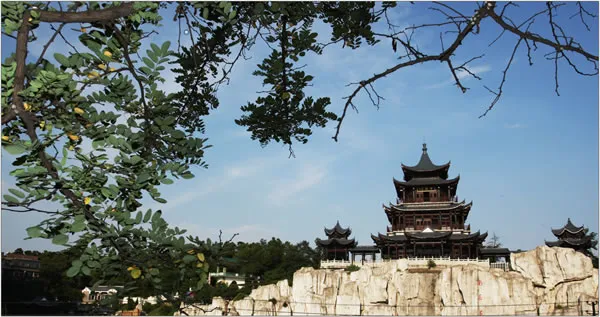
Yanfeng is a historical and cultural destination. It embodies a convergence of diverse cultural legacies: wild Goose culture, religious culture, Chuanshan culture (associated with philosopher Wang Fuzhi), Culture of the War of Resistance Against Japanese Aggression, academy traditions, and "red culture" (revolutionary history). It is home to: the millennium-old Yanfeng Temple; "Pingsha Luoyan" (Wild Geese Alighting on Sandbank) – the top-ranked scene among the Xiaoxiang Eight Scenes; Hunan Third Normal School(known as the "Cradle of Revolution in Southern Hunan"); the renowned Qing-era Chuanshan Academy; the red-themed Hengyang Party History Museum; and the site of the “Hengyang War Memorial City” stele.
Yanfeng is a hub of industrial clusters. With 59 large-scale industrial enterprises, it ranks first in the urban area. Its leading industry—power transmission and distribution—is one of the 12 key industries in the Manufacturing Power Province "1274" Initiative. Industry leaders such as Hengyang Tebian, Jinbei Electric, Hengfei Cable, and Qidi Guhan are industry standard setters here.
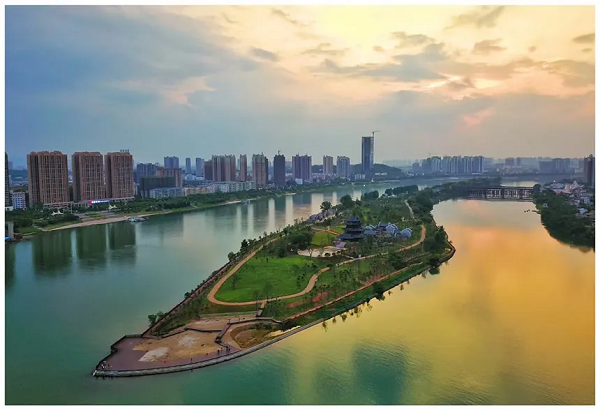
Yanfeng is a hub of openness and innovation. It is the city’s only provincial demonstration counties and cities for the transfer and transformation of scientific and technological achievements, and the only innovative district approved in the city and among the first batch in the province. The area boasts 16 municipal-level engineering technology research centers, 1 national-level technology center, 7 provincial-level enterprise technology centers, 2 technology research centers, 1 engineering laboratory, and 1 industrial design center.
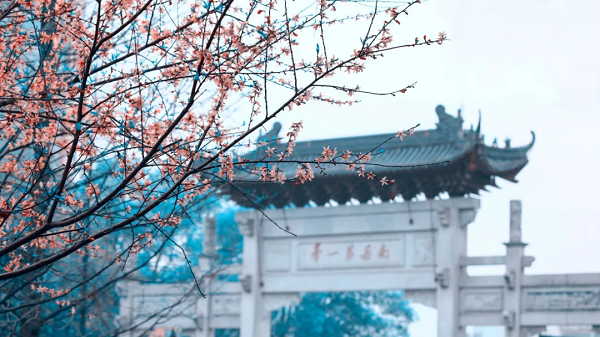
Yanfeng is an eco-friendly and livable paradise. It features four scenes from the "Eight Ancient Views of Hengzhou" – Yanfeng Misty Rain, Huayao Spring Stream, Yueping Snow Ridge, and Dongzhou Peach Waves. The district contains 51 schools, recognized as a National Community Education Experimental Zone, National Balanced Compulsory Education Development Zone, and Provincial Modern Educational Technology Pilot Zone. With 8 parks constituting 70% of Hengyang's urban green spaces, it hosts 3 AAA-rated tourist attractions and preserves 80% of the city's ecological resources.
Zhuhui District derives its name from the historic Zhuhui Pagoda within its territory.
In the Spring and Autumn Period, the area belonged to the Chu State. During the Qin Dynasty, it was administered under Changsha Commandery. In 202 BCE (the 5th year of Emperor Gaozu of Han), Ling County was established with its seat at present-day Hudong Village, Heping Township, Zhuhui District, remaining under Changsha Commandery.
In 196 CE (the 1st year of Jian'an era, Eastern Han Dynasty), Linzheng County was established through the territorial reorganization of the northeastern sector of Ling County's southern district and the eastern sector of Zhengyang County, with its administrative seat maintained at the former Ling County capital.
In 220 CE (Three Kingdoms period), Xiangdong Commandery was established from southeastern Changsha Commandery, with its capital at Ling County. During the Sui, Tang and Song dynasties, the territory remained part of Hengyang County.
In 1337 (the 3rd year of Zhiyuan era, Yuan Dynasty), it was governed under Xincheng County of Hengzhou Route, Huguang Province. In 1377 (the tenth year of Hongwu era, Ming Dynasty), it belonged to Hengyang County under Hengzhou Prefecture.
In 1756 (the 21st year of Qianlong era, Qing Dynasty), Zhuhui was incorporated into Qingquan County under Hengzhou Prefecture, Heng-Yong-Chen Route, Hunan Province.
In 1913 (the 2nd year of Republic of China), it became part of Hengyang County. In 1914 (the 3rd year of Republic of China), jurisdiction transferred to Hengyang Route. In 1920 (the 9th year of Republic of China), all counties came under direct provincial administration.
On January 1, 1942, the area was designated as the fifth district under municipal administration. In August 1949, it returned to Hengyang County. On October 8, 1949, it became the fifth district again before being reclassified as the third district in September 1951. In May 1955, it was officially named Jiangdong District.
On April 23, 1960, the district was restructured as "Jiangdong District People's Commune of Hengyang". In 1961, Shiziling and Hubei Road sub-communes were abolished while Dongyangdu sub-commune was established.
In June 1977, Xinxiang Subdistrict was created. In January 1982, Hunan Road Subdistrict was renamed Guangdong Road Subdistrict.
In April 2001, Hengyang's urban redistricting renamed Jiangdong District as Zhuhui District, incorporating Chashan'ao Town, Dongyangdu Town, Heping Township and Linghu Township from the former suburban area.
On November 17, 2006, Wangjiang Village and Maoping Village from Xiantang Town, Hengnan County were transferred to Linghu Township. On September 5, 2007, these villages were separated to establish Hengzhou Road Subdistrict.
Zhengxiang District is a new district formed in 2001 when the district was adjusted to the former suburban area as the main combination. With a total area of 110.52 square kilometers and a permanent resident population of 289,100, it governs two towns, namely Yumushan and Daiyingling, and four sub-districts, namely Zhengxiang, Hongxiang, Lianhe and Huaxing (the latter is under the jurisdiction of the High-tech Zone).
In recent years, it has successively won 130 national and provincial honorary titles including "National Science and Technology Progress Zone", "Comprehensively build counties, county-level cities and municipal districts to the well-off-society standard", "Achieve remarkable results in implementing policies and measures such as the opening up and rise of counties, county-level cities and municipal districts" and "Attain notable effects of high-quality development of counties, county-level cities and municipal districts".
Zhengxiang District has strategic location advantages. With the municipal Party committee and government as well as other major Party and government offices located here, Zhengxiang District serves as the political, economic and cultural center of Hengyang city. It boasts a well-connected and efficient transportation network, with National Highway G322, Provincial Highway S315, the western Outer Ring Road and the Hengyang-Zaomupu Expressway crisscrossing the area. The Tanhengxi (Xiangtan-Hengyang West) Expressway and Hengshao (Hengyang-Shaoyang) Expressway traverse the district, while major urban thoroughfares such as Jiefang Avenue, Chuanshan Avenue and Cailun Avenue run through its core, ensuring seamless regional access and intra-city mobility.
Zhengxiang District has picturesque natural sceneries. Just 10 kilometers from the urban center lies the Yumu Mountain 3A-level Scenic Area, which is renowned as " the Green Lung of the City" and "Hengyang's Backyard Garden". The area features 16 natural attractions and 33 cultural heritage sites, including the nationally unique Diku (means Emperor Ku) Temple--a shrine dedicated to Emperor Ku. Legend traces its origins to Emperor Shun's southern tour over 4,000 years ago, when it was built to honor Emperor Ku. Additionally, the Chisong Taoist Temple and Yanyu Buddhist Temple serve as key venues for religious activities.
Zhengxiang District has prosperous commerce and trade. It boasts 61 large-scale service enterprises with a combined 930,000 square meters of commercial complexes, along with 8 corporate headquarters and 11 specialized commodity markets. Landmark establishments such as Wanda Plaza, Taiyang Electric, Jingzhu Square, Rsun Mall, Red Star Macalline and Shanshan Outlets -- together with retail giants like Bubugao Square -- form the city's largest central business district. Further enhancing its prominence, the Yangliu Auto Sales Block stands as southern Hunan's largest automobile trade center.
Zhengxiang District has thriving industries. It boasts over 10 agricultural product brands including Tuqiao Village's Cuiguan (a variety) pears and Linjiang Village's Jingxiang (also a variety) peaches. There are 35 large-scale industrial enterprises, with 42 companies in the steel pipe and deep-processing industry chain led by Hengyang Steel Pipe Group, employing over 30,000 people and generating 18 billion yuan in sales. The financial sector flourishes with 34 financial institutions clustered here.
Zhengxiang District has habitable environment. As the city's first provincial-level civilized urban district, it boasts a rich cultural atmosphere with six general colleges and universities including University of South China and Hunan Institute of Traffic Engineering. Over 30 high-quality residential communities are scattered throughout the area, enhancing living standards and getting the favor of countless people. The district offers abundant cultural tourism resources, with popular destinations like the Wonder Stones Cultural Museum, Artists' Village and Ten-mile Lotus Pond leisure bases.
According to preliminary calculations, Zhengxiang District achieved a gross regional product (GRP) of 30.868 billion yuan in 2024, marking a 3.8% year-on-year growth. The primary industry contributed 334 million yuan with 2.1% growth, the secondary industry 11.076 billion yuan with 5.2% growth, and the tertiary industry 19.458 billion yuan with 3.0% growth. These industries accounted for 1.1%, 35.9% and 63.0% of GRP respectively, with their contribution rate to economic growth of 0.7%, 50.2% and 49.1%, promoting economic growth of 0.03%,1.9% and 1.8%. Real GDP per capita reached 106,849 yuan based on the resident population.
The annual consumer price index (CPI) registered a 0.1% decline year-on-year, with food prices dropping 1.1% while prices in education, culture and recreation categories rose by 1.7%.