-- Article list --
China's commerce ministry, alongside other government departments, released an action plan on Monday to stabilize and optimize foreign investment utilization.
The action plan details 15 measures to be taken across five areas, which include expanding market access, facilitating investment procedures, enhancing investment promotion, strengthening services and guarantees for foreign investment, and improving foreign capital management.
The plan prioritizes expanding market access in services, finance and pharmaceuticals, among other sectors, while streamlining processes for cross-border mergers and acquisitions, data flows, and domestic reinvestment by foreign firms.
It also outlines concrete measures to promote the "Invest China" initiative and fully ensure national treatment for foreign-funded enterprises.
With manufacturing access restrictions now fully lifted, the action plan focuses on services, targeting broader market access in fields including education, finance and healthcare.
To further open the service sector, the plan adds pilot programs in vocational training, schools and high-level universities, while allowing more foreign financial institutions to manage risks via treasury bond futures and conduct fund investment advisory services, according to Ling Ji, vice minister of commerce and deputy China international trade representative.
The plan fully implements national treatment for foreign-funded firms, addressing their concerns over equal participation in government procurement and fair access to business operations, while also supporting them in the country's pro-consumption initiatives such as consumer goods trade-in programs and tax refunds for overseas shoppers.
Jing Qin, an official with the National Development and Reform Commission, said the commission will focus on institutional opening up, gradually expand access to China's commodity and service markets, and align rules and regulations with international standards in areas including intellectual property protection, government procurement and finance.
Action Plan for Stabilizing and Optimizing Utilization of Foreign Investment
A matchmaking conference for major foreign investment and cooperation projects of Hunan Province in 2024 was held in Changsha on October 17. The Directory of Major Foreign Investment and Cooperation Projects of Hunan Province for 2024 was announced at the meeting, highlighting a total of 44 projects.
According to the directory, there are 16 investment projects, mainly involving agriculture, electric power, electronics, new materials, and industrial parks, and 28 foreign contracted projects, including electric power and water conservancy energy, mining, infrastructure, transportation, and business services industries. Representatives of the Hunan Afritech Greencrops Group Co., Ltd. and other eight enterprises introduced and shared their major projects.
In recent years, "Hunan investment" spreads all over the world, "Hunan construction" enjoys global reputation, "Hunan labor" serves the world, and Hunan keeps deepening and consolidating "Belt and Road" Initiative investment and cooperation. Up to now, 986 Hunan enterprises are operating overseas, stepping into 111 countries and regions. A total of 1,974 foreign contracted projects are implemented, serving 124 countries and regions. "By organizing this matchmaking conference, we encourage all participants to seize the opportunity to advance cooperation and exchanges, fostering a 'Hunan synergy' in foreign investment and cooperation. I hope it will stimulate the confidence and drive for Hunan enterprises to 'go global'," said Guo Ning, deputy director of the Department of Commerce of Hunan Province.
In the first half of this year, Hunan's newly-signed foreign contracted projects were valued at 1.38 billion USD, an increase of 128.8%. The completed turnover reached 1.34 billion USD, up 39.0% year on year. The 'going global' construction industry continued to stay stable and sound. Wu Yong, deputy director of the Hunan Provincial Department of Housing and Urban-Rural Development, remarked that Hunan has a complete construction industry chain, from project plan, design, production, and construction to operation and maintenance management, with strong scientific and technological talent support at each process. In the future, we will further optimize our service initiatives to provide enterprises with a full range of services such as project consultation, approval services, and financing support; further encourage group cooperation to enhance the competitiveness at global market; and, further promote the introduction of talents to cultivate more internationalized professionals through school-enterprise cooperation, so as to inject new impetus into the enterprises' "going global", he added.
This article is from the Hunan Provincial Government www.enghunan.gov.cn.
In October 2022, General Secretary Xi Jinping pointed out at the 20th National Congress of the Communist Party of China (CPC) that China is striving to "promote high-standard opening-up. We will leverage the strengths of China's enormous market, attract global resources and production factors with our strong domestic economy, and amplify the interplay between domestic and international markets and resources. This will position us to improve the level and quality of trade and investment cooperation." According to the 2023 Report on the Work of the Government, China will "intensify efforts to attract and utilize foreign investment. We should expand market access and continue to open up modern services sector. We should ensure national treatment for foreign-funded companies. We should take active steps to see China join the Comprehensive and Progressive Agreement for Trans-Pacific Partnership (CPTPP) and accede to other high-standard economic and trade agreements, and steadily expand institutional opening up by proactively adopting relevant rules, regulations, management, and standards. We should continue to leverage the role of imports and exports in driving economic growth. We should improve services for foreign-funded companies and facilitate the launch of landmark foreign-funded projects."
Full text: Foreign Investment Guide of the People's Republic of China (2023 Edition)
Source: Ministry of Commerce of the People's Republic of China



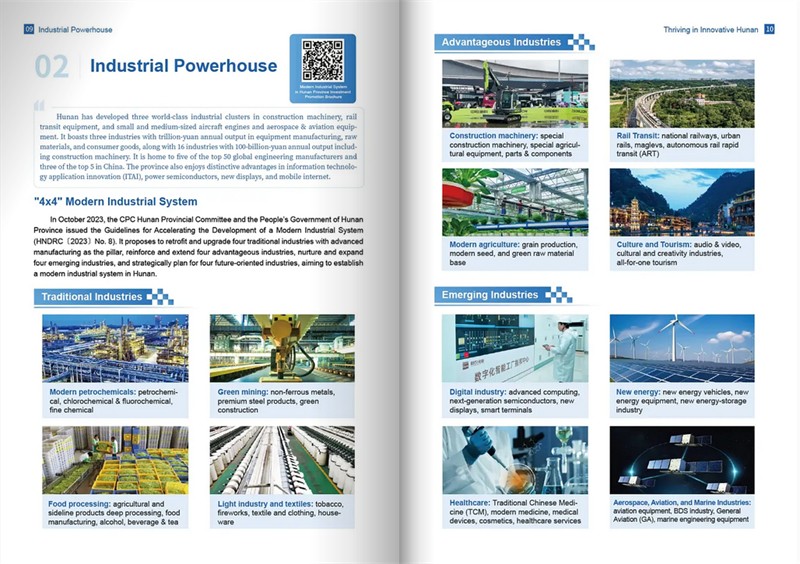
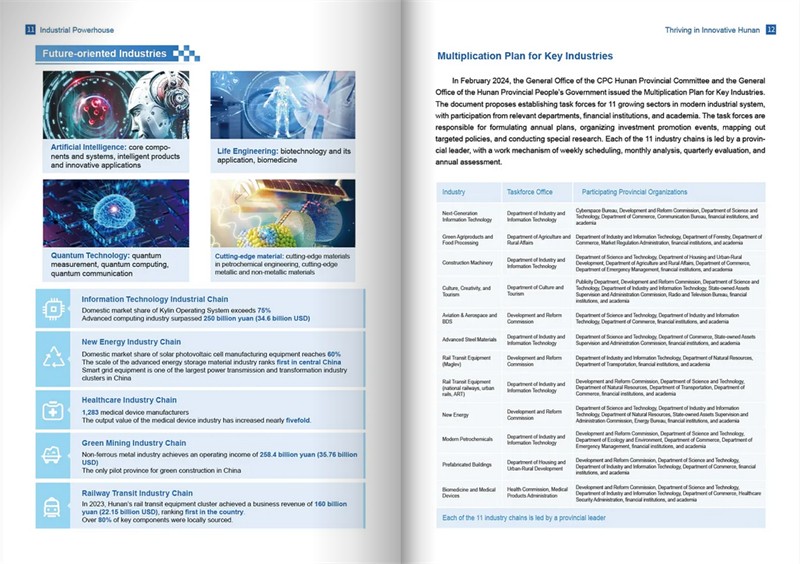
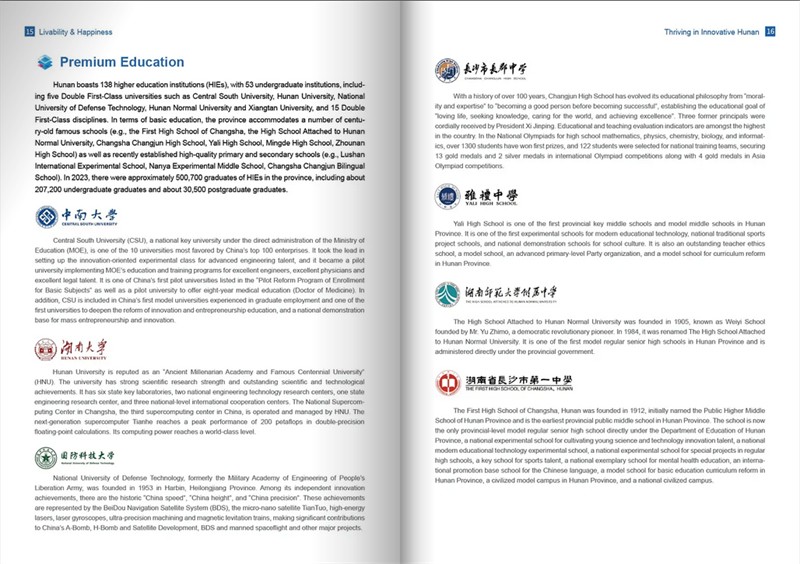
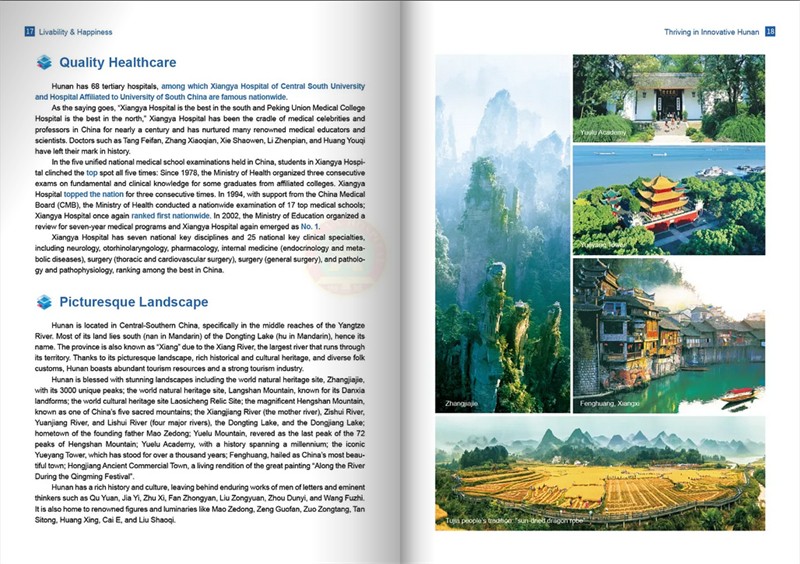

China released the 2022 catalogue of industries for encouraging foreign investment (full list in Chinese availableCatalogue of Encouraged Industries for Foreign Investment (2022 Version)) on Friday, a move widely seen as part of intensified efforts to attract more foreign investment and expand high-standard opening-up.
Analysts said the revised catalogue will help boost foreign investment in key industries like advanced manufacturing, high-tech, modern services and environmental protection. It will also help facilitate greater inflow of foreign capital into the country's central and western regions.
That will reinforce China's position in global industrial and supply chains and eventually inject more stability into the global economy, they said.
To take effect on Jan 1, the freshly unveiled catalogue has 1,474 items, among which 239 are new and 167 are modified from that in the previous catalogue released in 2020, according to a statement from the National Development and Reform Commission.
"The items applicable on the national level continue to focus on encouraging foreign investment in the manufacturing sector to enhance industrial and supply chains," said an NDRC official in the statement.
"The modifications of the national items mainly target promoting the integration of services and manufacturing sectors," the official said, adding items for central and western regions are designed in accordance with specific labor and resource conditions of different places.
For instance, new or revised national items in the catalogue cover sectors including aviation equipment manufacturing, key industrial components used in autonomous driving, and high-performance raw materials.
They also cover advanced integration technologies and services for low-carbon environmental protection, energy and water conservation, as well as recycling of decommissioned wind turbine blades and photovoltaic module waste.
Zhou Mi, a senior researcher at the Chinese Academy of International Trade and Economic Cooperation in Beijing, said the revised catalogue has adapted well to China's current external and internal conditions to better attract foreign investment.
"As the global economy has seen major changes in supply and demand dynamics and industrial structures since 2020, countries around the world are competing to attract foreign investors, although with differentiated focuses on specific areas," Zhou said.
"China is expected to better attract and promote foreign investment under the principle of reinforcing coordination between foreign investment and the development of China's industrial and supply chains," he said, adding that this will further allow for the sharing of China's development opportunities with foreign investors and the rest of the world.
Liu Ying, a researcher at Renmin University of China's Chongyang Institute for Financial Studies, said the country's accelerated moves to expand opening-up, as reflected by the revision of the catalogue, will intensify its position as a key player within global networks of industrial and supply systems.
Against the backdrop of the struggling global economy and industrial and supply chain reconstruction, China's further opening-up will help to build more open, stable and elastic global industrial and supply chains while contributing to new worldwide growth momentum, Liu said.
The catalogue was jointly released by the NDRC and the Ministry of Commerce.


A Foreign-funded enterprise which holds or uses state-owned assets shall, after obtaining the certificate of approval issued by the Hunan Provincial Department of Commerce, and submitting the contract, articles of association, certificate of approval (photocopy), the Report on Verification of Capital, and the Certificate of Capital Contribution by the Chinese and Foreign Parties (including a detailed property list, and the Notification of Confirmation of Assets Evaluation) issued by a public accounting office, to go through the procedures for property registration of state-owned assets, at the management department of the state-owned assets relevant to the financial relationship of administrative subordination.
(Any construction project with foreign investment shall go through the following formalities.)
1. For construction projects having a comparatively large impact on the environment, the project constructor shall fill in an Environment Protection Examination Opinion Form for Constructed Project, before the project proposal is approved, and submit the form to the Environmenal Protection Bureau, for consent to be used as the basis of project proposal approval. The provincial level department can approve the project proposal. Projects with investments of over RMB 50 million, and heavy pollution, shall be examined and approved by the provincial Environmental Protection Bureau. Other projects may be examined and approved by municipal level Environmental Protection Bureaus.
2. The project constructor shall submit an Environment Impact Report to the Environment Protection Bureau, for approval (Table).
3. After the project is completed, the enterprise shall apply to the Environmental Protection Administration, for acceptance of protection facilities, and obtain an "Acceptance Certificate of Environment Protection Facilities", after which the project may start regular operation.
4. After the project is put into operation, the enterprise shall register the pollution discharge with the local Environmental Protection Authority, and obtain a License of Pollution Discharge.
The removal and streamlining of approval procedures for certain foreign-invested projects will attract and assist overseas companies while benefiting overall investment this year, experts and industry insiders said.
In a recently released guideline, the National Development and Reform Commission said that foreign-invested projects under $30 million will no longer need to follow filing procedures for approval.
Also, approval for projects over $30 million and under $300 million will be handed from ministerial-level authorities to provincial-level ones. The projects must be in industries covered by China's Catalogue of Industries for Encouraging Foreign Investment.
The changes were announced in a broader guideline released by the NDRC on March 22 on further facilitating and streamlining investment projects.
Researchers and insiders believe the step will further boost China's ability to attract foreign investment as procedures are eased and the role of lower-level governments is increased.
Guo Meixin, a senior researcher at the Academic Center for Chinese Economic Practice and Thinking at Tsinghua University, said the move will not only cut red tape for overseas businesses, but also encourage provincial-level governments to work more closely with the NDRC.
Guo said based on the center's research data most of the foreign-invested projects under $30 million and which qualify under the catalogue of industries are small and medium-sized ones in scientific and technological research, software and manufacturing industries.
Projects below $30 million are relatively small and those between $30 million and $300 million are more likely to be medium-sized ones, she added.
Guo said providing more power of approval to provincial-level governments will incentivize them to develop potential foreign projects.
The guideline made clear that for projects between $30 million and $300 million, the potential investor will be allowed to directly file the application with provincial-level authorities.
"Provincial-level governments, more often than not, know more specifics of these investment projects than the NDRC," she said. "Giving them such a mandate will help formulate a positive link between local governments and foreign businesses."
Greater market role
The changes are part of the country's broader efforts to let the market play a more decisive role in allocating resources by cutting institutional costs for foreign businesses and building a level-playing field, she added.
Guo said that with some countries, particularly in Asia, gradually resuming production as they recover from the economic impact of the COVID-19 pandemic, China's foreign trade volume may face pressure in the second quarter. This is why the NDRC changes are timely and necessary, she said.
Tu Xinquan, dean of the China Institute for WTO Studies at the University of International Business and Economics in Beijing, believes the steps are part of China's overall efforts to boost investment this year.
"As economic recovery is gradually gathering pace and a certain amount of investment is needed to sustain growth momentum for the wider economy the encouragement of foreign investment is an important step," Tu said.
He added that the changes were in line with China's policy direction of promoting opening-up and luring overseas investment.
The National Bureau of Statistics figures show that from January to February the value of fixed asset investment stood at 4.52 trillion yuan ($688 billion), a 25 percent year-on-year increase and up 3.5 percent from 2019.
Foreign businesses welcomed the changes to encourage foreign-invested projects.
Michael Mei, vice-president at Smiths Group, a United Kingdom-based industrial goods manufacturer that operates across 55 countries and regions, sees the adjustments as China's latest effort to deepen reform, promote opening-up and further improve the country's business environment.
"Removing the previous filing requirements will facilitate investment procedures for foreign investors and improve our efficiency. It will be conducive to luring foreign businesses to set up more projects in China at a faster pace," he said.
"What we expect is that provincial-level governments can fully implement the policy adjustment in coordination with the NDRC, so that this incentive will be a clear, stable and consistent one in its implementation," he added.
Bai Ming, deputy director of the Ministry of Commerce's International Market Research Institute, said the changes to approve projects under $30 million were a major step.
"Smaller investment projects need much greater flexibility to meet market demands and are much more responsive to an evolving economic situation," he said. "It's often the case that by the time filing procedures are completed the golden time for investment is gone."
With the country making progress in streamlining administrative procedures and improving the role of government functions, the changes to approval of smaller projects should go smoothly when oversight of compliance is in place, he predicted.
Bai said China has been working hard to expand market access for foreign investors. Items on the negative list for foreign investors in China have been cut to 33 from 93.
The World Bank's Doing Business report last year indicated that China carried out a record eight business reforms last year and ranked 31st among 190 countries in terms of the ease of doing business.
"Foreign investment will be playing an increasingly visible role in stabilizing China's economy via job creation and stabilizing supply and production chains," he said. "These policy incentives will continue to facilitate foreign investors and help them enjoy accessible government services in China."
Article 1 For the purpose of promotion of development of Chinese technology import, these Measures is formulated in accordance with the Foreign Trade Law of the People's Republic of China and the Regulations of the People's Republic of China on Administration of Import and Export of Technologies .
Article 2 The import of technologies that falls within the Technologies Prohibited from Import in the Catalogue of Technologies the Import of Which Is Prohibited or Restricted (published separately) shall be prohibited.
Article 3 The State adopts a licensing system for the import of technologies the import of which is restricted. The importer of technologies that falls within the Technologies Restricted to Be Imported is in the Catalogue of Technologies the Import of Which Are Prohibited or Restricted shall apply for licenses in accordance with these Measures.
Article 4 The competent commercial authorities of provinces, autonomous regions, and municipalities directly under the Central Government (hereinafter referred to as the local competent commercial authorities) shall be the review authorities of restrictive import of technologies, which are responsible for licensing of the restrictive import of technology in their administrative divisions. The enterprises under the administration of the Central Government shall go through the licensing procedures with the local competent commercial authorities in the territorial principle.
Article 5 The operator of technology import shall fill in the Application of Chinese Restrictive Technology Import (hereinafter referred as the Application, see Schedule 1) and report it to the local competent commercial authorities for import licenses while importing the technologies restricted as specified in the provision of Article 3 of these Measures.
Article 6 The local competent commercial authorities shall organize technology and trade experts to conduct technical and trade examination and review on the technology under application for import within 30 working days upon receipt of the Application and determine whether or not to approve the import thereof.
Where the applier provides incomplete application materials, the content of application is not clear or there are other circumstances that fail to conform to the prescribed provisions, the local competent commercial authorities shall require the applier to make corrections or make up for the application materials.
Article 7 Trade review on restricted technology import shall include the following contents:
(1) Whether or not comply with Chinese foreign trade policies and benefit the development of foreign economic and technical cooperation;
(2) Whether or not comply with the duties committed by China to the outside world; and
(3) Whether or not cause adverse effect on the establishment and acceleration of establishment of specific domestic industries.
Article 8 Technical review on restricted technology import shall include the following contents:
(1) Whether or not threaten state security, social public interests or public morality;
(2) Whether or not threaten the health or safety of human and life or health of animals and plants;
(3) Whether or not destroy environment; and
(4) Whether or not comply with national industrial policies and economic and social development strategy and benefit the promotion of Chinese technical progress and industrial upgrading and maintenance of Chinese economic and technical rights and interests.
Article 9 Where an application for technology import is approved, the local competent commercial authorities shall issue the Letter of Intent for Licensing Technology Import of the People's Republic of China (hereinafter referred to as the Letter of Intent for Licensing Technology Import, see Schedule 2) uniformly printed, prepared and numbered by the Ministry of Commerce. The valid period of the Letter of Intent for Licensing Technology Import is 3 years.
The operator of technology import shall sign technology import contracts with foreign parties after acquiring the Letter of Intent for Licensing Technology Import.
Article 10 The operator of technology import shall hold the Letter of Intent for Licensing Technology Import, copy of the contract and its schedules and certifications of legal status of contractual parties to apply for the technology import license with the local competent commercial authorities after signing the technology import contract.
Article 11 The local competent commercial authorities shall review on the authenticity of the technology import contract within 10 working days upon receipt of the documents prescribed in Article 10 of these Measures, and determine whether or not to approve the license.
Article 12 The operator of technology import may submit the copy of the signed technology import contract and its schedules as well as certification of legal status of contractual parties while filing an application for technology import to the local competent commercial authorities according to Article 5 of these Measures.
The local competent commercial authorities shall organize technology and trade experts to conduct examination and review on the technology under application for import within 30 working days upon receipt of the above-mentioned documents, and determine whether or not to approve import. The local competent commercial authorities shall conduct examination and review on the authenticity of the technology import contract within 10 working days upon approval of import, and determine whether or not to approve the license.
Where the applier provides incomplete application materials, the content of application is not clear or there are other circumstances that fail to conform to the prescribed provisions, the local competent commercial authorities shall require the applier to make corrections or make up for the application materials.
Article 13 Where technology import is licensed, the local competent commercial authorities shall issue to the operator of technology import the Technology Import License of the People's Republic of China (hereinafter referred to as the Technology Import License, see Schedule 3) uniformly printed, prepared and numbered by the Ministry of Commerce. The restricted technology import contract shall take effect as of the date of the issuance of the Technology Import License.
Article 14 The operator of technology import shall have access to the "information management system of technology import and export contract" on the website of the Ministry of Commerce (website: jsjckqy.fwmys.mofcom.gov.cn) and record the content of the contract according to the procedures before acquiring the Technology Import License from the local competent commercial authorities.
Article 15 Where the investment projects that shall be examined and approved or checked by the relevant departments involve restricted technology import, the operator of technology import shall submit the documents approved by the relevant departments while filing an application for technology import to the local competent commercial authorities according to Article 5 or Article 12 of these Measures.
Article 16 The operator of technology import shall renew the procedures of technology import licensing according to the procedures prescribed by these Measures if the content of technology import needs to be altered after acquiring the Technology Import License.
Article 17 The operator shall go through the relevant procedures including foreign exchange, banking, taxation and Customs by holding the Technology Import License.
Where the import of technologies falls within the Technologies Restricted from Import in the Catalogue of Technologies the Import of Which Is Prohibited or Restricted, the operator of technology import shall take initiative to present to the Customs the Technology Import License and the Customs shall handle the procedures for examination and declaration against the Technology Import License.
Article 18 The Ministry of Commerce shall be responsible for supervision and examination on the technology import licensing by the local competent commercial authorities.
The local competent commercial authorities shall report the approved technology import licensing items of the previous year to the Ministry of Commerce for filing before January 31 every year.
Article 19 In case of violation of the provisions of these Measures, the responsibilities of the persons and units concerned shall be prosecuted in accordance with the Regulations of the People's Republic of China on Administration of Import and Export of Technologies .
Article 20 These Measures is not applicable to the import of special technologies for defense and military use.
Article 21 These Measures shall take effect 30 days after promulgation. The Measures for the Administration of Prohibited and Restricted Import of Technologies (the former Degree No. 18 [2001] of the Ministry of Foreign Trade and Economic Cooperation and the State Economic and Trade Commission) is abolished at the same time.
The Ministry of Commerce of the People's Republic of China 2009-02-01
To all provinces, autonomous regions, municipalities, cities specifically designated in the state plan , Xinjiang Production and Construction Corps., commerce departments of Changchun, Shenyang, Jinan, Nanjing, Hangzhou, Guangzhou, Wuhan, Chengdu and Xi'an, national economic and technological development zones and border economic cooperation zones; branch bureaus and foreign exchange administration departments of the State Administration of Foreign Exchange (SAFE) in all provinces, autonomous regions and municipalities, and SAFE branch bureaus of Shenzhen, Dalian, Qingdao, Xiamen and Ningbo,
In order to regulate the approval procedures and foreign exchange management of foreign-funded investment companies, and promote the development of foreign-invested investment companies, relevant requirements are hereby notified as follows:
1. Commerce authorities at all levels should strengthen the administration of the approval of statistical information of foreign-funded investment companies. Approved foreign-funded investment companies should be noted as “Investment Company” in the Basic Information Sheet of Foreign-invested Enterprises, and registered in the system of administration of review and approval for foreign-invested enterprises of MOFCOM. Other types of enterprises are not allowed to name themselves as “Investment Company” or “Investment Holdings”, or similar terms. These requirements will be regarded as important issues in the joint annual inspection of foreign-invested companies.
2. Domestic loan of foreign-funded investment companies shall not be used for reinvestment in China.
3. Foreign-funded investment companies may, with the approval of local foreign exchange bureau, directly use RMB profits, RMB obtained in China by way of early recovery of investment gains, liquidation, equity transfer and capital reduction for domestic investment. Foreign investors may also carry out domestic investment with the said legitimate income after register capital (investment increment) to investment companies. Foreign-funded investment companies shall provide the foreign exchange administration authorities with the following materials when applying for domestic investment approval:
(A) Written application;
(B) IC card for foreign exchange registration of foreign-funded companies
(C) Documents from commerce authorities approving domestic investment of foreign-funded investment companies
(D) Evidence of RMB funding sources and documents submitted for domestic reinvestment of profits, early recovery of investment gains, liquidation, equity transfer and capital reduction (increment) of legitimate RMB income of foreign-funded investment companies.
(E) The latest capital verification report and financial audit report (with the audit report of foreign exchange income and expenditure).
Foreign-funded investment companies may transfer RMB funds directly to the invested enterprises, or transfer to a foreign-funded investment company,before transferring to the invested enterprise after the materials are reviewed and approved by the local foreign exchange bureau.
The local foreign exchange bureau shall process capital verification with the working letter of accounting form, the application (for inflow) for capital verification, letter of inquiry for capital placement of foreign investor, and copies of the said documents for domestic investment from local foreign exchange bureau. The amount and date of verification should be marked on the original copy.
Commerce departments and foreign exchange administrative departments at all levels should contact and inform the Department of Foreign Investment Administration of MOFCOM and the Department of Capital Project of SAFE in case of any problems in implementation.
Ministry of Commerce of the People’s Republic of China
State Administration for Foreign Exchange
December 8, 2011
1. Forms of Title Transfer
The state-owned title transfer may be conducted in such forms as bidding, auction, agreement and in other forms approved by the state law and administrative regulations.
2. Procedures of Title Transfer
(1)Check and approval: the state-owned title transfer should be reported to the government for approval in accordance with the state regulation. The target for transfer needs financial auditing, asset check and evaluation.
(2)Application for registration and entrustment: the seller lets the transfer agency issue notice.
(3)Signing of Contract, dealing with payment and title transfer registration.
3. Scope and Parties of Title Transfer
(1)Title transfer may cover part or whole of the property rights and the management rights of an enterprise.
(2)The parties concerned may be foreign, state-owned and collective enterprises, shareholding companies, private businesses and other economic entities, regardless of their system of ownership, line of business and location. The state law and administration regulation should be taken into consideration.
4. Disposal of the Income from the Title Transfer and Nature of the Transferred Title:
(1)The income from the transfer of the property rights shall belong to the seller of the property rights. The net income from transferring the state-owned title should be handled in accordance with relevant regulations.
(2)The nature of the property rights transferred shall be changed according to the nature of the buyer`s property rights.
China’s A shares will for the first time be available to international retail investors, when a “through train” liking the Shanghai and Hong Kong stock markets is rolled out on Nov 17.
Shanghai-Hong Kong Stock Connect will allow a net 23.5 billion yuan ($3.8 billion) of daily cross-boundary purchases, granting overseas investors greater access to A shares as well as diversifying domestic investments.
Here, we have prepared a hands-on guide for investors to get on the “train”:
1. What is Shanghai-Hong Kong Stock Connect?
The program, announced by Premier Li Keqiang in April, will allow international investors, institutional and retail, to trade Shanghai-listed stocks via the Hong Kong Exchange while Hong Kong H shares will be eligible for trading by mainland investors.
Before the program, direct access to A shares was limited to domestic investors and qualified foreign institutional investors within an authorized quota.
2. Who are eligible investors?
While all Hong Kong and overseas investors will be allowed to trade Shanghai-listed shares under stock connect, eligible participants for Southbound trade include mainland institutional investors and those individuals holding an aggregate balance of not less than 500,000 yuan in securities and cash accounts
3. How to open an account?
There are 94 brokers in Hong Kong and 89 in the mainland ready to participate in stock connect, according to a list provided by regulatory authorities as of Nov 12.
To trade through these market participants, retail investors will need to open an account and application documents include:
Proof of identification ― ID card, Entry Permit for traveling to and from Hong Kong and Macao or passport.
Proof of residence ― property ownership certificate, utilities bill, mobile bill or social security statement.
4. What are eligible stocks?
There are 568 eligible stocks for Northbound trading, namely constituent stocks of the Shanghai Stock Exchange 180 Index and SSE 380 Index as well as shares that are dual listed in the two bourses (A+H shares).
For Southbound, investors will be able to trade 268 eligible stocks, namely constituent stocks of the Hang Seng Composite LargeCap Index and Hang Seng Composite MidCap Index as well as shares that are dual listed in the two bourses (A+H shares).
5. Trading quota
Trading under stock connect will, initially, be subject to quota restrictions. Overseas investors can only invest a net value of as much as 300 billion yuan in A shares with a daily cap of 13 billion yuan, while mainland investors can only invest a net value of as much as 250 billion yuan in Hong Kong stocks with a daily cap of 10.5 billion yuan.
Both quotas apply on a “net buy” basis, which means investors will always be allowed to sell their cross-boundary securities regardless of the quota balance.
6. Trading hours and holiday arrangements
In initial operation of Shanghai-Hong Kong Stock Connect, investors will only be allowed to trade on the other market on days when both are open for trading and banking services are available on the corresponding settlement days.
Northbound trading will follow the trading hours of Shanghai Stock Exchange, while Southbound trading will follow those of Hong Kong Stock Exchange. Investors can place Northbound orders five minutes before the mainland market session opens in the morning and in the afternoon.
7. Trading currency
International investors will trade and settle Shanghai-listed stocks in renminbi only, while mainland investors will trade Hong Kong-listed stocks in Hong Kong dollars and settle trades in renminbi.
8. Settlement cycle
Northbound trades will follow the A share settlement cycle, meaning international investors buying Shanghai-listed stocks on T-day can only sell the shares on and after T+1. Therefore, day trading is not allowed for the A shares market.
For Southbound trading, mainland investors will be allowed to conduct day trading for Hong Kong stocks.
9. Fees and levies
International investors trading Shanghai-listed stocks under the program will be subject to a Handling Fee and Securities Management Fee by the Shanghai Stock Exchange, ChinaClear’s Transfer Fee, together with stamp duty and dividend tax imposed by the State Administration of Taxation (SAT).
Subject to regulatory approval, Hong Kong Securities Clearing Company will also impose a new fee, called “Portfolio Fee”, to collect monthly from market participants for providing depository and nominee services for their securities held in the Central Clearing and Settlement System.