-- Article list --
Better Converting "Inbound Passenger Flow" into "Onsite Consumption"
Cross-Region Recognition for Departure Tax Refund Service Implemented Among Hunan, Fujian, Guangdong, Guangxi, and Hainan
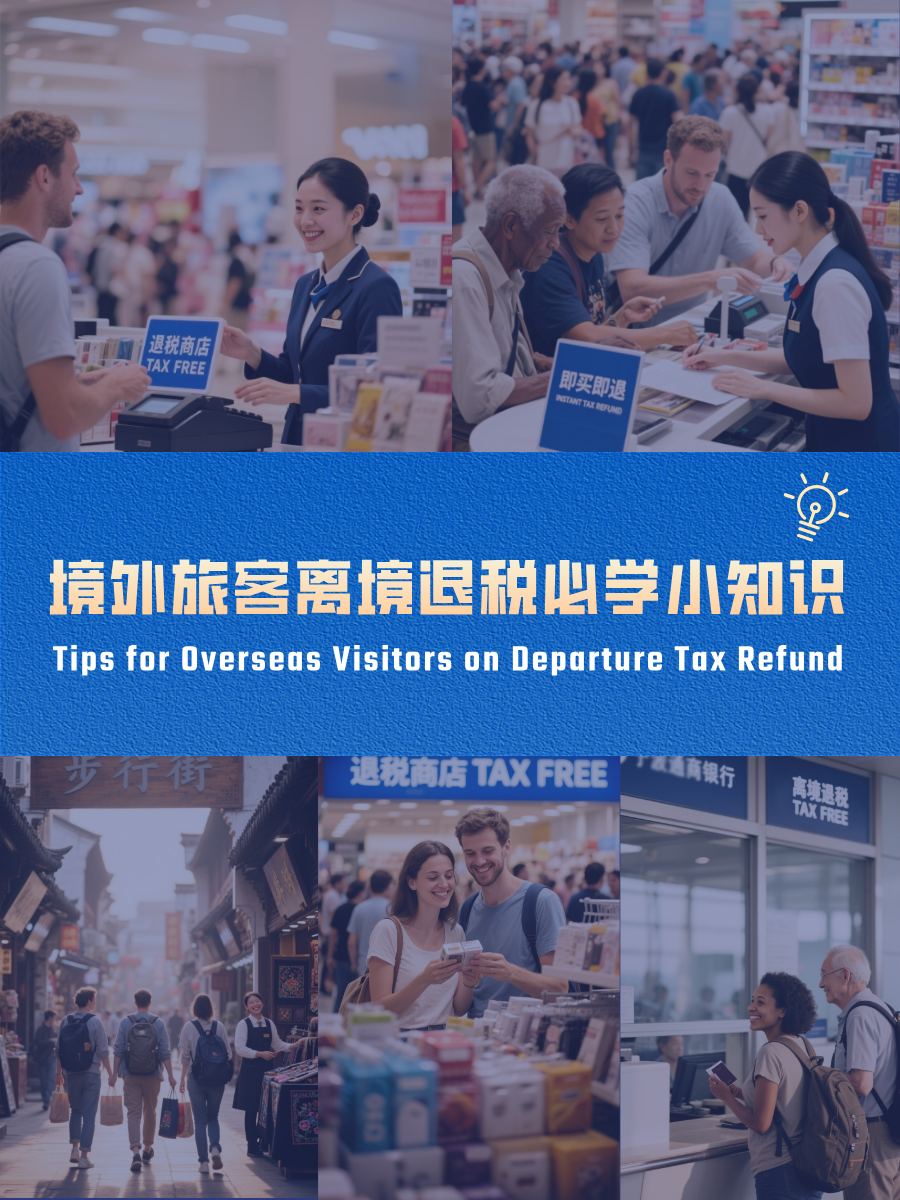
Recently, the Hunan Provincial Tax Service, Fujian Provincial Tax Service, Guangdong Provincial Tax Service, Guangxi Zhuang Autonomous Region Tax Service, Hainan Provincial Tax Service, Xiamen Tax Service, and Shenzhen Tax Service jointly issued an announcement clarifying that starting July 1, 2026, the cross-region recognition for "Instant Tax Refund" service will be implemented across Hunan, Fujian (including Xiamen), Guangdong (including Shenzhen), Guangxi, and Hainan, to better convert "inbound passenger flow" into "onsite consumption."
Hunan launched the "Instant Tax Refund" service in April 2025. So far, the province has issued 1,521 tax refund application forms for 1,206 overseas travelers, achieving a tax-inclusive sales volume of 55.9855 million CNY. To further smooth out the coordination channels for cross-border services between Hunan and regions including the Guangdong-Hong Kong-Macao Greater Bay Area, the Hainan Free Trade Port, the Western Taiwan Straits Economic Zone, and the Beibu Gulf Economic Zone, the Hunan Provincial Tax Service has collaborated with tax authorities in Fujian, Guangdong, Guangxi, Hainan, Xiamen, Shenzhen, and other regions to establish a "5+2" collaborative framework. This framework ensures mutual recognition of business rules, interconnectivity of information systems, and alignment of regulatory standards for the "refund-upon-purchase" service.
This means that if an overseas traveler purchases tax-refundable goods at an "Instant Tax Refund" store in Changsha or Xiamen, they can enjoy this service when departing from any departure port in Guangzhou or Shenzhen in Guangdong, or Guilin in Guangxi, or Haikou in Hainan.
"Under the new policy, overseas travelers have a wider range of departure port options and can plan more travel itineraries and consumption activities within these regions, thereby further driving overall regional inbound consumption," said Li Ronghui, deputy director of the Hunan Provincial Tax Service. He added that the bureau will leverage the cross-region recognition policy for departure tax refund service to collaborate with tax authorities in other provinces and Guangxi Zhuang Autonomous Region, thereby optimizing online tax refund services and launching a 'tax refund consumption map' to attract more overseas tourists for sightseeing.
China will improve the implementation of its tax and fee reduction policies further to support scientific and technological innovation, according to the State Taxation Administration.
The policy incentive of increasing additional tax deductions for research and development expenses should continue as a long-term institutional arrangement, administration official Wang Shiyu said in an interview with Xinhua.
Preferential tax and fee policies should be leveraged to encourage enterprises to double down on independent innovation, Wang said.
Efforts should also be made to explore preferential tax and fee policies to support the application of sci-tech achievements and improve the related policy environment, he said.
Chinese Premier Li Qiang has signed a State Council decree issuing a regulation on the implementation of the country's value-added tax (VAT) law, which will take effect on Jan. 1, 2026.
The regulation is designed to facilitate the effective enforcement of the law by providing detailed rules on its application.
The regulation specifies the scope of taxable goods, services, intangible assets and immovable property, and further defines taxpayer categories.
It also clarifies the application of VAT rates, including zero-rating for certain exports and cross-border sales of services and intangible assets.
In addition, the rules refine methods for calculating VAT payable, clarify standards for tax incentives, and strengthen VAT administration measures.
The VAT law was adopted at a session of the Standing Committee of the National People's Congress, the national legislature, in December last year.
Description
Taxpayers may make a declaration of individual income tax (IIT) by themselves in any of the following cases:
1. Taxpayers who obtain an annual income of 120,000 RMB or more (excluding those individuals who have no domicile within the territory of China and have resided within the territory of China for less than one year in a tax year) shall make declaration within 3 months after a tax year ends.
2. Taxpayers who obtain income from abroad (referring to individuals who have domicile within the territory of China or who have no domicile but have resided within the territory of China for less than one year in a tax year) shall make a declaration within 30 days after a tax year ends.
3. Taxpayers, who obtain wages and salaries from two or more sources within the territory of China, who obtain taxable income and there is no withholding agent, and who are under any other circumstances as prescribed by the State Council, shall make declaration within 15 days of the next month following obtaining taxable items calculated by month or by time.
4. Taxpayers, whose equities are transferred to any other individual or any legal entity, shall make declaration within the first 15 days of the following month.
5. Individual income tax on income from the transfer of restricted stock
(1) The IIT, levied by such ways as pre-withholding and prepayment by securities institutions, or self-filing and settlement by taxpayers, shall be pre-withheld and prepaid by securities institutions. If there is any discrepancy between taxable income, which is computed by a taxpayer on the basis of the actual transfer income and the actual cost, and the tax pre-withheld and prepaid by securities institution, the taxpayer shall handle the filing and settlement within 3 months as of the first day of the following month.
(2) Taxpayers who adopt self-declaration shall self-declare IIT on income from the transfer of restricted stock within the first 15 days of the following month, and handle all tax-related matters together.
6. Taxpayers shall file returns of and pay IIT on investments with personal non-monetary assets within the time limit for tax payment as agreed at the time of the recordation.
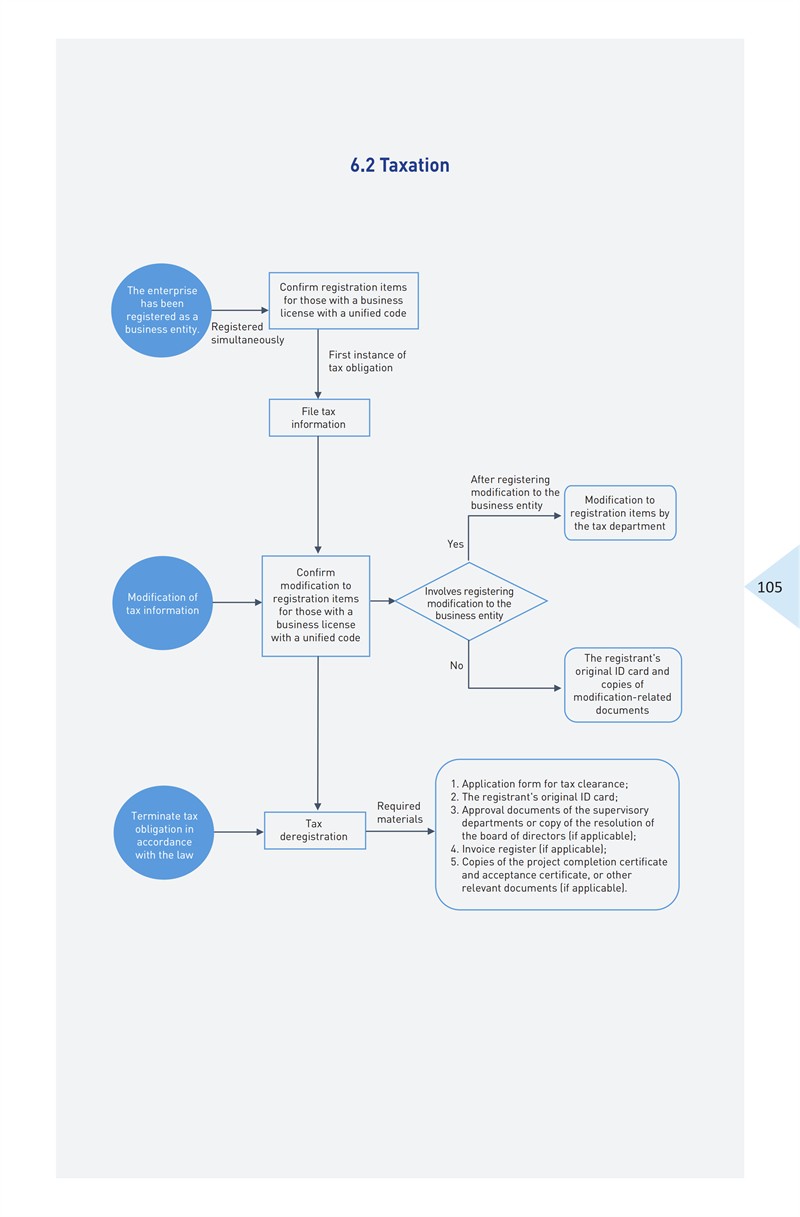
Submission
1. Taxpayers who firstly make declaration or change basic information shall submit:

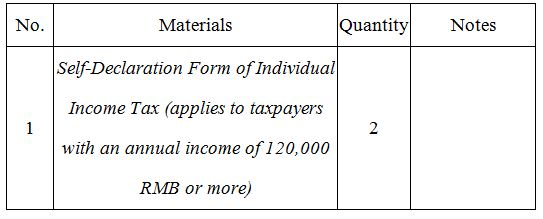
2. Taxpayers who obtain an annual income of 120,000 RMB or more shall submit:
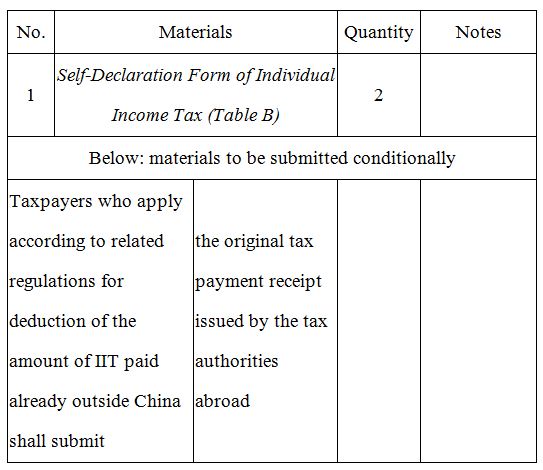
3. Taxpayers who obtain income from abroad shall submit:
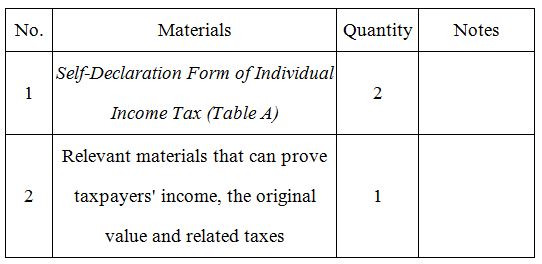
4. Taxpayers, who obtain wages and salaries from two or more sources within the territory of China, who obtain taxable income and there is no withholding agent, and who are under any other circumstances as prescribed by the State Council, shall submit:
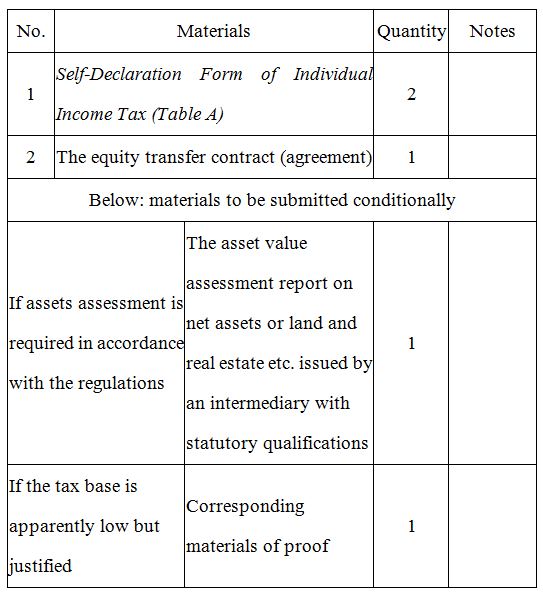
5. Taxpayers, whose equities are transferred to any other individual or any legal entity under circumstances as prescribed in the Measures for the Administration of Individual Income Tax on Equity Transfer Income (for Trial Implementation), shall submit:
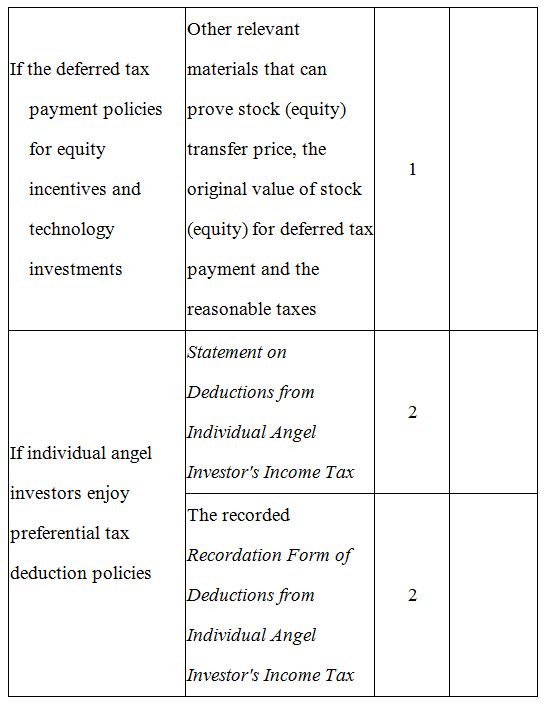
6. Individual income tax on incomes from the transfer of restricted stock
(1) Taxpayers, whose IIT are levied by such ways as pre-withholding and prepayment by securities institutions, filing and settlement by taxpayers themselves, shall submit:
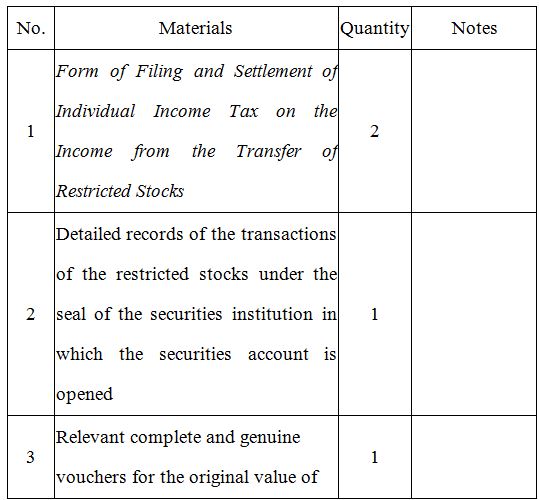
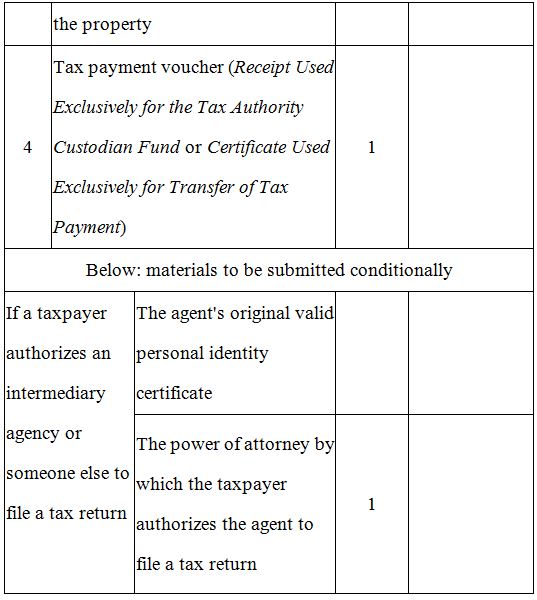
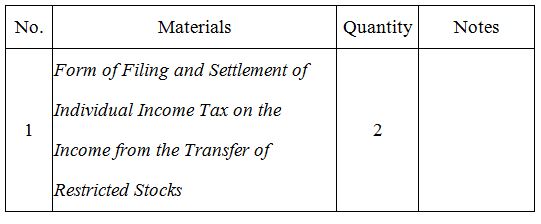
(2) Taxpayers who adopt the self-declaration way shall submit:
7. Taxpayers who pay IIT by installments on investments with personal non-monetary assets shall submit:
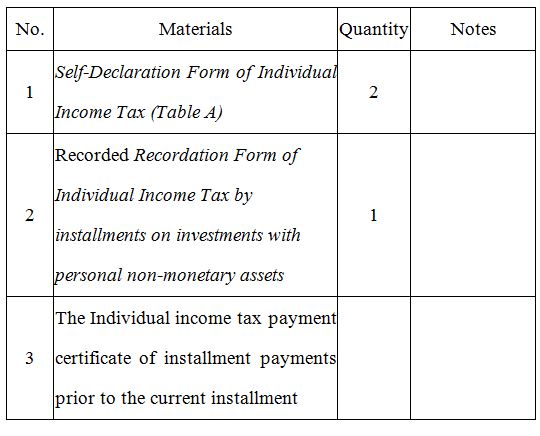
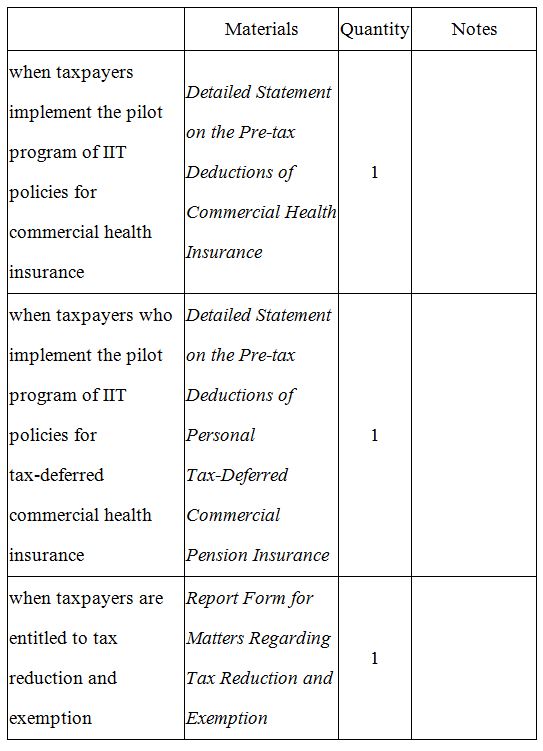
8. Taxpayers under following circumstances shall also submit:





A Guide to Working and Living in China as Business Expatriates(2024 Edition)




A new version of tax policy guideline for foreign trade and investment was recently released by the State Taxation Administration (STA).
This new guideline aims to fully utilize the functional role of taxation to secure foreign trade and investment.
The guideline, which was updated by revising some tax support policies and tax administration services, helps create a favorable tax environment for foreign trade and investment, where taxpayers can better understand and practice the policies.
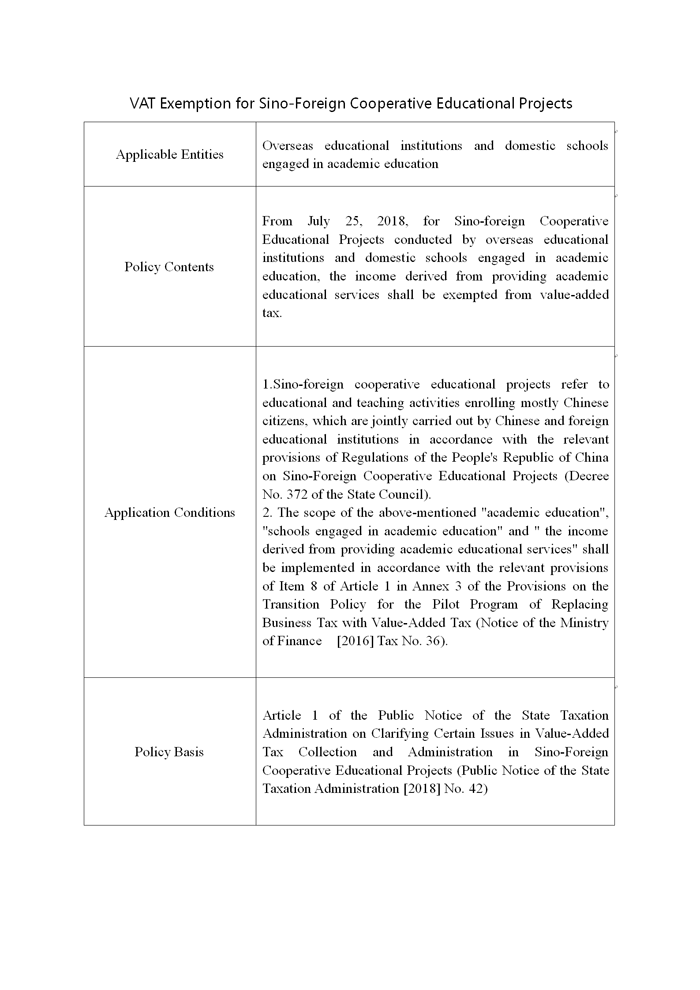
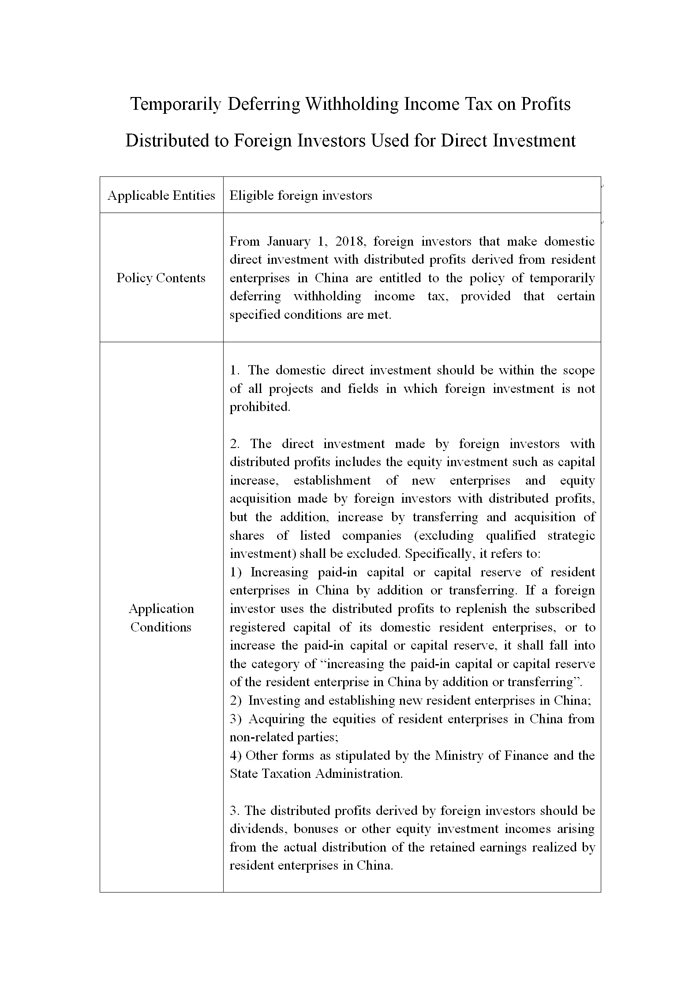
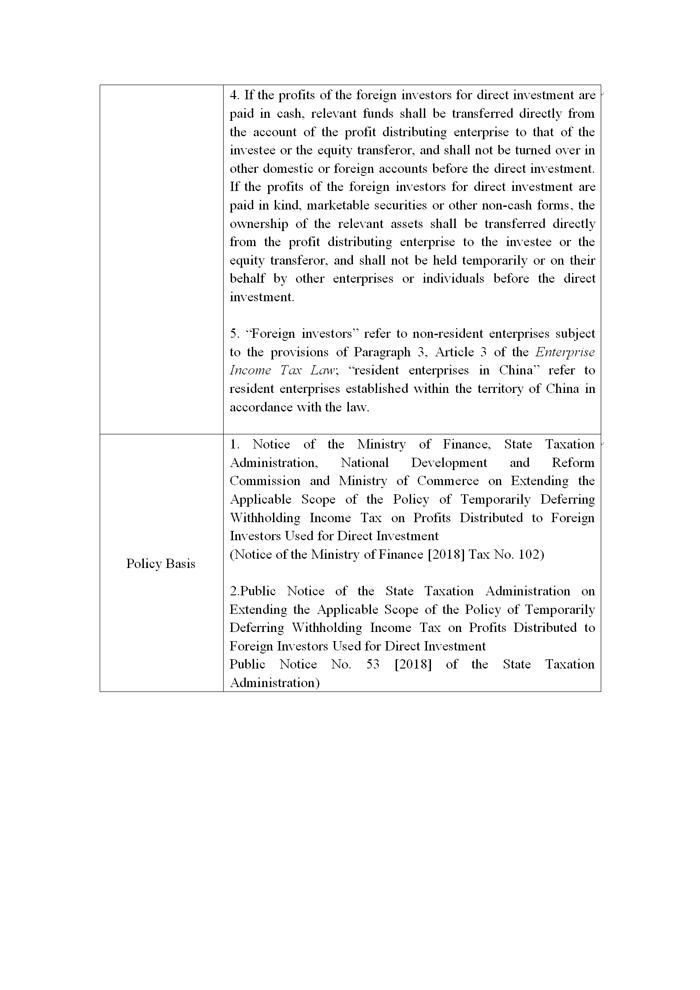
The latest guideline consistes of two major parts, namely, supporting policies to secure foreign trade and investment, according to the official of the STA. Out of 51 items, 19 items refer to the tax policies stabilizing foreign trade, such as policies for exporting goods and services, value-added tax (VAT) policies for cross-border taxable activities, tax policies for new types of foreign trade, and facilitation measures for export tax refund (exemption) services. The other 32 policies focus on encouraging foreign investing.
The guideline is available now on the official website of the STA. Taxpayers log in the website to look up the latest tax support policies and see which are suitable for their own firms.