-- Article list --
The 3rd "Red Flag Cup" Frankfurt International Dragon Boat Festival came to a successful close recently. Zhang Haohao, a county-level representative inheritor of Hengshan Shadow Play, took part in the concurrent traditional Chinese cultural performances and food market events as the sole representative of the intangible cultural heritage (ICH) inheritors from Hengshan County. Crossing mountains and seas, she brought this ancient art overseas, captivating international audiences and winning widespread acclaim.
Returning home with pride and emotion, Zhang went live for the first time after the overseas journey. Leaving behind the hustle and bustle of the international stage, she sat before the camera and, for the first time, shared with her viewers the stories of her cross-cultural ICH adventure softly and sincerely, recounting the heartwarming moments she had experienced along the riverside far from home.
The livestream room was simply adorned, featuring only the shadow puppets and cultural creative items freshly brought back from Germany. Zhang carefully took out the handcrafted shadow puppets of Nezha and Ao Bing, touching the carved lines gently, filled with care and emotion. She spent two months meticulously refining the two new puppets before the festival, blending Huxiang paper-cutting, leather carving, and painting techniques. She held a simple goal that she wanted to demonstrate Hengshan's most authentic ICH crafts to the world, letting foreign friends see that the ancient Chinese shadow play is still vibrant and fashionable, and carries enduring craftsmanship passed down through generations.
Zhang Haohao, a county-level representative inheritor of Hengshan Shadow Play, shows netizens the shadow puppets she had displayed overseas during her livestream.
In front of the camera, Zhang thoughtfully recounted the details of her exhibition in Germany. On the international stage by the Main River, tourists from around the world were drawn to stop and admire Hengshan Shadow Play, experiencing it up close for the first time. Unfamiliar languages and different cultures could not diminish the wonder and beauty cast by the light and shadow. Seeing faces full of curiosity and delight, she truly felt that ICH is never an old, dusty relic, but a cultural force that transcends borders, reaches hearts, and conveys the warmth of the East. What moved her most was the sincere recognition from people of all walks of life overseas. "They think we Chinese are incredibly skilled with our hands. They couldn't believe we could make something like this—they couldn't believe they were handmade," she said.
In addition to immersive shadow puppet shows and interactive cultural activities, Zhang also brought along self-developed cultural creative products inspired by shadow puppets, such as leather hairpins, earrings, necklaces, and brooches. Each piece features unique hand-carved craftsmanship that reshaped overseas perceptions of Chinese accessories. Many foreign visitors marveled at the crafts on display and eagerly bought pieces as souvenirs.
"One overseas Chinese visitor told me it was the first time she has seen such accessories. She thought they were truly special, and each of these handmade pieces is one-of-a-kind," Zhang Haohao said.
From rural stages to international riverbanks, from quiet perseverance to overseas acclaim, Zhang has never stopped, staying true to her original aspiration. When talking about ICH inheritance, her eyes gleamed with passion and determination. She said she is both an art guardian and also a dream chaser. Over the years, refusing to let the ancient art fade into oblivion, she has consistently worked to revitalize the art with youthful approaches—online sharing and offline promotion, making breakthroughs time and again. This overseas trip further reinforced her gentle yet firm vision for the long-term preservation and promotion of ICH.
During the livestream, she expressed her hope to bring Hengshan shadow puppet craft to overseas Chinese-language schools, hoping that children abroad—both Chinese and local—can experience and learn this ancient art. She also expected to set up small shadow puppet troupes, so that the art can take root and thrive abroad, being carried forward for generations to come. The glimmer of Huxiang culture may shine brightly on the world stage.
Hengshan Shadow Play, a national-level ICH item rooted in Hengshan County, was inscribed on UNESCO's Representative List of Intangible Cultural Heritage in 2014 as a vital component of Chinese shadow puppetry. Its distinctive Hunan-style light-and-shadow artistry carries profound Huxiang cultural heritage. Having made a stunning debut on an international stage in Germany, Zhang returned home and shared her reflections, pride, and passion in a heartfelt livestream. Her journey demonstrated that intangible cultural heritage can captivate global audiences while retaining its gentle warmth at home — reminding us that craftsmanship endures and heritage never fades.

Recently, the oil-paper umbrellas from Shigu Town, Xiangtan County made a splash at the 27th Shanghai International Gifts, Cultural & Creative Products and Home Furnishings Exhibition (CHN Gift Expo). Boasting over-600-year-old intangible cultural heritage craftsmanship and innovative China-chic design, the Shigu oil-paper umbrella claimed the "Gold Award for Intangible Cultural Heritage Creations" of the expo, and secured on-site transactions and intended orders valued at more than 500,000 CNY, achieving both greater brand visibility and market growth.

The "Gold Award for Intangible Cultural Heritage Creations" medal presented at the exhibition.
As the largest and most influential gift and homeware industry event in eastern China, the CHN Gift Expo serves as a key window connecting domestic and international distributors and demonstrating the market viability of cultural and creative products. This year's expo gathered thousands of brands. Shigu Town carefully selected high-quality intangible cultural heritage oil-paper umbrella series for display. At its specially decorated booth, new eco-friendly products like odorless crystal tung-oil-paper umbrellas and pearl umbrellas made their debut, balancing practicality and aesthetics. The Flying Apsaras series and the collector's edition of Baoxianghua Ribbon deeply integrated traditional umbrella-making techniques with China-chic elements, featuring exquisite patterns and an antique texture that frequently caught the attention of buyers and visitors. During the expo, the Shigu oil-paper umbrella booth remained popular, with several products selling out. The prospective cooperation spanned gift procurement, cultural tourism and creative industries, and e-commerce platforms.
"From bamboo selection, to rib shaping, umbrella surface pasting, patterns painting, and tung oil brushing… it takes 72 steps to make a Shigu oil-paper umbrella," said a spokesperson of Shigu Town. The local oil-paper umbrella crafting technique has been included in Hunan's provincial-level intangible cultural heritage list. The umbrella ribs are evenly assembled, the umbrella surface is pliable and tough, and the tung oil coating is waterproof and translucent, offering both practical value and artistic collectible appeal. However, for a long time, this traditional craft primarily relied on retail sales at tourist sites and festive orders. To overcome its geographical constraints, Shigu Town has adopted a dual-drive model of "heritage + demand," moving beyond the traditional production-sales model. It has actively connected with high-end exhibitions and developed innovative product lines, expanding the traditional oil-paper umbrella into areas such as China-chic creative products, customized souvenirs, and study tour experiences.
The 3rd "Red Flag Cup" Frankfurt International Dragon Boat Festival came to a successful close recently. Zhang Haohao, a county-level representative inheritor of Hengshan Shadow Play, took part in the concurrent traditional Chinese cultural performances and food market events as the sole representative of the intangible cultural heritage (ICH) inheritors from Hengshan County. Crossing mountains and seas, she brought this ancient art overseas, captivating international audiences and winning widespread acclaim.
Returning home with pride and emotion, Zhang went live for the first time after the overseas journey. Leaving behind the hustle and bustle of the international stage, she sat before the camera and, for the first time, shared with her viewers the stories of her cross-cultural ICH adventure softly and sincerely, recounting the heartwarming moments she had experienced along the riverside far from home.
The livestream room was simply adorned, featuring only the shadow puppets and cultural creative items freshly brought back from Germany. Zhang carefully took out the handcrafted shadow puppets of Nezha and Ao Bing, touching the carved lines gently, filled with care and emotion. She spent two months meticulously refining the two new puppets before the festival, blending Huxiang paper-cutting, leather carving, and painting techniques. She held a simple goal that she wanted to demonstrate Hengshan's most authentic ICH crafts to the world, letting foreign friends see that the ancient Chinese shadow play is still vibrant and fashionable, and carries enduring craftsmanship passed down through generations.

Zhang Haohao, a county-level representative inheritor of Hengshan Shadow Play, shows netizens the shadow puppets she had displayed overseas during her livestream.
In front of the camera, Zhang thoughtfully recounted the details of her exhibition in Germany. On the international stage by the Main River, tourists from around the world were drawn to stop and admire Hengshan Shadow Play, experiencing it up close for the first time. Unfamiliar languages and different cultures could not diminish the wonder and beauty cast by the light and shadow. Seeing faces full of curiosity and delight, she truly felt that ICH is never an old, dusty relic, but a cultural force that transcends borders, reaches hearts, and conveys the warmth of the East. What moved her most was the sincere recognition from people of all walks of life overseas. "They think we Chinese are incredibly skilled with our hands. They couldn't believe we could make something like this—they couldn't believe they were handmade," she said.
In addition to immersive shadow puppet shows and interactive cultural activities, Zhang also brought along self-developed cultural creative products inspired by shadow puppets, such as leather hairpins, earrings, necklaces, and brooches. Each piece features unique hand-carved craftsmanship that reshaped overseas perceptions of Chinese accessories. Many foreign visitors marveled at the crafts on display and eagerly bought pieces as souvenirs.
"One overseas Chinese visitor told me it was the first time she has seen such accessories. She thought they were truly special, and each of these handmade pieces is one-of-a-kind," Zhang Haohao said.
From rural stages to international riverbanks, from quiet perseverance to overseas acclaim, Zhang has never stopped, staying true to her original aspiration. When talking about ICH inheritance, her eyes gleamed with passion and determination. She said she is both an art guardian and also a dream chaser. Over the years, refusing to let the ancient art fade into oblivion, she has consistently worked to revitalize the art with youthful approaches—online sharing and offline promotion, making breakthroughs time and again. This overseas trip further reinforced her gentle yet firm vision for the long-term preservation and promotion of ICH.
During the livestream, she expressed her hope to bring Hengshan shadow puppet craft to overseas Chinese-language schools, hoping that children abroad—both Chinese and local—can experience and learn this ancient art. She also expected to set up small shadow puppet troupes, so that the art can take root and thrive abroad, being carried forward for generations to come. The glimmer of Huxiang culture may shine brightly on the world stage.
Hengshan Shadow Play, a national-level ICH item rooted in Hengshan County, was inscribed on UNESCO's Representative List of Intangible Cultural Heritage in 2014 as a vital component of Chinese shadow puppetry. Its distinctive Hunan-style light-and-shadow artistry carries profound Huxiang cultural heritage. Having made a stunning debut on an international stage in Germany, Zhang returned home and shared her reflections, pride, and passion in a heartfelt livestream. Her journey demonstrated that intangible cultural heritage can captivate global audiences while retaining its gentle warmth at home — reminding us that craftsmanship endures and heritage never fades.
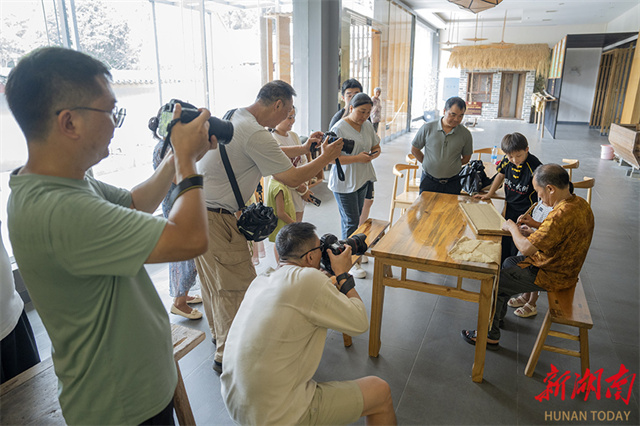
The photo, taken on July 29, shows tourists observing ancient paper-making techniques at a training center for Cai Lun paper-making craft in Leiyang City. Cai Lun reformed the art of paper-making and has been regarded as the inventor of paper and the paper-making process. As the hometown of Cai Lun, Leiyang is known as the birthplace of the world's paper civilization. The Cai Lun paper-making craft has been listed as a representative item of national intangible cultural heritage. Currently, many ancient paper-making workshops remain in the city.
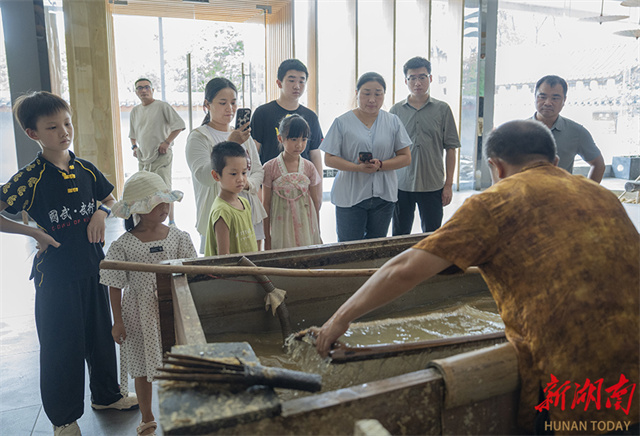
The photo, taken on July 29, shows tourists observing ancient paper-making techniques at a training center for Cai Lun paper-making craft in Leiyang City. Cai Lun reformed the art of paper-making and has been regarded as the inventor of paper and the paper-making process. As the hometown of Cai Lun, Leiyang is known as the birthplace of the world's paper civilization. The Cai Lun paper-making craft has been listed as a representative item of national intangible cultural heritage. Currently, many ancient paper-making workshops remain in the city.
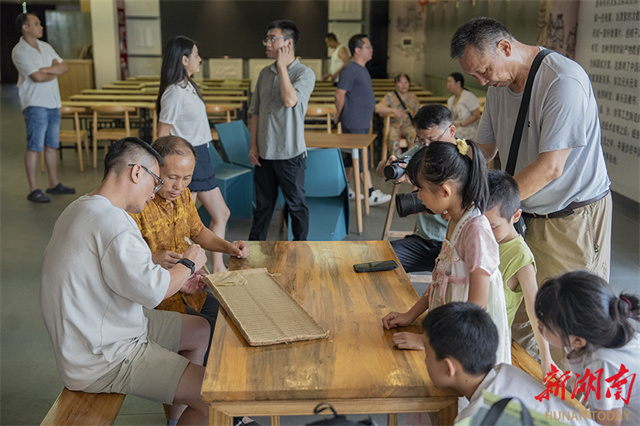
The photo, taken on July 29, shows people trying their hand at ancient paper-making at a training center for Cai Lun paper-making craft in Leiyang City. Cai Lun reformed the art of paper-making and has been regarded as the inventor of paper and the paper-making process. As the hometown of Cai Lun, Leiyang is known as the birthplace of the world's paper civilization. The Cai Lun paper-making craft has been listed as a representative item of national intangible cultural heritage. Currently, many ancient paper-making workshops remain in the city.
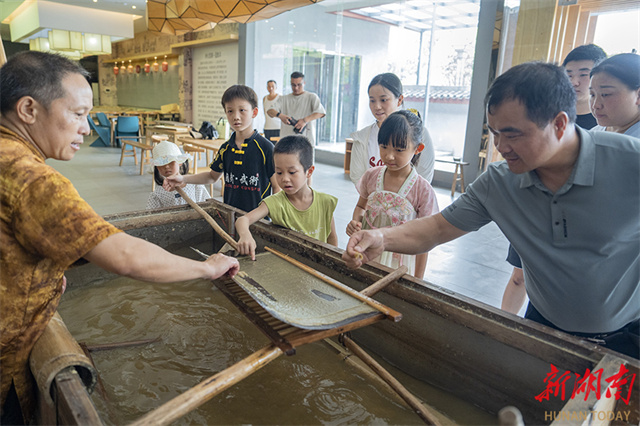
The photo, taken on July 29, shows tourists observing ancient paper-making techniques at a training center for Cai Lun paper-making craft in Leiyang City. Cai Lun reformed the art of paper-making and has been regarded as the inventor of paper and the paper-making process. As the hometown of Cai Lun, Leiyang is known as the birthplace of the world's paper civilization. The Cai Lun paper-making craft has been listed as a representative item of national intangible cultural heritage. Currently, many ancient paper-making workshops remain in the city.
Shadow puppetry, also known as shadow play, is a folk drama whose characters are made of animal hides or cardboard. The puppeteers standing behind the calico manipulate the puppets and tell the stories in a popular tune, accompanied by percussion and string instruments. The folk art has spread across China in different styles due to various operatic tunes.
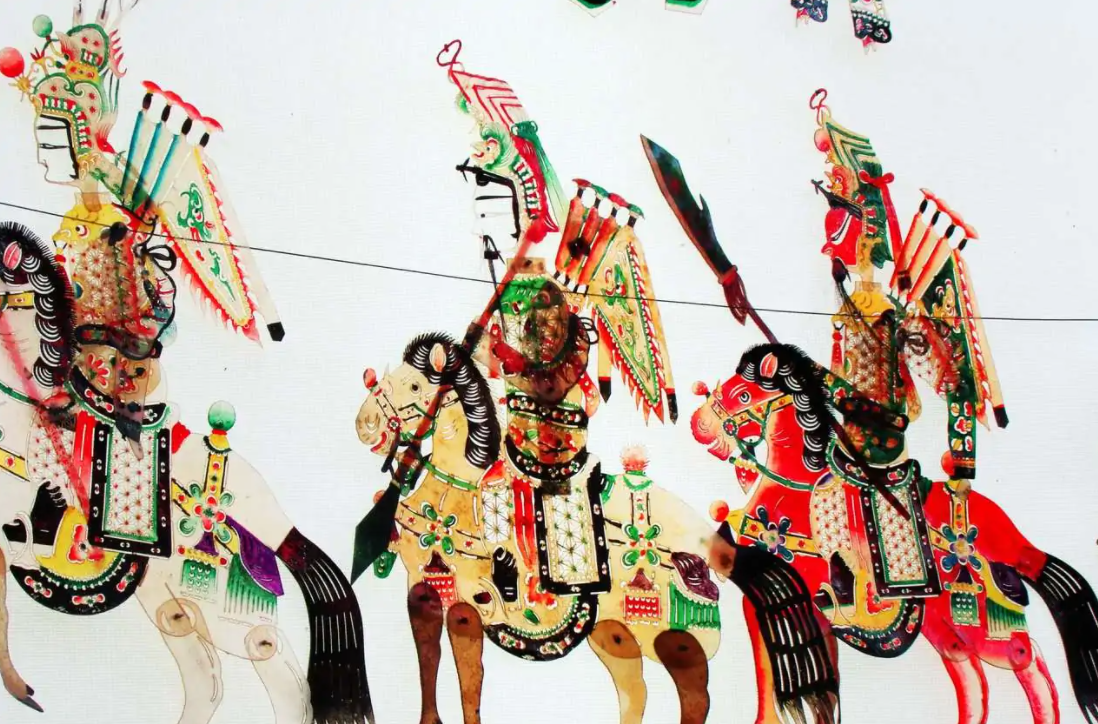
Shadow puppetry is a traditional Chinese folk art form and the local people of Beijing call it Lvpiying (shadow puppets made of donkey hides). According to the Chinese history, this historic art emerged in the Western Han Dynasty, developed in the Tang Dynasty and prevailed in the Qing Dynasty. It spread to Western Asia and Europe during the Yuan Dynasty. In 2011, the Chinese shadow puppetry was added to the UNESCO’s Representative List of the Intangible Cultural Heritage of Humanity.
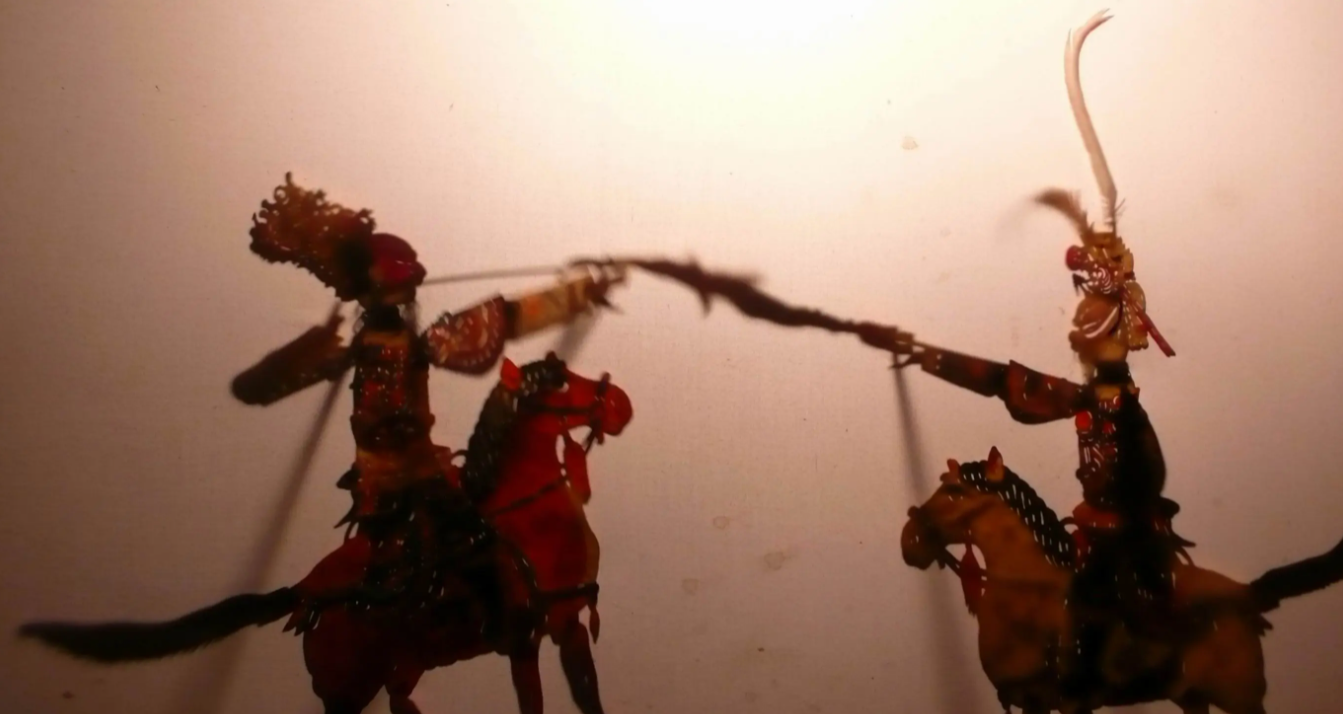
Based on learning from the traditional performances, the shadow puppetry in Hunan Province has improved a lot in its character modeling, background design, lights, acoustic performance and other aspects. Now the traditional opera music has been replaced by the composed music and animal puppets have played roles in performances. A number of excellent plays have been created and performed, including Two Friends, Fox and Raven and others, earning a great reputation at home and abroad.
Flower Drum Opera was originally created by the working people as a folk singing and dancing mode with flexible and diverse forms. The opera performed by a Xiaodan (a young female role in the traditional opera) and a Xiaochou (a comic role in the traditional opera) is called “Dan flower-drum opera” or “Duizi flower-drum opera”.
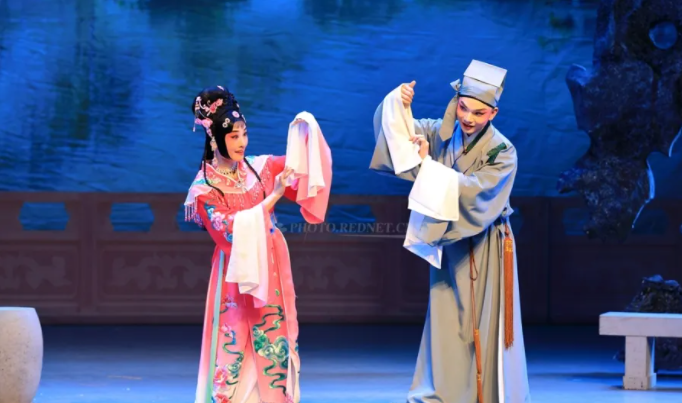
On this basis, more opera elements such as plots, characters, conflicts, languages, tunes, dances and movements were added in it, which gradually evolved into the flower-drum opera.
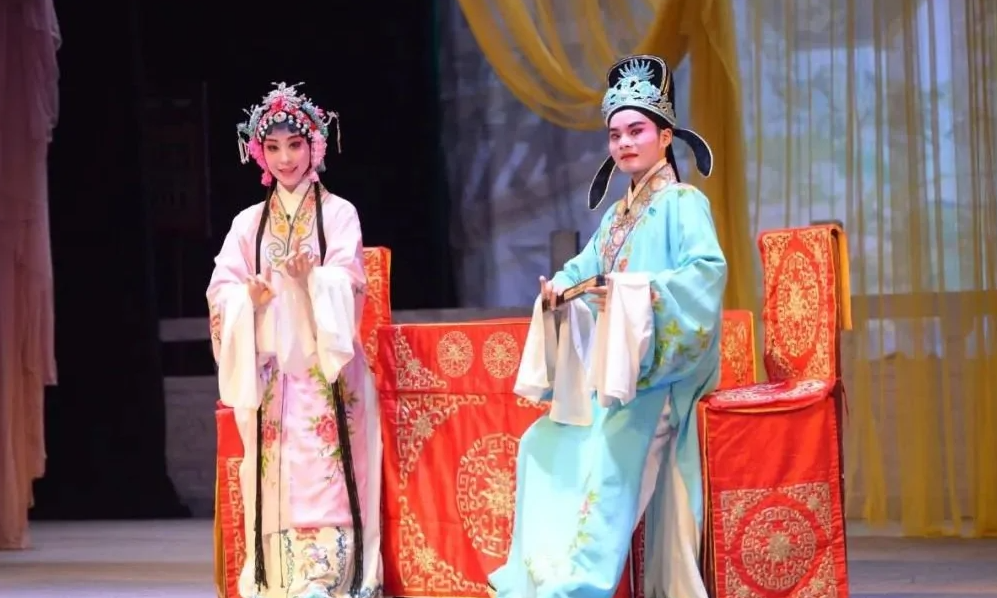
However, it has been known as a folk drama for a long time since the Qing Dynasty, with the two-role playlet and three-role playlet as the main. The two-role playlet features roles of Xiaodan and Xiaochou, while the three-role playlet features roles of Xiaodan, Xiaochou and Xiaosheng (young handsome males in the traditional opera). After the founding of the People’s Republic of China in 1949, the Flower Drum Opera further prospered and developed into a large-scale opera.
Hunan Flower Drum Opera boasts diverse melodies, known for its various qupai (the names of the tunes) and forms as well as different dialects, featuring distinctive regional tunes and accompaniment. The tunes are simple, comfortable, cheerful and light-hearted with “Chuandiao” and “Daluoqiang” as its major tunes. Most of the traditional plays are collectively created by people, with themes derived from folklore and rural life.
There are about 500 plays handed down in China. According to the difference in popular regions and tunes, drama and stage language, Hunan Flower Drum Opera can be roughly divided into six kinds of operas, including Changsha Flower Drum Opera, Changde Flower Drum Opera, Yueyang Flower Drum Opera, Shaoyang Flower Drum Opera, Hengzhou Flower Drum Opera and Lingling Flower Drum Opera.
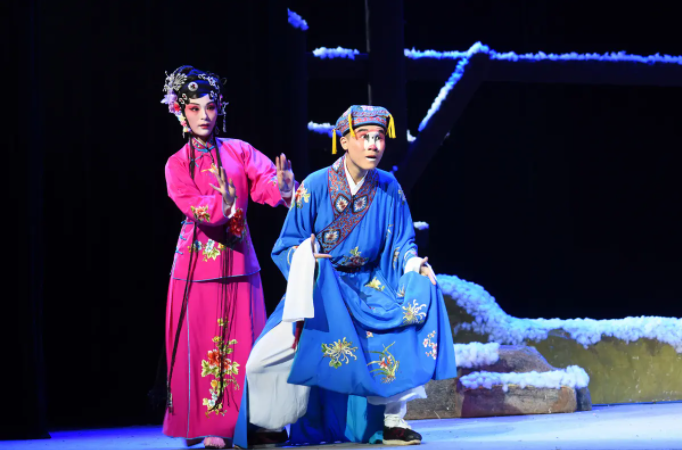
All these operas contain several schools with their own artistic characteristics. With the development of Flower Drum Opera, a large number of repertoires and operas emerge, most of which are adapted from myths and legends, folk stories or other local operas. “Liu Hai and Jinchan”, one of Changsha Flower Drum Operas, is a good example.
The story of “Liu Hai and Jinchan” is an ancient Chinese folktale, derived from Taoist allusions. It is said that a Jinchan (a fetish that can spit money in Chinese legends) lived in the Sigua Well of Changde City. It often spewed a beam of white light from the well at night, which soared into the sky.
A man of virtue could ascend to heaven and become the immortal via this white light. A young man called Liu Hai lived by the well with his mother, who grew up in an extremely poor family but was still kind to others and pious to his mother. He often went to the nearby mountains to cut firewood and sell it to buy rice.
One day, a fox spirit in the mountain changed its appearance into a beautiful girl Hu Xiuying and blocked Liu Hai’s way back to ask him to marry her. After getting married, Hu Xiuying wanted to helped her husband get immortality. She used a white pearl as bait and fished in the Sigua Well. As Jinchan bit the bait and jumped out, Liu rode on its back and ascended to heaven as an immortal.
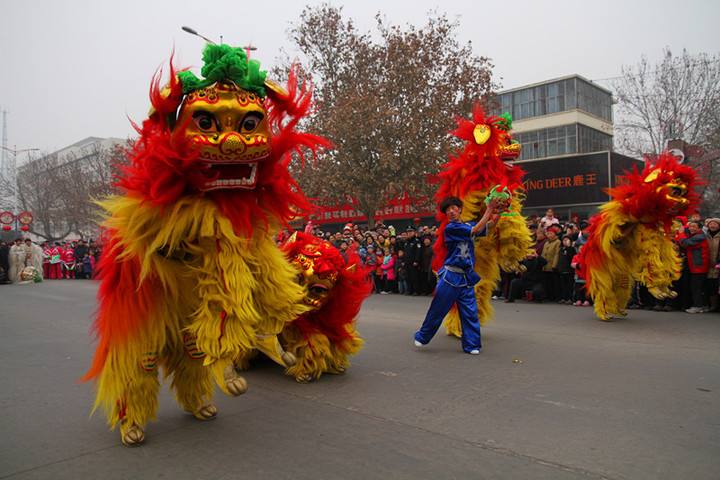
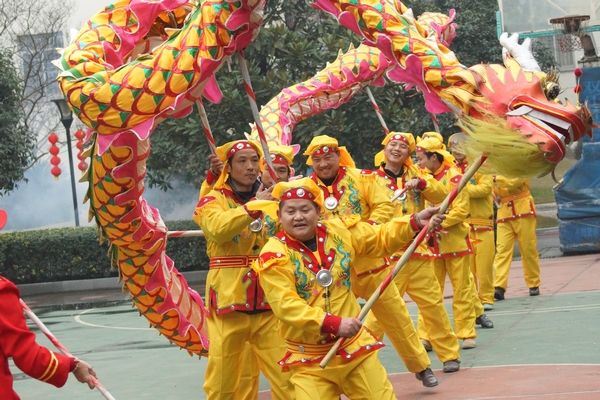
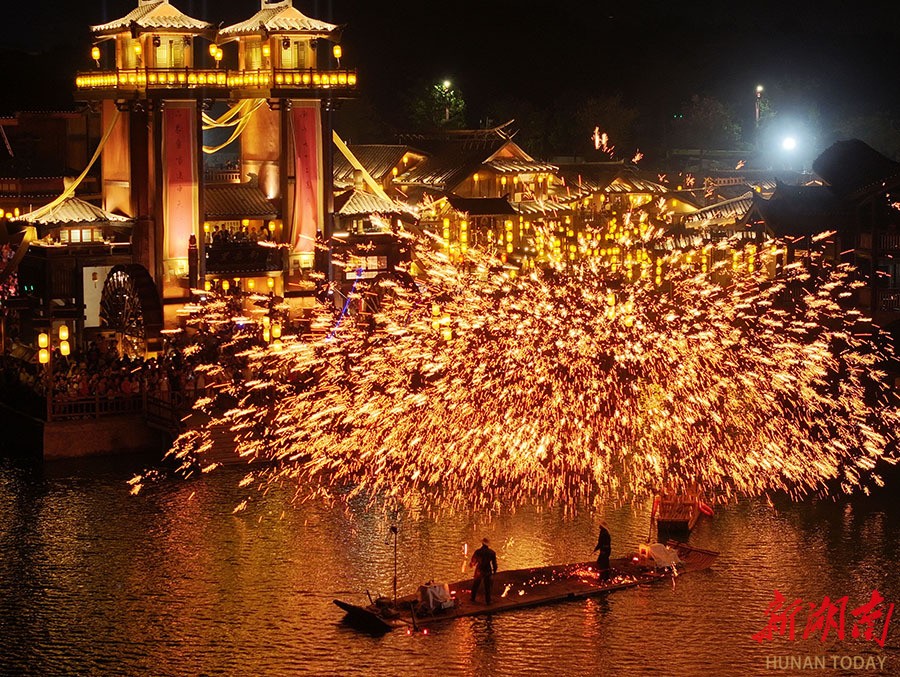
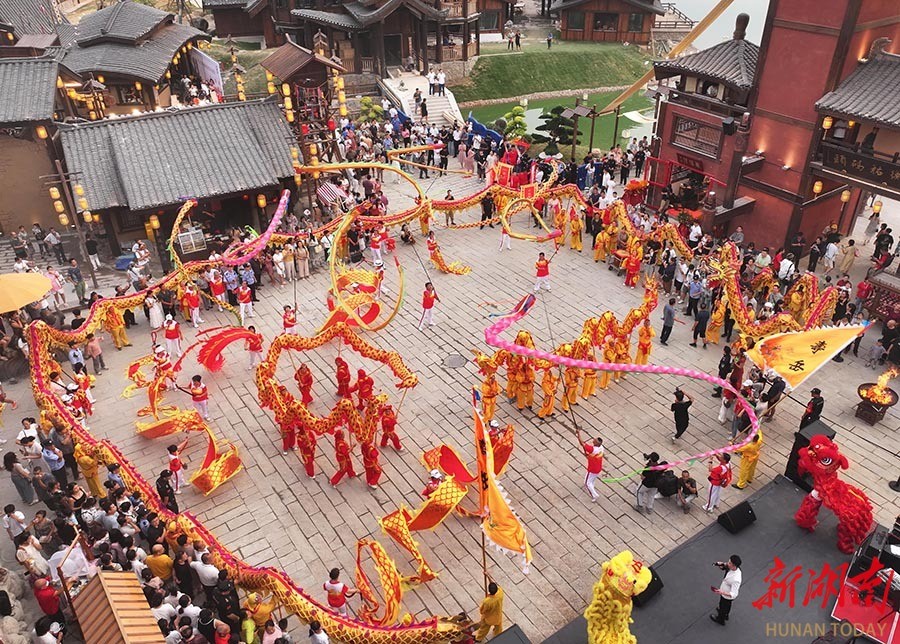
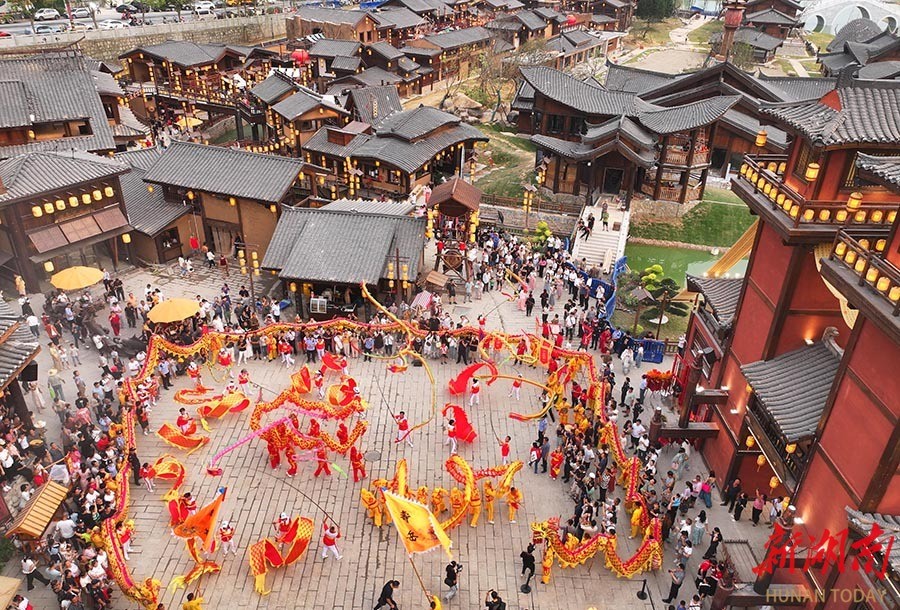
On September 14, the Nanyueli Temple Fair was held in Nanyue District, Hengyang City. Local residents carried out a variety of intangible cultural heritage (ICH) activities, such as dragon and lion dances, molten iron fireworks, shadow puppetry, and fireworks display, to celebrate the Mid-Autumn Festival.
Zhou’s needle weaving technique is an intangible cultural heritage item in Hengyang City.
This technique has been passed down from generation to generation in the Zhou family. Xiao Yuelian, who has lower limb disabilities, has truly mastered it. Nowadays, she teaches the technique to help many special groups like her find jobs, making it a shining brand of Hengyang.
This technique will be showcased at the upcoming 3rd Hunan Intangible Cultural Heritage Expo, where visitors can enjoy the exquisite works up close and appreciate the unique style that combines simplicity, nature, practicality, and beauty.
Hengyang String Music is a unique form of folk art, sung in Hengyang dialect and accompanied by musical instruments. Its musical style blends the solemnity and elegance of court music with the softness and agility of folk songs and dances.
As the third Hunan Intangible Cultural Heritage Expo is about to open, tourists are welcome to Hengyang to enjoy the string music, an intangible cultural heritage item.


Photos taken on May 19 show workers making oil paper umbrellas in a local company of Kaiyun Town, Hengshan County, Hengyang City. In recent years, the county has fused the traditional oil-paper umbrellas with modern fashion for the cultural tourism market demands to inherit and develop the traditional culture, and help locals increase income.

During the Lantern Festival, there was jubilation at the foot of Nanyue Mount Heng, where Nanyue Temple Fair was staged.

On the evening of February 4, accompanied by bright lights, more than 10 dragon and lion teams passed through the streets and alleys. On February 5, the 15th day of the first lunar month, amid the sonorous sound of gongs and drums, the Dragon and Lion Competition kicked off.

Nanyue Temple Fair is a national intangible cultural heritage representative item, which has been passed down for generations.
Formerly named "Qiyang theatrical troupe", Qi Oprea was called "Qiyang Drama" during the Republic Period and is popular in Hunan's Hengyang, Shaoyang, Lingling, Chenzhou, Huaihua, as well as in other provinces such as northern Guangxi and Guangdong, southern Jiangxi and western Fujian. It utilizes three Zansheng tunes (a kind of tune in Chinese opera), Gao, Tan and Kun, and as many as 1,079 Qupai (the names of the tunes to which "Qu" are composed) ). It is renowned for its high-pitched, resonant and passionate singing style.
The Yonghe School excels at performing Tan tunes while the Baohe School is famous for its Gao tunes. When Gao tunes are performed, the former school uses the male vocal accompaniment; in the latter, suona horns are always used. Both are renowned for their bold, unconstrained and rustic performance style. Qi opera boasts as many as 941 traditional plays, among which the adapted versions of "Zhaojun Comes out of the Frontier" (performed 3 times in Beijing), "Uproar in the Yan Mansion", "Niugao Destroys Imperial Edict", "Visit Sages", "Baogong in Jail" enjoy tremendous popularity. Also popular are the original or adapted modern plays such as "Huanggong's Strategy", "Swallow and Lanlan", "Deliver Food" and "General Songpo".
Qi opera boasts a large number of famous artists, in which Shengjue (the male character types in Chinese operas) includes Hu Dexiao, Li Yuliang, Zhu Wencai, Li Rongzhen, Tang Fuyao, Gui Songmao, Tian Lianlu, Zou Zhenxi and Zheng Wubing. Xiaosheng (the young man's role) includes Yan Yunrui, He Cuifu, Guo Pinwen, Fu Zilin and Tang Qinglan. Danjue (the female lead heroine) includes Liu Fuman, Su Ronglan, Qian Fufang, Xiao Yumei, Ke Kezhu and Lv Shuzhen. Laodan (the old female character type in Chinese operas) includes Liao Jincai. Hualian (the male character in Chinese opera with a painted face) includes Tang Sanxiong, Xia Fuhong, Xiao Pinlong, Zhang Pinchao, Deng Hankui, Yin Fujie, Luo Zhuling and Liu Yude. Choujue (the clown in the Chinese opera) includes Zhou Sanmao, He Sanbao, Li Rongfu, Fei Xiangchen and Wang Saique. Dongshi (another kind of role in Chinese opera, the same as Jiaoshi below) includes Tang Qingchuan, Li Dexuan, Liu Daosheng and Tang Yunqin, and Jiaoshi includes Yi Yueyu.