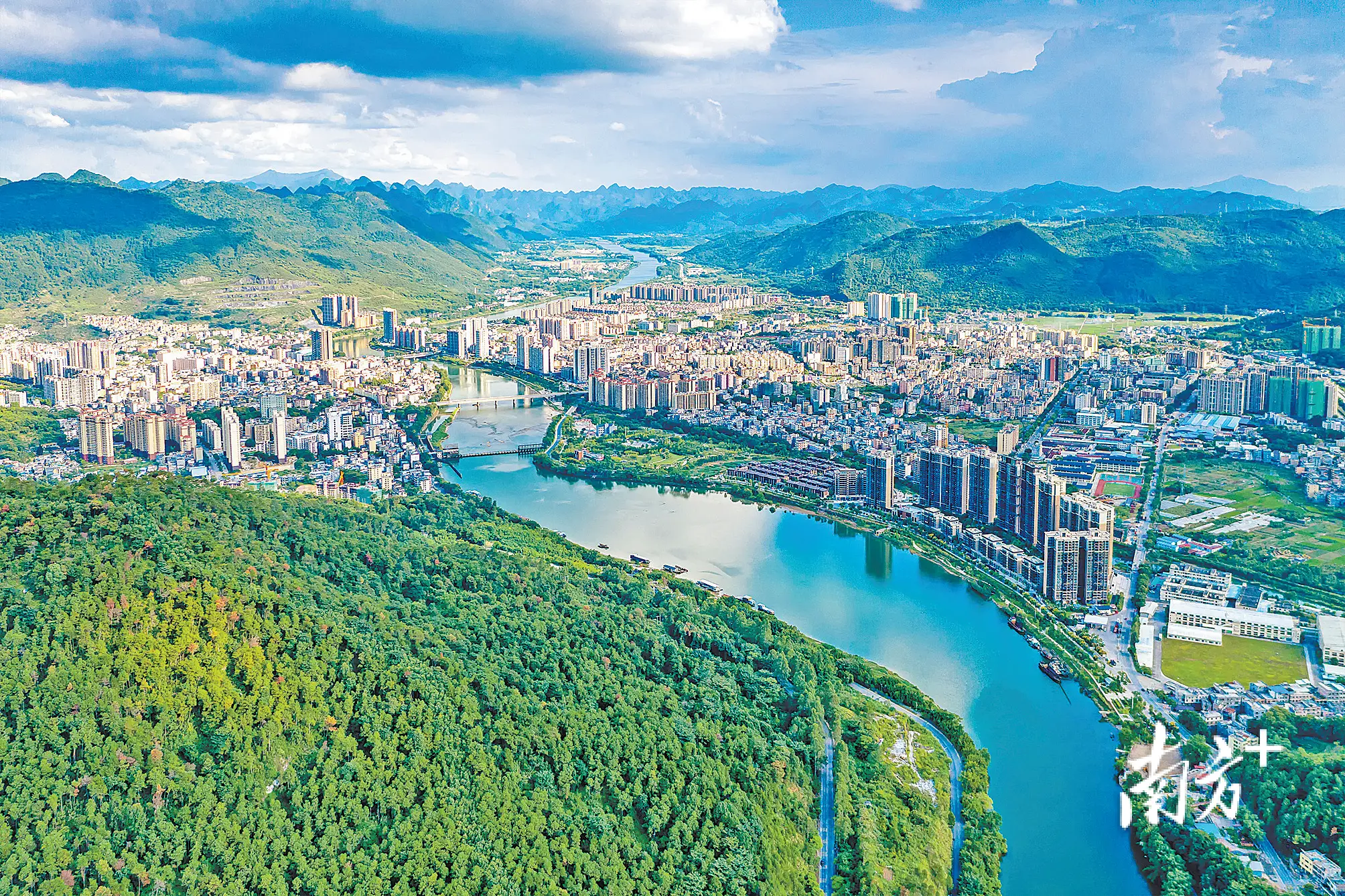
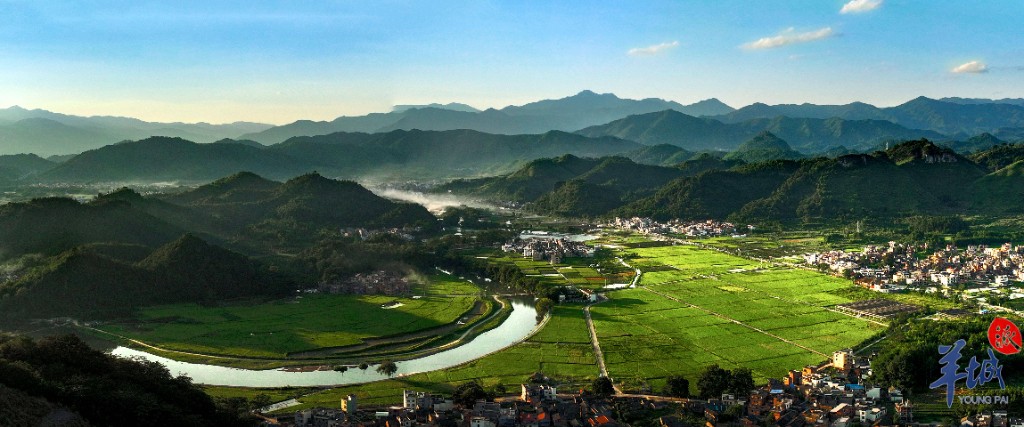
Some cities are defined by skylines; Qingyuan is defined by its river. Tucked into the north-central fold of Guangdong along the Beijiang (North River) basin and often called Fengcheng(“Phoenix City”), it is the largest prefecture-level city in the province by area, yet it reads less like a sprawling metropolis and more like a long, green breathing space where mountains, gorges, farms, and water decide the pace of life.
What gives Qingyuan its character is the way it stacks contrasts without apology. Upstream canyons and forested ridges feed a dense river network—ideal for white-water rafting and canyon adventures—while the same geology that carved those ravines also spills warm, mineral-rich springs out of the ground, turning hillsides into lantern-lit spa towns when the air turns cool. It is no accident that Qingyuan is widely promoted as a “Hometown of Drifting/Rafting” and later formally recognized as a “City of Hot Springs” (the local government’s own briefing materials spell out the rafting origins, hot-spring inventories, and the seasonal Qingyuan Hot Spring Festival programming that anchors the city’s autumn–winter leisure calendar).
Travel here is really a menu of five classic moods—locals sometimes summarize them as “passionate rafting, intimate hot springs, leisurely landscapes, wondrous caves, and ethnic heritage”—and all five show up in the same weekend.
You can spend the morning chasing grade and plunge in places like Gulong Gorge, where the canyon’s stair-step waterfalls and suspension elements make the river feel cinematic; then pivot to forest trails and glass-view platforms that turn adrenaline into scenery.
You can drift, quite literally, into the dark elegance of the Lianzhou Underground River, a karst landmark where boats glide beneath stalactite vaults and the temperature seems to belong to another century—cool, hushed, and strangely timeless.
Or you can head southwest into the Yingxi Peak Forest country, where limestone pinnacles rise out of paddies and hamlets in a way people like to call “Little Guilin of Guangdong,” and where the best views tend to happen when you stop looking for them.
But Qingyuan’s quietest distinction may be human. In its upland counties—above all Liannan Yao Autonomous County and neighboring Lianshan—the ridgelines carry drumbeats and embroidery patterns as much as they carry cloud. At places like the hill-clinging Nangang/Nan’er “Thousand-Year Yao Village,” you don’t just “see” heritage; you walk lanes of timber stilt houses, catch the rhythm of long-drum dances, and understand why this is the province’s most concentrated tapestry of Zhuang and Yao mountain culture.
Positioned as the Pearl River Delta’s “backyard garden,” Qingyuan keeps one foot in deep countryside and the other on fast rails and expressways that put it within easy reach of Guangzhou/Zhuhai Delta circuits—close enough for a Sunday escape, far enough to feel like somewhere the sky finally opens up again.
Come for the canyon mist and the steam of a hillside spring; stay because the food (yes, the famous free-range chicken, yes, the mountain teas) tastes like the landscape that raised it. In Qingyuan, the itinerary is less a checklist than a rhythm: paddle, soak, wander, listen—then do it all over again under a different kind of light.