-- Article list --
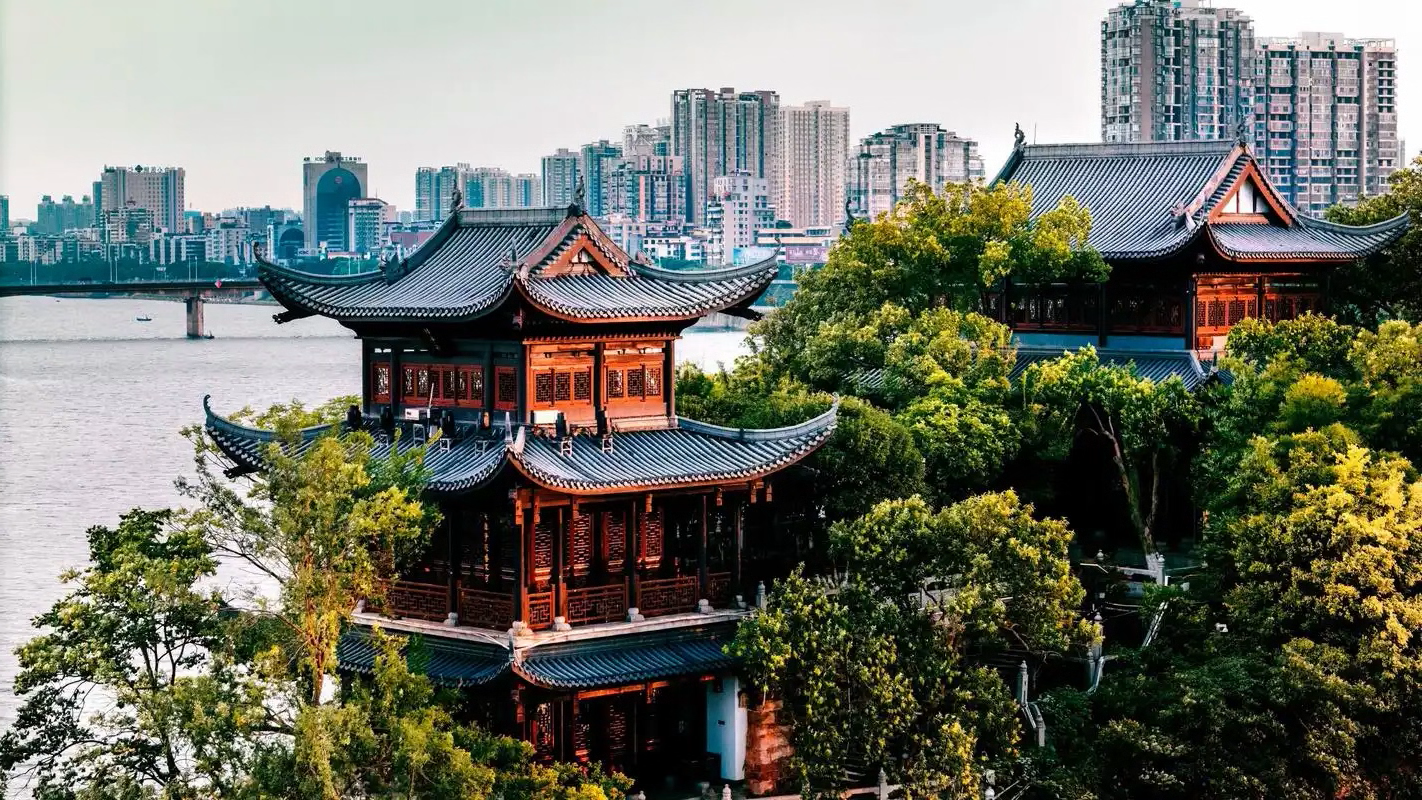
Since ancient times, Hengyang has been endowed with a rich cultural heritage and produced numerous outstanding talents. In history, there were figures such as Jiang Wan, the minister who assisted the Shu Kingdom; Cai Lun, the inventor of papermaking; Wang Fuzhi (also known as Wang Chuanshan), the renowned thinker; and Peng Yulin, the commander of the Xiang Army's naval forces.
During the Northern Song Dynasty, Zhou Dunyi's Explanation of the Supreme Ultimate laid the foundation for Neo-Confucianism, putting forward crucial perspectives on exploring the origin of the universe and exerting a profound influence on the formation and development of the Huxiang School. As one of the four major schools of Neo-Confucianism in the Song and Ming dynasties, the rise of Hunan's culture is deeply rooted in the spread of the Huxiang School and the nurturing of Huxiang culture. In the late Ming and early Qing dynasties, Wang Fuzhi (style name Ernong), together with Gu Yanwu and Huang Zongxi, was known as one of the Three Great Thinkers. His strong national consciousness embodied in his character had a profound impact on later generations. The image of the scholar—wearing wooden clogs, holding an oiled-paper umbrella, refusing to stand under the sky of the Qing Dynasty or tread on its soil—vividly expressed his loyalty to the Ming Dynasty. Tan Sitong praised him as "the only scholar in five hundred years who truly understands the principles of the world," and lauded his thoughts as "unparalleled throughout history." Though the great man has passed away, his former residence, Xiangxi Thatched Cottage in Caitangwan, Xiangxi Village, Qulan Township, Hengyang County, and his tomb on Mount Daluo remain for people to pay their respects.
Hengyang boasts many other famous historical sites, including the Former Residence of Marshal Luo Ronghuan in Nanwan Village, Ronghuan Township, Hengdong County; the Former Residence of Zeng Guofan; and the Former Residence of Xia Minghan in Hongshi Township. With its abundant cultural resources, Hengyang can form an excellent regional tourism network by integrating with the pilgrimage tourism of Mount Nanyue and other industrial tourism projects. The planning and construction of the Shigu Cultural Zone has further provided a head start in creating diversified tourism forms and achieving good connectivity with surrounding areas.
During the long revolutionary struggle, the Southern Hunan Students' Federation in Hengyang produced a large number of revolutionary martyrs, including Xia Minghan, Jiang Xianyun, Huang Jingyuan, Zeng Zhongsheng, Chen Weiren, Wu Yunfu, Zhang Jichun, He Baozhen, Guan Zhonglian, Mao Zejian, Jiang Hua, Huang Kecheng, and Tian Ji.
In modern times, the nostalgia of Qiong Yao is vividly expressed in her works, as she never forgets "Hengyang Road" in Taipei. Luo Fu, the "Poetry Devil," declared: "I am not a coward; I am a man from Hengyang!" The famous writer Lung Ying-tai said: "Hengyang is my eternal dreamland." The great photographer Chen Changfen stated: "I guard my hometown Hengyang." Wu Shaozu, former Director of the State Sports Commission, said: "My roots are in Hengyang." The great painter Zhong Zengya proudly claimed: "I am proud to be a Hengyang native."
There is also a host of other cultural celebrities from the Huxiang region, such as Ma Jigao, Bai Shuxiang, Zi Huajun, Teng Wensheng, Long Xinmin, Tang Haoming, Guan Chufei, Wang Zhi, Xie Lisi, Wu Yujuan, Li Li—Hunan's "Zhang Haidi," and Tan Qianqiu—the "Earthquake Hero." Additionally, Hengyang is a cradle of sports champions. World champions Li Jing, Ling Jie, Liu Yuxiang, and Luo Xihe—who defeated the "Stone Buddha" Lee Chang-ho—are all stars hailing from Hengyang.
Today, the ancient city of Hengyang has been designated as one of the first batch of Historical and Cultural Cities in Hunan Province and a key cultural tourism city in Hunan's 10th Five-Year Plan for Tourism Development. Leveraging "Red Tourism" centered around the former residences of great men, Hengyang promotes historical and cultural tourism sites such as the "City of Anti-Japanese War Memorial," the "Hunan Students' Federation," and the "Lu Family New Residence." It integrates resources between Shigu Academy and Chuanshan Academy, utilizes the landscapes along both banks of the Xiang River and water resources to innovate thematic elements, and plans a grand tourism circle that effectively connects with surrounding areas. With a favorable cultural landscape and a harmonious social atmosphere, Hengyang is building a high-quality cultural brand and expanding its urban influence.
Cultural Institutions
By the end of 2024, there were 10 art performance troupes, 13 mass art galleries and cultural centers, 14 public libraries, and 20 museums and memorials in Hengyang. The city has 7 national-level and 49 provincial-level intangible cultural heritage protection projects.
At the end of the year, there were 8 radio stations, 19 FM and TV rebroadcasting transmitters, 9 TV stations, and 562,500 cable TV subscribers.
There were 19,224 sports facilities, including 6 large-scale gymnasiums, 1,069 athletics fields, 160 swimming facilities, and 257 gyms. The number of regular participants in physical exercise reached 2.638 million, with 10,801 national fitness events held. Athletes from Hengyang won 7 world championships, 6 Asian championships, and 12 national championships.
Ethnic Groups
Hengyang is a region with scattered ethnic minorities. The Tashan Yao Township in Changning is the only ethnic minority township in the city. The main focus of Hengyang's ethnic work is on the Tashan Yao Township and the Hui community in urban areas, emphasizing rural and urban ethnic affairs. The city is home to 42 ethnic minorities, with a total population of 17,800, accounting for 0.25% of the total population. The Yao people, the largest ethnic minority group, mainly reside in Tashan Yao Township, Changning. The Hui people live relatively concentratedly in the area from the Railway Station to the Airport in Zhuhui District. The theme of ethnic work is: Strive Together for Unity and Prosperity. The city's ethnic work is divided into two parts:
Rural Ethnic Work: Primarily focused on developing the economy of Tashan Yao Township, Changning.
Urban Ethnic Work: Mainly involved in mediating ethnic conflicts in urban areas.
In recent years, ethnic minorities coming to Hengyang are mainly from Ningxia, Gansu, Qinghai, Xinjiang, and Aba in Sichuan. Currently, there are more than 50 Hui halal noodle restaurants in the city, with some selling lamb skewers and raisins, and others running stalls selling ethnic medicinal herbs and handicrafts. Therefore, strengthening services and management for ethnic minorities from other areas is increasingly important for promoting ethnic unity, progress, and social harmony.

Hengyang is a veritable famous historical and cultural city. It has never been absent from the progress of human civilization and the development of Chinese civilization—not only making indelible contributions but also erecting incomparable monuments. Both in ancient times and modern times, Hengyang’s historical culture is profound and far-reaching.
It is home to Mount Heng (Nanyue), one of China’s Five Sacred Mountains; the birthplace of fire culture; the place where Yu the Great gained wisdom for taming floods; the "resting place" of Leizu, the ancestor of sericulture; the birthplace of Cai Lun, inventor of papermaking (one of the Four Great Inventions of ancient China); the cradle of the teachings of Wang Chuanshan, the great thinker; the site of Shigu Academy, one of the Four Great Ancient Academies of China; the battlefield of the Battle of Hengyang in the War of Resistance against Japanese Aggression; and the most complete repository of the Han Chinese "Spring She" (spring altar) custom.
As a vital thread in Chinese civilization, Hengyang’s historical culture embodies both the commonality of Chinese civilization’s development and the individuality of regional cultural evolution. It inherits the unity of civilization’s progression while highlighting the diversity of its advancement. Defined by its origins and developmental journey, Hengyang’s historical culture bears distinct agrarian civilization traits and a strong Hunanese cultural essence.
I. Exploring the Origins of Hengyang’s Historical Culture
An ancient city with over 2,000 years of history, Hengyang boasts a profound cultural heritage and distinct cultural characteristics. Like other regional historical cultures, Hengyang’s culture is diverse, not singular; rich, not monotonous. Yet amid its myriad cultural manifestations, there exist core threads—primary and secondary, fundamental and derivative.
What are the three main threads of Hengyang’s historical culture?
The evolution of sacrificial culture rooted in fire god worship;
The progression of agrarian civilization symbolized by Shennong and Emperor Yan;
The development of Hunanese culture shaped by the indomitable spirit of the southern aborigines.
The various cultural labels attributed to Hengyang—wild goose culture, religious culture, sacred mountain culture, academy culture, Chuanshan culture, anti-Japanese culture, etc.—are all derivatives of these three foundational cultural streams. Their relationship is that of root to branch, source to tributary, not parallel or equal. Moreover, these three threads are not only inclusive but also unique and distinctive, serving as the defining emblems of Hengyang’s historical culture.
(1) Fire God Worship: The Primary Origin of Hengyang’s Historical Culture
Fire god worship is inseparable from Mount Heng. For a long time, however, Hengyang people have "failed to see the true face of Nanyue." When discussing Nanyue’s cultural heritage, they often cite longevity culture, coexisting Buddhism and Taoism, sacrificial culture, sacred mountain culture, and incense culture—all valid, but superficial.
Rarely do people ask: Why did these cultural phenomena emerge? What is their origin? Why did imperial courts and commoners offer sacrifices at Mount Heng? Who was the object of worship? This lack of inquiry has fragmented Hengyang’s cultural identity, leaving it unsystematic and lacking uniqueness. Here’s why fire god worship is the primary origin:
Hengyang’s name derives from Mount Heng. An indelible, inseparable bond unites the two. Located south of Mount Heng, the city was named Hengyang (literally "south of Heng")—an eternal imprint bestowed by Mount Heng。
Hengyang and Mount Heng were historically integrated.
Qin Dynasty: Counties established; Mount Goulou renamed Mount Heng, and Hengshan County created.
Early Han: Hengshan County split into Chengyang and Ling counties.
Three Kingdoms (Eastern Wu, 257 AD): Hengyang Commandery founded, with its seat north of Hengshan County.
Jin Dynasty: Hengyang County renamed Hengshan County, still under Hengyang Commandery.
Sui Dynasty: Commandery abolished; Heng Prefecture established, governing the region.
Tang Dynasty: Sui’s Hengshan Commandery renamed Heng Prefecture, seat moved to the Xiang River (Linzheng).
Song Dynasty: Prefecture walls built.
Yuan Dynasty: Hengzhou Lu (circuit) established.
Ming Dynasty: Renamed Hengzhou Fu (prefecture).
Qing Dynasty: Ming system retained.
Republic of China: Prefecture abolished (1913); county system restored (1922); city established (March 1942).
Post-1949: City status maintained; prefecture-city merger (June 1983).
Zhu Rong: Symbol of Mount Heng.
Stretching 800 li, Mount Heng has 72 peaks, 52 within Hengshan County. Its iconic peak is Zhu Rong Peak. The name "Zhu Rong" predates written records: during the era of the Yellow Emperor, Zhu Rong served as Huozheng (fire steward), a hereditary official post overseeing fire management. Early Huozheng officials were deified as fire gods after death, with descendants adopting "Zhu Rong" as their surname. This deeply rooted belief unites Chinese people at home and abroad. As fire god, Zhu Rong is integral to Chinese civilization, synonymous with the identity of "descendants of Yan and Huang."
Fire god worship: Fundamental to Hengyang’s cultural genesis and growth.
(Note: Original text includes a digression on Wang Chuanshan omitted here for brevity.)
(2) The Influence of Hengyang’s Southern Aboriginal Cultural Genes on Hunanese Culture
Today, few indigenous families in Hengyang can trace their roots back 1,000 years; most settlers arrived during the late Ming/early Qing dynasties and later. While the original indigenous cultural carriers are lost, cultural integration accompanied migration. A region always preserves traces of its earliest cultural DNA—true of southern aboriginal (Chu-Man) culture, Hunanese culture, and Hengyang’s culture.
Since written records began, Hengyang and Hunan experienced five major migrations:
Prehistoric: Yan-Huang tribes migrated south to escape Central Plains floods/droughts;
Qin conquest of Chu;
Western Jin: "Yongjia Crossing South" (311 AD) to evade the Eight Princes’ Rebellion;
Yuan conquest of Song;
Qing conquest of Ming.
These upheavals involved bloodshed, ethnic cleansing, and regime collapse. For migrants, Hengyang became a place of survival, healing, renewal, and national restoration. Bringing advanced Central Plains civilization, migrants merged their ethos of self-reliance, righteousness, martial spirit, and practical statesmanship with the bold, unyielding, and rustic character of the southern aborigines.
With scholarly advocacy, local customs and ideologies transformed, fostering a distinct Hunanese cultural system. From the Song Dynasty onward, over ten academies (led by Shigu and Lianhu Academies) promoted Neo-Confucianism, enriching southern aboriginal culture and fueling Hunanese culture’s formation—acting as its lifeblood and vital energy.
II. Characteristics and Value of Hengyang’s Historical Culture
A living fossil of agrarian culture, defined by Zhu Rong sacrifices and Shennong veneration.
The interplay between fire god worship and Nanyue’s Sacred Emperor, ancient Hengzhou, and folk customs; and between Shennong worship and production/living practices and cultural psychology, epitomizes agrarian civilization’s "living fossil" status.
A stronghold of Hunanese culture, embodying the southern aborigines’ boldness and Chuanshan’s integrity.
Icons like Wang Chuanshan, Li Fu, Peng Yulin, Zeng Xi, Xia Minghan, and Luo Ronghuan personify this spirit. Historic events—the Xiang Army’s formation in Hengyang, the 47-day Battle of Hengyang, and the Hengyang Anti-Missionary Incident—reflect this resilience.
Flourishing academies and prominent scholars confirm Hengyang as a hub of the Hunanese School of Thought. Ming-Qing handicraft growth, post-1937 industrial expansion, and its inland transport hub status made Hengyang a crossroads for northern-southern cultural and economic exchange—exemplifying the Hunanese School’s emphasis on practical application.
An ecological cultural model city, defined by its sacred mountain backdrop and confluence of three rivers.
Built against Mount Heng (with Huiyan Peak as its first peak) and at the confluence of the Zheng, Xiang, and Lei Rivers, Hengyang embodies ancient Chinese "harmony between humanity and nature" urban planning principles—nestled among mountains, embraced by waters, harnessing cosmic energy.
Wild geese stop at Hengyang and fly no farther south. Huiyan Peak, Mount Heng’s southernmost peak, inspired poets to dub Hengyang the "Wild Goose City". Three of China’s Ten Great Ancient Melodies—Mist Over the Xiaoxiang River, Wild Geese Descend on Sandbank, and Plum Blossom Melody—originated here, testament to its stunning landscapes, rich ecology, and outstanding people.
Its millennia-old mountains, rivers, and islands; unchanged city site for 1,000 years; and unaltered urban layout for centuries distinguish Hengyang from other southern Chinese cities
Since ancient times, Hengyang has been renowned for its flourishing literary culture and the emergence of outstanding talents. Historical figures include Jiang Wan, a key minister assisting the state of Shu Han; Cai Lun, the inventor of papermaking; Wang Fuzhi (also known as Wang Chuanshan), a prominent philosopher; and Peng Yulin, the commander of the Xiang Army’s naval forces.
During the Northern Song Dynasty, Zhou Dunyi’s Diagram of the Supreme Ultimate (Taiji Tushuo) pioneered Neo-Confucian philosophy by proposing significant ideas about the origins of the universe. This work profoundly influenced the formation and development of the Huxiang School of thought. As one of the four major schools of Neo-Confucianism during the Song and Ming dynasties, the rise of Hunan culture is closely intertwined with the spread of the Huxiang School and the nurturing environment of Huxiang culture.
In the late Ming and early Qing dynasties, Wang Fuzhi (courtesy name Ernong, style name Chuanshan) was revered alongside Gu Yanwu and Huang Zongxi as one of the “Three Great Thinkers.” His character demonstrated a strong sense of national identity and exerted a lasting influence.With wooden clogs on his feet and an oil-paper umbrella in his hand, he famously declared, “I will not bow my head under Qing rule nor set foot on Qing soil,” vividly expressing his deep attachment to the Han people of the Ming Dynasty. Tan Sitong once praised him, saying, “In the past five hundred years, the only true scholar who understood the world was Chuanshan.” He also described Wang’s ideas as “transcending all ages.”
Today, historical sites such as the Xiangxi Caotang (Xiangxi Thatched Cottage) in Caitangwan, Xiangxi Village, Qulan Town, and the Tomb of Wang Fuzhi on Mount Luoshan in Hengyang County are still well preserved and open for public admiration.
Hengyang is also home to many other renowned historical sites, such as the former residence of Marshal Luo Ronghuan in Nanwan Village, Ronghuan Township, Hengdong County; the former residence of Zeng Guofan in Shuangfeng County; and the former residence of martyr Xia Minghan in Hongshi Town.
With its abundant cultural resources, Hengyang is well positioned to integrate pilgrimage tourism centered around Mount Nanyue and various industrial tourism initiatives, forming a robust regional tourism system. With the planning and development of projects such as the Shigu Cultural Area, Hengyang has seized an early advantage in diversifying its tourism offerings and promoting regional integration.
During the prolonged revolutionary struggles, the Xiangnan Student Federation, based in Hengyang, produced many heroic figures, including Xia Minghan, Jiang Xianyun, Huang Jingyuan, Zeng Zhongsheng, Chen Weiren, Wu Yunfu, Zhang Jichun, He Baozhen, Guan Zhonglian, Mao Zejian, Jiang Hua, Huang Kecheng, and Tang Tianji, among others.
Today, Hengyang continues to be a cherished hometown for countless individuals.In the works of writer Qiong Yao, the deep longing for her homeland is vividly portrayed, with special mention of “Hengyang Road” in Taipei.The poet Luo Fu (“The Demon of Poetry”) proudly proclaimed, “I am not a coward; I am a Hengyang native!”Renowned writer Lung Ying-tai (Long Yingtai) affectionately described Hengyang as “my eternal dreamland.”Famous photographer Chen Changfen stated, “I am watching over my homeland, Hengyang.”Former State Sports Commission Director Wu Shaozu said, “My roots are in Hengyang.”Celebrated painter Zhong Zengya expressed, “I am proud to be a Hengyang native.”
Hengyang has also nurtured a host of notable figures in Huxiang culture, such as Ma Jigao, Bai Shuxiang, Zi Huajun, Teng Wensheng, Long Xinmin, Tang Haoming, Guan Chufei, Wang Zhi, Xie Lisi, Wu Yujun, as well as Hunan’s “Zhang Haidi” Li Li, and “Earthquake Hero” Tan Qianqiu.Moreover, Hengyang is recognized as a cradle of sports champions.World champions like Li Jing, Ling Jie, Liu Yuxiang, and Luo Xihe — who famously defeated “The Stone Buddha” Lee Chang-ho — all hail from Hengyang.
Today, Hengyang Ancient City has been designated as one of Hunan Province’s first batch of Historical and Cultural Cities and has been included as a key city in Hunan’s “Tenth Five-Year Plan” for tourism development.
By leveraging the former residences of great revolutionary figures as the foundation for “Red Tourism,” Hengyang has promoted historical and cultural tourism projects such as the Anti-Japanese War Memorial City, the Xiangnan Student Federation Site, and the Lujiaxinwu (Lu Family New House). It has also integrated resources from cultural landmarks such as Shigu Academy and Chuanshan Academy, utilized the scenic banks of the Xiang River and its rich water resources, innovated thematic elements, and planned a large-scale tourism circle, fostering effective connections with surrounding regions.A favorable humanistic environment and a harmonious social atmosphere have contributed to building a high-quality cultural brand, further enhancing Hengyang’s urban influence.
Since ancient times, Hengyang has been renowned for its rich cultural atmosphere and the emergence of numerous talents. Historical figures such as Jiang Wan, a minister who assisted the Shu Kingdom, Cai Lun, the inventor of papermaking, Wang Fuzhi (also known as Wang Chuanshan), a prominent thinker, and Peng Yulin, the commander of the Xiang Army's naval forces, all hail from this region.
During the Northern Song Dynasty, Zhou Dunyi's "Explanation of the Diagram of the Supreme Ultimate" initiated the theory of Neo-Confucianism, proposing significant views on the origin of the universe and profoundly influencing the formation and development of the Huxiang School. The Huxiang School is one of the four major schools of Neo-Confucianism during the Song and Ming dynasties, and the rise of Hunan culture is deeply rooted in the spread of the Huxiang School and the nurturing of Huxiang culture. In the late Ming and early Qing dynasties, Wang Fuzhi (Wang Chuanshan, courtesy name Ernong), along with Gu Yanwu and Huang Zongxi, were collectively known as the three great thinkers. His strong sense of national consciousness left a deep impact on later generations. The image of a scholar "wearing wooden clogs and holding an oil-paper umbrella, refusing to bow to the Qing sky or tread on Qing soil" vividly expressed his loyalty to the Ming Dynasty. Tan Sitong praised him as "the only scholar in five hundred years who truly understood the world," and lauded his thoughts as "unparalleled in history." Although Wang Fuzhi has passed away, his legacy remains in the form of the "Xiangxi Thatched Cottage" in Qulan Township, Hengyang County, and the "Wang Fuzhi Tomb" on Daluo Mountain, which are open for visitors to pay their respects.
Hengyang is home to many other famous historical sites, such as the "Former Residence of Marshal Luo Ronghuan" in Nanwan Village, Ronghuan Township, Hengdong County, the "Former Residence of Zeng Guofan," and the "Former Residence of Xia Minghan" in Hongshi. With its abundant cultural resources, Hengyang can integrate tourism centered around Mount Heng (Nanyue) pilgrimage, along with other industrial tourism, to form a comprehensive regional tourism experience. The planning and construction of cultural areas like Shigu further provide opportunities to create diverse tourism formats and establish strong connections with surrounding regions.
During the long revolutionary struggle, the Xiangnan Student Union in Hengyang produced a large number of revolutionary figures, including Xia Minghan, Jiang Xianyun, Huang Jingyuan, Zeng Zhongsheng, Chen Weiren, Wu Yunfu, Zhang Jichun, He Baozhen, Guan Zhonglian, Mao Zejian, Jiang Hua, Huang Kecheng, and Tang Tianji.
Today, the nostalgia of Qiong Yao, a famous writer, is evident in her writings, as she fondly remembers "Hengyang Road" in Taipei. The "Poetry Devil" Luo Fu once said, "I am not a coward; I am from Hengyang!" Renowned writer Long Yingtai remarked, "Hengyang is my eternal dreamland." Photographer Chen Changfen expressed, "I am guarding my homeland, Hengyang." Former National Sports Commission Director Wu Shaozu stated, "My roots are in Hengyang." Painter Zhong Zengya proudly declared, "I am proud to be a Hengyang native."
Additionally, a large number of Huxiang cultural celebrities, such as Ma Jigao, Bai Shuxiang, Zi Huazhu, Teng Wensheng, Long Xinmin, Tang Haoming, Guan Chufei, Wang Zhi, Xie Lisi, Wu Yujuan, Li Li (known as the "Zhang Haidi of Hunan"), and Tan Qianqiu (a hero of the earthquake relief efforts), have also contributed to the region's cultural heritage. Hengyang is also a cradle of sports champions, with world champions like Li Jing, Ling Jie, Liu Yuxiang, and Luo Xihe, who defeated the "Stone Buddha" Lee Chang-ho, all hailing from Hengyang.
Today, Hengyang Ancient City has been designated as one of the first batch of historical and cultural cities in Hunan Province, and the province's "Tenth Five-Year Plan" for tourism development has identified Hengyang as a key city for cultural tourism. By leveraging "Red Tourism" centered around the former residences of great figures, Hengyang aims to promote its status as a "Memorial City of the Anti-Japanese War," along with historical and cultural tourism sites such as the "Hunan Student Union" and "Lu Family New House." Integrating resources between Shigu Academy and Chuanshan Academy, and utilizing the banks of the Xiang River and other water resources, Hengyang plans to innovate thematic elements and create a large tourism circle that effectively connects with surrounding regions. With its excellent cultural landscape and harmonious social atmosphere, Hengyang is building a high-quality cultural brand to expand its urban influence.
The city boasts 11 art performance troupes, 13 public art and cultural centers, 14 public libraries, and 20 museums and memorial halls. There are 7 national-level intangible cultural heritage protection projects and 49 provincial-level ones. Hengyang has 8 radio stations, 16 FM and TV relay stations, 9 TV stations, and 586,000 cable TV subscribers. The city also has 18,487 sports venues, including 7 large stadiums, 1,070 track and field venues, 169 swimming pools, and 329 gyms. In terms of ethnic diversity.
Hengyang is a region with scattered ethnic minority populations. The Tashan Yao Ethnic Township in Changning is the only ethnic township in the city. The primary focus of Hengyang's ethnic work is on the Tashan Yao Ethnic Township and the Hui community in the urban area. The city is home to 42 ethnic minorities, with a total population of 17,800, accounting for 0.25% of the city's total population. The Yao ethnic group, which has a relatively large population, mainly resides in the Tashan Yao Ethnic Township in Changning, while the Hui community is concentrated in the area from Zhuhui District's train station to the airfield. The theme of ethnic work in Hengyang is "unity and common prosperity." The city's ethnic tasks are divided into two main areas: rural ethnic work, which focuses on developing the economy of the Tashan Yao Ethnic Township in Changning, and urban ethnic work, which primarily involves mediating ethnic conflicts in the city. In recent years, ethnic minorities in Hengyang have mainly come from regions such as Ningxia, Gansu, Qinghai, Xinjiang, and Aba in Sichuan. Currently, there are over 50 Hui Muslim noodle restaurants in the city, some selling lamb skewers and raisins, while others set up stalls selling ethnic medicines and handicrafts. Therefore, strengthening the management and services for ethnic minorities from other regions is increasingly important for promoting ethnic unity and social harmony.
In terms of religion, Hengyang is a key city for religious work in China, characterized by four main features: First, it has a wide range of religious sects and a large number of followers. Buddhism, Taoism, Catholicism, Christianity, and Islam are all present, with 5 municipal-level religious groups and 11 county-level religious groups. There is also one religious institution (the Nanyue Taoist College for Women). The city has 560,000 religious believers, accounting for about 8% of the total population. Second, there is a large number of religious clergy, with a total of 1,002 religious personnel in the city. Third, there are many religious activity sites, with 480 registered religious venues. Among these, 4 are designated as national key religious sites by the State Council, and 15 are approved as key sites by the provincial government. Fourth, there is extensive religious exchange with foreign countries. Before the founding of the People's Republic of China, dozens of seminarians from the Huangshawan Catholic Seminary in Hengyang moved to Taiwan, and they are now distributed in Hong Kong, Macau, Taiwan, the United States, and Singapore. More than 10 of these clergy members are still alive and maintain regular contact with the Catholic community in Hengyang. Representatives of Hengyang's religious communities, particularly in Buddhism and Taoism, have frequently traveled to Japan, South Korea, Hong Kong, Taiwan, and Singapore for academic exchanges, enhancing Hengyang's religious influence internationally.

As the Xiang River runs through the province from south to north, Hunan is called "Xiang" for short and boasts its "Xiang Cuisine", "Xiang Embroidery", "Xiang Opera", and "Xiang Army".
Huxiang Culture is basically a regional culture handed down from generation to generation in Hunan. From the Shang Dynasty or Yin Dynasty (1600 BC-1100 BC) to the Northern Song Dynasty (960-1127), Hunan's culture was represented by the Chu culture from the north, the Miaoman culture of the original Miao nationality, and the Yue culture from the south and west. Patriotic poet Qu Yuan's poetry and the historical relics in Mawangdui Han Tomb are featured with Chu culture.
When it came to the Southern and Northern Dynasties (420-589) and the Tang (386-581) and Song (960-1279) Dynasties, even extending to the Song, Yuan (1271-1368) and Ming Dynasty (1368-1644), remarkable changes took place along with several large migrations, concerning population distribution, customs and habits, as well as ideologies among Huxiang people. Large number of great ideologists came out then to form a new regional culture, including the founder of Neo-Confucianism Zhou Dunyi, Confucius follower Wang Fuzhi who believed that neo-Confucianism had distorted Confucius' teachings, and Wei Yuan, who attempted to combine traditional scholarly knowledge with practical experience to find workable solutions to the problems plaguing the government at the time.

Originated from the Chu culture of the pre-Qin period, and enriched with the Yellow River plain culture in the Song and Ming Dynasty, Huxiang culture became splendid with the reputable attribution of "half of Chinese modern history was participated in by Hunanese", and "an army cannot be formed without Hunanese".
Philosophical thought
Initiated by Hu Anguo in the Song Dynasty, and developed with Hu Hong, Zhang Shi, Wang Chuanshan, Zeng Guofan, Tan Sitong, Yang Changji, and even Mao Zedong, Huxiang philosophical thought form its distinctive features. It combined the moral-oriented philosophy of the Neo-Confucianism with humanistic pragmatism, which has been passed on from generation to generation till modern times. Hunanese played brilliant roles in the modern history of China. Despite different political view, their academic and cultural styles of being pragmatic were almost the same.
Education philosophy
Huxiang education rose in the Song Dynasty. With thousand-year development, it has formed its unique traditions: equal stress on both learning and thinking; unity of theory and practice. Huxiang education pay attention to independent thinking as well as rational criticism, which is represented by Yuelu Academy.
Huxiang Religions
Huxiang culture is inclusive to religions, with the co-existence of Buddhism and Taoism in the Nanyue Grand Temple in Hengshan Mountain being an instance.
Folk customs


Huxiang area has been long inhabited by many ethnic groups. Different traditions and folk customs have been formed along with different evolvement, living areas, production modes, religious beliefs of the groups. These traditions and customs communicate with and influence each other, jointly forming a distinctive Huxiang folk culture.
Huxiang art

The western Han painting on silk found in Mawangdui Tomb is considered as an origin of Chinese painting. Colored lacquer painting in the Western Han Dynasty is among the earlist oil painting in the world. Yi Yuanji, Zhang Yizun, Qi Baishi and Huang Yongyu are representatives of Huxiang masters of fine arts.
Xiang opera is one of the major local operas in Hunan, also called "Changsha Banzi" and "Xiangtan Banzi" by folks. Due to its Zhongzhou rhyme and Changsha mandarin, it is also named Changsha Xiang Opera. Hunan's operas include Qi Opera, Chenhe Opera, Hengyang Xiang Opera, Wuling Opera, Jinhe Opera, Baling Opera, Xiang Kun, Changsha Flower Drum Opera and Shaoyang Flower Drum Opera.
Huxiang dialects
Hunan is a region with various and complex dialects, including the Xiang dialect, southwestern mandarin, Gan dialect, Hakka dialect and other local dialects. Xiang dialect (also called Xiang language) is the most representative and the most widely distributed dialect in Hunan, covering 40 cities and counties along Xiangjiang River and Zijiang River. In Hunan, about 30.85 million people speak the Xiang dialect, accounting for 3.2% of the national population.
The Xiang dialect, represented by Changsha dialect, is distributed among most areas in Hunan. From the phonetic perspective, Xiang dialect can be divided into new and old Xiang dialects. The old Xiang dialect mainly prevails in central Hunan such as Ningxiang County and Hengyang City while the new Xiang dialect is widely spoke in large and middle-sized cities such as Changsha and Zhuzhou.
Southwest mandarin, as the second major dialect in Hunan, is mainly distributed over western, northern and southern Hunan. Hakka dialect is commonly used in some areas in southeast Hunan, such as Rucheng, Guidong, Youxian, Chaling and Pingjiang counties.
According to the historical records, the ancient Chu dialect took shape in the Spring and Autumn period (770 BC – 476 BC), with the "southern Chu" dialect in the Han dynasty (202 BC - 220) being the direct source of the Xiang dialect. Immigration is considered as the main reason for the Hunan dialect's coming into being. Before the Five Dynasties (907-960), immigrants from North China came to Hunan, whose dialect formed the ancient "Chu dialect" in Hunan and gradually evolved into the Xiang dialect, further branching out southwest mandarin and local dialect. After the Five Dynasties, immigrants were mainly from southeast China including Jiangxi, Fujian and Guangdong whose dialects developed into early the Gan dialect, the Hakka dialect and local dialects. The surrounding major dialects and mandarins have also exerted an influence on the formation and development of the mandarin in Hunan's border area. The language of the minority groups, especially in remote areas, also has played a certain role in the development of these dialects.

Hengyang is a city with a long history. According to historical relics, ancestors who settled in the area as early as five to six thousand years ago had already begun to use primitive tools made from stones. They also grew rice and raised animals, chiefly cattle and pigs.
The primeval district of Hengyang was first occupied by the ancestors of the modern Miao, Zhuang, and Hakka people. In the Warring States period, it was a much-fought-over territory of the Chu State.
In 221 BC, when Emperor Qinshihuang united China, the southern state of Chu was divided into Qianzhong county and Changsha county to which the Hengyang district belonged. 400 years later in 220 AD, it was renamed Hengyang and became the administrative seat of Hengyang prefecture.
During the Western Jin Dynasty, its name was changed to Hengzhou, and under the Eastern Jin Dynasty (618-907) it became the seat of Xiangdong prefecture. During the Southern and Northern Dynasty it was the capital of Hengyang kingdom.
After the fall of the Sui Dynasty, Hengyang was a county. It was changed into a superior prefecture which was a part of the province of Huguang until the Qing Dynasty.
This status was retained until 1912, when the superior prefecture was abolished and the city became a county seat, which was in the charge of 34 counties of Hunan province.
During the Second Sino-Japanese War (1937-1945), not only was Hengyang a traffic hub in south China, but also the third biggest industrial and commercial city in the area controlled by Kuomingtang. At that time, the population of the area increased tenfold. It became an officially registered became a city in 1942.
After the liberation of Hengyang on October 8th in 1949, the Railway Ministry set up Hengyang Railway Bureau, with jurisdiction over the railways of five provinces in the middle of southern China. The city has been governing the county since July 1983.
Table of Evolutionary History of Hengyang
Years | Dynasty | Administrative Title |
770B.C. | Spring-Autumn, Warring States | Ruled byChu |
211B.C. | Qin | Changsha prefecture |
265A .D. | Western Jin Dynasty | Hengzhou |
316A .D. | Eastern Jin Dynasty | Xiangdong prefecture |
420A .D. | Southern and Northern Dynasty | Hengyang kingdom |
764A .D. | Tang | Hengyang prefecture |
1295A .D | Yuan | Superior prefecture |
1368A .D | Ming | Superior prefecture |
1664A .D | Qing | Superior prefecture |
1911A .D | Republic of | Hengyang |
1949A .D | The People`s Republic of | Hengyang city |


