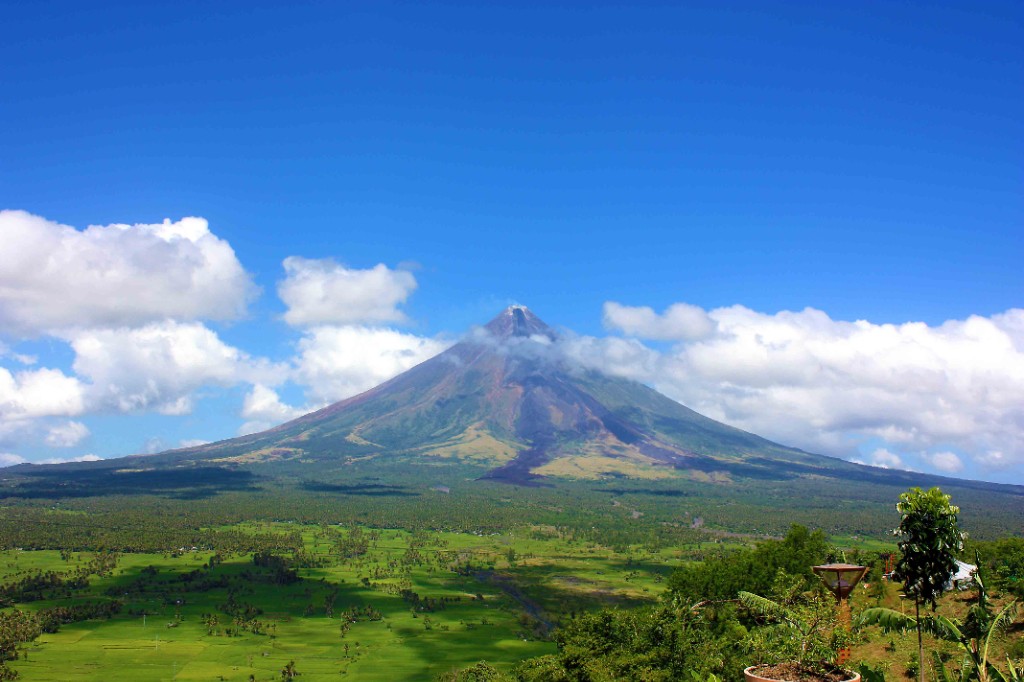
Legazpi doesn't announce itself with a skyline so much as with a silhouette. On clear mornings, the cone of Mayon Volcano—symmetrical, restless, and almost absurdly perfect—rises above the roofs and palms like a sentence the landscape refuses to finish. Tucked into the curve of the Albay Gulf in the Philippines' Bicol Region, Legazpi is the provincial capital that lives comfortably in the shadow of an active stratovolcano, and somehow that tension is exactly what makes the city feel alive.
The city is really two moods stitched together. One belongs to the seafront and the old port: a warm, salt-air rhythm of fishing boats, breezy promenades such as Legazpi Boulevard, and the casual evening theatre of sunset over water, with Mayon's outline sharpening as the light drops. The other mood belongs to the old Albay district and its heritage spine, where church façades, plazas, and civic buildings recall a long layering of local faith and colonial history—most iconically expressed just outside town at the Cagsawa Ruins, where a lone bell tower stands in open fields as a stark, photogenic memorial to the 1814 eruption and to the resilience that rebuilt around it.
Between those poles, Legazpi offers the kind of tourism that is equal parts scenery and sensation. You can take the short climb up Ligñon (Lignon) Hill for the classic panoramic frame—volcano, rooftops, gulf, and all—or head to hilltop vantage points like Daraga Church where the view makes the descent feel optional. Then there's the ground-level Bicol experience: coconut-rich, chili-bright cooking (Bicol Express, laing, pili-nut snacks) that turns a simple meal into a reason to linger, and a street-and-seafood culture that feels generous without trying too hard.
If Mayon is the headline, the supporting act is Legazpi's role as a gateway: arrivals typically flow in through what's still colloquially called Legazpi Airport—the newer Bicol International Airport in nearby Daraga—which keeps the city connected to Manila and the rest of the country even as it keeps its own tempo: slow enough to watch clouds lift off a volcano, fast enough to remind you that the earth here is still awake.