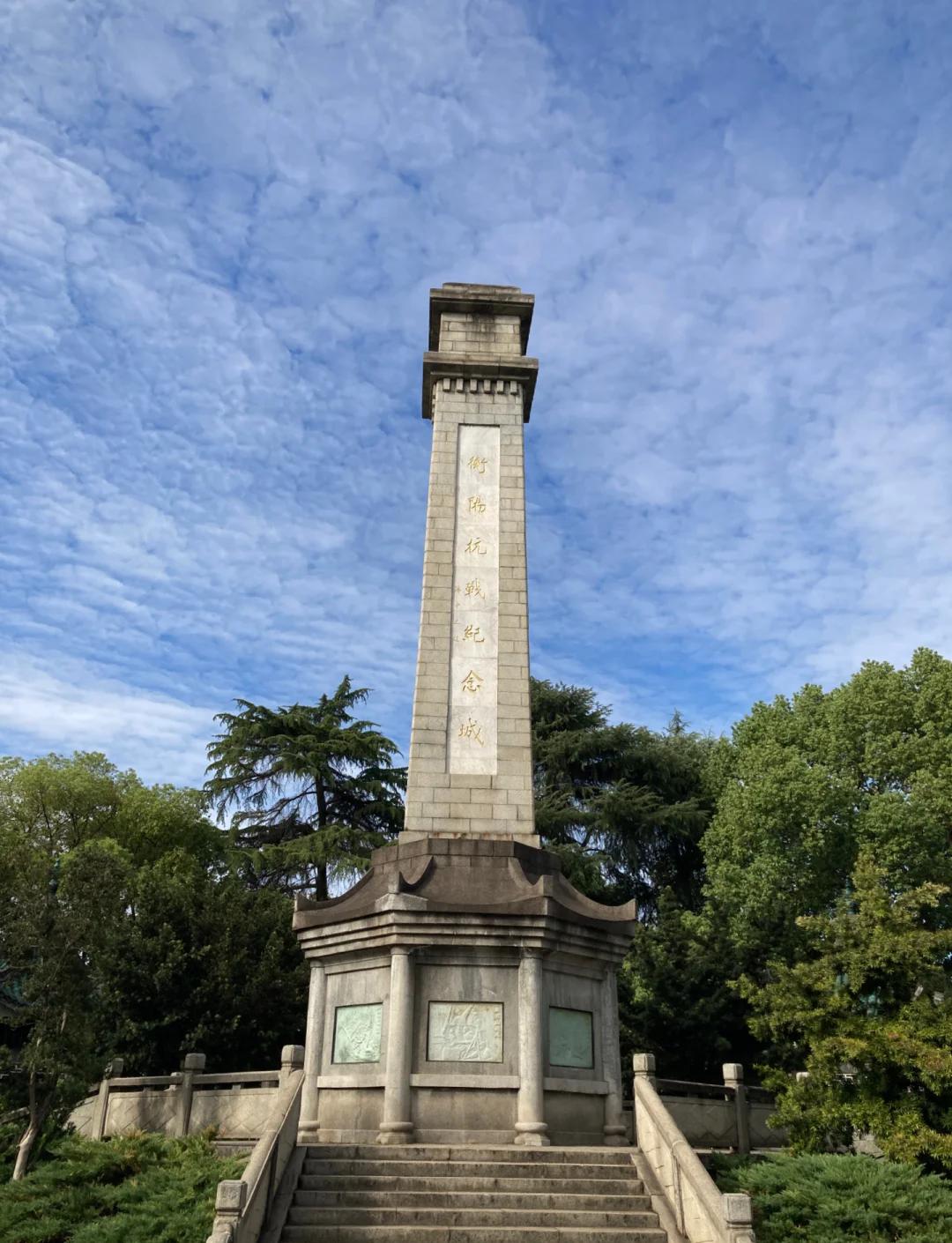
The Hengyang Anti-Japanese War Heroes Monument, also known as the Hengyang Martyrs Memorial, is a significant historical landmark located at the summit of Yueping Mountain in Yueping Park, Yanfeng District, Hengyang City, Hunan Province, China. Standing 18.16 meters tall, it serves as a solemn tribute to the Chinese soldiers and civilians who sacrificed their lives during the Battle of Hengyang in 1944.
The monument commemorates the heroic defense of Hengyang, often referred to as "the Oriental Battle of Moscow." In the summer of 1944, Chinese troops, primarily the 10th Army led by General Fang Xianjue, defended the city against overwhelming Japanese forces for 47 days. This fierce battle inflicted heavy casualties on the Japanese army and significantly disrupted their strategic plans, marking a pivotal moment in the War of Resistance Against Japanese Aggression. Due to this extraordinary contribution, Hengyang was officially named the only "City of Commemoration for the War of Resistance" in China.
Inscription on the monument reads: The front of the monument bears the inscription "Eternal Glory to the Anti-Japanese Heroes" (抗日英雄永垂不朽), originally calligraphed by Chiang Kai-shek in January 1947. In 1984, Cheng Xingling, then Chairman of the Hunan Provincial Committee of the Chinese People's Political Consultative Conference, re-inscribed the characters.
Recognized for its historical value, the monument was listed as a key cultural relic protection unit in Hunan Province in 2002. In 2014, it was included in the first batch of National Anti-War Memorial Facilities and Sites. Today, it stands as a powerful symbol of national resilience, patriotism, and the enduring spirit of peace, attracting visitors who wish to pay their respects to the martyrs and reflect on history.